Highest Voted Nominees (So far...) (Note: These founders have not committed, this just represents nominations)

Eric Hostetler
CEO, Volund Manufacturing
No items found.

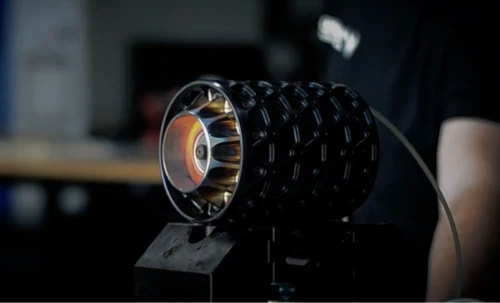
Eric Hostetler spent years as a mechanical engineer building cult consumer brands, from Fox Racing motocross gear to Beats by Dre, logging nearly 100 trips to China and absorbing the high-volume manufacturing philosophy that governs those industries. That background turned out to be the map to buried treasure when he co-founded Volund Manufacturing, a Huntington Beach startup building a vertically integrated factory model to produce low-cost jet propulsion systems for attritable munitions, counter-UAS interceptors, and low-cost cruise missile programs. The core insight is straightforward: defense is starting to demand what consumer goods have always required, namely lower cost, higher run rate, and faster development cycles, and the traditional defense industrial base is structurally incapable of delivering that.
The problem Hostetler and his co-founder diagnosed at their previous company was a fractured and aging supplier ecosystem where a pool of 20,000 machine shops nationwide collapses to roughly 25 once you filter for aerospace certification, security compliance, and five-axis machining capability, shops so overwhelmed that lead times stretch to 18 months and a $300 part gets priced at $10,000. Volund's answer is to bring those capabilities under one roof, connect CAD directly to manufacturing artifacts and an ERP system through a custom MES, and run the whole operation on a digital backbone optimized for moving fast within the regulatory rails of high-reliability industries. Hostetler's 10-year vision is a network of small, targeted factories modeled loosely on Foxconn's playbook: each one highly efficient at a single product vertical, collectively capable of serving as the manufacturing layer that lets other founders focus on their engineering innovations without building a propulsion team from scratch.
"If you kind of wave a magic wand, which is what we hope to do with us, that capability now under our roof, it's really a $300 part. It's not a $10,000 part."
"All of a sudden these goals of making this affordable, making it fast produced, making it approachable from a cost perspective, all of a sudden it starts to sound a whole lot like my background."
"Having a plan on how to actually produce this thing at scale needs to be thought of very early on. I've watched a number of companies build what a lot of people call technical debt."
.webp)



Mat Vogels (00:14)
everybody. Welcome to another episode of pirates only a podcast where we interview early stage founders at the very beginning of their journeys, to talk about not only how they got started, but what they're building and the future that what they're building can bring not only for themselves, but we find that a lot of times it's for other startups and new opportunities for founders to build on top of them. Eric, thank you so much for being on here. Eric is the
co-founder and CEO of Volund Manufacturing. Thank you for being on, Eric.
Eric Hostetler (00:45)
Thank you so much for having me today.
Mat Vogels (00:47)
Really quick, can you spend a minute to 90 seconds just giving the most layman version for what it is that you're building at Volund?
Eric Hostetler (00:56)
Yep, Volund Manufacturing is an advanced manufacturing plant's new factory model designed to provide low-cost propulsion systems to the Department of War to unlock the world of attritable munitions in the form of interceptors for counter-UAS and for things that look a lot like low-cost cruise missiles. We are pursuing a vertically integrated factory to produce those things at scale.
Mat Vogels (01:21)
could you talk a little bit about what you were doing before starting this company?
Eric Hostetler (01:27)
Yeah, I've got probably...
A fairly unique background, I think, compared to a lot of people in this space. I come from the world of actually high volume consumer goods. By education, I'm a mechanical engineer, but I got out of school and I went to go work for companies like Vans. I worked for Oakley Sunglasses. I worked for Fox Racing doing motocross gear. I worked for Apple doing Beats by Dre. I kind of had a strict policy of only working for companies where I made cool stuff.
So I got a chance to, and there's some others mixed in there as well. So yeah, I, you know, really kind of seen the spectrum as far as where and how to make things. I, in that whole process, like you can imagine a lot of those brands, there's a lot of overseas production. I made something like 96 trips to China. spent about four years on the ground. I spoke, okay, Mandarin for a minute. I definitely have favorite restaurants in Shanghai and Hong Kong.
Mat Vogels (01:55)
What a lineup! Those are all great!
All right, what, what, I was gonna say that I love that each of those brands that you mentioned, although, you unique in some cases for what you were building all have such a memorable following in like cult following in a lot of those ways. I mean, I grew up, you know, racing ATVs and motorcycles and Fox was obviously a big brand there. Obviously have Apple everything now. So very different demographics, but also like very hardcore fans.
Is that, mean, when you think about some of the pieces that kind of brought you here, are you kind of bringing that same mentality of trying to find customers that will almost treat you in like the same way as what you're building now?
Eric Hostetler (02:59)
Both myself and my co-founder have a very, very strong sense of brand identity, of brand equity. My co-founder is actually a very talented photographer, and so we hope that a lot of our photographic assets, whether that's on the web or social media, are going to be engaging for that reason. Unfortunately, most of our customers are probably going to be defense primes, where I don't know if they buy on brand equity. I'd love it if they did.
But I think it probably feeds more into our public facing image a little bit. I think a bigger portion of some of stuff I really took away from that time in my career was really just the methodology that I think you use to manufacture that space and the methodology that you actually approach product design with.
At first glance, you wouldn't expect things like headphones or sunglasses to have like much to inform for making defense articles or aerospace items. But in reality, you know, when we would approach a new project, we would always have materials that we knew we could afford to use given the
Scale profile of what we're gonna make I knew how many of a thing I was gonna make I need to make sure that the materials I was using supported that I to make sure the manufacturing processes I was looking at supported that and One of the big kind of aha moments as we've looked at the last several years in defense in particular is We're starting to ask for lower cost. We're starting to ask for higher run rates. We're starting to ask for a treatable systems and and all of sudden these goals of making this affordable
making it fast produced, making it approachable from a cost perspective, all of a sudden it starts to sound a whole lot like my background. And it's actually those things that we're really trying to flip the script on how we approach, in our case, we're approaching propulsion systems. So air breathing, know, jet engines would be almost the literal definition of the meet the requirements, like prove this out, it takes several years to do it, deliver this.
just beautiful ⁓ work of engineering, but oftentimes you might have painted yourself into a corner with manufacturing processes. Perhaps you selected a particular type of casting that there's only three or four places in the whole world that actually make those kinds of parts.
And so this methodology of looking back to the very beginning to actually begin incorporating those concerns about manufacturability and run rates and, know, I can go to my CTO and say, hey, if we make that material, there's 10 foundries in the U.S. that can work with us. If we pick that material, there's 50. And so this, it's kind of this interesting intersection between methodologies of how we approach things just from a philosophical perspective.
Mat Vogels (05:33)
Yeah.
Yeah, I love that. So one of the unique insights, so to speak, of starting this is certainly we're in a wave now where defense primes, manufacturing, all these things are now seeking faster deliverability, equal quality. It's certainly more of a startup approach. Was that the only unique insight that thought I need to start this business or was there a moment or a problem that you were facing previously that said, I need to solve this because no one else is?
Eric Hostetler (06:07)
Yeah, think one of the things that happened was obviously I was one of the early employees at Anderol and really kind of kicked off my exposure to this paint yourself into a corner dynamic that we saw with a lot of the design first and figure out manufacturing second. saw a lot of that. But then on the back end, as we started to engage with suppliers,
Mat Vogels (06:23)
you
Eric Hostetler (06:25)
We hit this very bizarre dichotomy where the US Defense Industrial Base is simultaneously massive and tiny at the same time. in things like this is where you might need to make this impeller ⁓ for a jet engine.
When you go out to, want to find a machine shop that can make this. There might be 20,000 machine shops in the US. say, there's definitely got to be something that can do this. And then you go, OK, well, they have to be a machine shop. They have to be AS90100 certified to work on aerospace parts. They have to be CMMC level 2 compliant. They have to be able to do simultaneous five axis machining, and not only simultaneous five axis machining, but of the most complicated variety for doing these turbo machinery parts. And where you started with 20,000, you might be down to, I don't know, 25 at this point.
And
so now you've got these 25 shops. By and large, most of these shops are probably going to have statistically less than five employees, which means that the owners are probably operators. The operators are contributing materially to the advancement of the business. all of these things on systems to go fast and automation and engaging with new customers via marketing and all these things aren't.
aren't something that they're really able to do. so you're, you're start with 20,000, all of a sudden you're, you're, you're talking to the one or two shops you might be able to work with that might have a 18 month lead time to make these things. And then because they're so in demand, capitalism takes over and you might be paying $10,000 for a part. If you kind of wave a magic wand, which is what we hope to do with us is that capabilities now under our roof, it's really a $300 part. It's not a $10,000 part. And so,
Mat Vogels (08:08)
Mm-hmm.
Eric Hostetler (08:10)
Realizing that this was the dynamic that we saw every day of going out to these places and just ⁓ kind of running into roadblocks of this defense industrial base a lot of the dynamics that have led to it being fractured and aging and slow or frustrating every day and so You know had kind of that that stereotypical founder story where There's the two of us sitting in this machine shop at that this company we're at every day Just lamenting how frustrating it is to work within this problem. I mean, this is every founder story
And we said, well, my co-founder is 23 years of just intensely technical defense manufacturing. So he's been, you know, CNC machining, programming, manufacturing, engineering, quality, all these types of things for 23 years now. And we started looking at this way to kind of marry ⁓ my background in high volume goods and this different way of developing products with his experience of...
building in the, I'll say in the traditional sense. And so how do we, how do we take this fresh approach while respecting all of the traceability and quality and, and the things that matter in defense? How do we build a, you know, a new approach to that? And so we, you know, conceived of this, this factory model where we wanted to, to, go after this, to, to fix what we saw as being the problems as we've watched.
the Department of War began to ask for things like production capacity as a stockpile and ask for not just, you know, can you rapidly produce this thing, but can we actually rapidly develop things and produce them faster?
These are the things that we really saw vertical integration, painting a path forward for being able to supply these things quickly. We saw providing a digital backbone to that factory where we connect our design to our.
what I'm calling manufacturing artifacts, the creation of all the things the factory floor needs be able to do its job, whether that's files for the CNC mills, whether that's heat soak profiles for a heat treat oven, whether that's work instructions, 2D files for lasers, etc., all these things. We connect the CAD to those manufacturing artifacts. We connect that to the ERP system, where you have purchase orders and inventory and...
you know, the initial high level work orders and then we connect that to a custom MES that actually allows you to grab those files way back from the PLM system, push those to the floor in an automated fashion and then simultaneously listen to the factory floor, know what's going on, know what kind of quality measurements and process parameters are being monitored, aggregate those things into usable data and then.
provide those pieces of data into reports attached to ERP and really build a closed loop system that does all these things. And it's really what it becomes is a system that's just optimized for moving fast within the regulatory environment that we have in defense and space and high medical nuclear energy. All these high reliability industries where...
It has to work. We're never going to hand a soldier any kind of weapon that might work or works a lot of the time. It has to work. These things have to be 100 % reliability. so the quality systems and the security that surround these things, this might be little bit of an unpopular opinion. Those things aren't optional. We have to do those. So we built a system that's optimized while we're respecting those rails that we have to run on.
Mat Vogels (11:27)
could you give kind of a high level, like who is the Department of War? that your customer? Who are your customers that are buying this? Because then the next question I want to ask is, what does the process currently look like today? You just went through a little bit of what that is, but maybe from a timeline perspective to a cost perspective at the highest levels, what are they doing today? And then that'll help maybe for the audience.
learn why what you're building is just so powerful.
Eric Hostetler (11:53)
Yeah, so at its core, our customers are going to be integrators. And those integrators might be traditionals, they might be non-traditionals. this is...
going to be, you know, the non-traditional companies like Andoril or Coaspire, Zone 5 Technologies, Integrated Systems for Systems, or it very well might be some of the traditionals. This is going to be the Boeing, the Lockheed, the Raytheons, et cetera. Currently, most, you know, a traditional program is going to have the main system awarded to one of those integrators, and that integrator is then going to reach out to a Tier 1 subsystem supplier
on the bigger system, it's going to be the Pratt & Whitney's, the Rolls Royce, the GE Aviation. On the smaller systems that we're pursuing, that'd be companies like ourselves or Beehive. Where things are getting a little bit interesting is that in the past, those guys are definitely other customers. The US government's never going to buy just a jet engine. As this...
just a treatable munitions trend is coming about. The government is actually starting to pursue a little bit less orthodox versions of some of this. They don't want any more of this world. They have to stockpile entire missiles, but they are starting to look into the supply chain and actually pursue.
individual portions of the supply chain to actually stockpile and so these are gonna things like warheads and these are gonna be things like propulsion systems and so I actually have fielded some conversations with various offices within the Department of War about actually pursuing production OTAs to actually stockpile engines directly from myself. So generally speaking, I think the short answer is generally speaking, I'm selling to an integrator but the tides are turning and there's some interesting things going on within the defense acquisition space right now.
Mat Vogels (13:36)
What would be like a, like you mentioned a little bit, some of the costs and time, but in your position at Andro, for example, if you want it to go and get a propulsion device or an engine, what would like a high level, what would the timeline be for you to get that to like directly ship to your door?
Eric Hostetler (13:54)
Yeah, so we saw the same thing happen. This happened with with mock industries. This happened with with the ender industries. And I think a lot of companies had similar journeys where you you step out. want to we want to make a low cost cruise missile because that eminently makes tons of sense. And that's absolutely the thing we should be pursuing. We're going to go try and buy an engine that you just say, that's got to exist. Right. And so you get to the marketplace and you realize that there are a handful of suppliers that make, you U.S.
made like I would say truly mil-spec you know durable performant engines and you realize they cost a hundred thousand dollars and you realize they can produce 20 or 25 a month
And it's like, wait, what? Like this is crazy. Like want to build a whole system for $100,000. I can't pay $100,000 just for the engine. This thing's only got to last four hours or one hour. There's no way. you go, okay, hang on, let's go back and look some more. So we're going to go out and we're going to start looking at hobby engines. What does a dentist buy to build his RC aircraft on the weekends? And I'm just assuming all dentists do this. I don't know if that's true. I just believe it to be true.
And so you go out and go, these are made in Spain or these are made in Germany or these are made in Taiwan and these are $6,000 or they are $15,000 or $20,000 and you can get some of them and the production numbers are a little bit better. And then you start realizing they're just woefully inadequate from a FADEC, the full authority digital engine control, the controller, the FADEC behaviors is woefully inadequate or the
Mat Vogels (15:08)
They will now.
Eric Hostetler (15:38)
the performance above.
call it 10,000 feet drops off dramatically because dentists aren't allowed to fly it at 20,000 feet. And so then you start to explore the world of kind of the hobby or prosumer options. And again, you find those are inadequate for a different reason. And ⁓ you pretty quickly are left standing in the arena where everything's too expensive or not performing enough. And there's nothing really to meet those needs. And so they're, you know,
number of people then reach the conclusion to start building their own. I think it's well known that Andral has produced some of their own engines. it was born out of necessity. And I think that you're going to see a number of people try to do this on their own. At the end of the day, propulsion systems are very, very bespoke engineering. They're bespoke materials. They're bespoke manufacturing methodologies. And ⁓
It's challenging to build efficiencies, combining those with other aerospace disciplines within an organization. And this is why we've seen companies like Pratt & Whitney and Rolls Royce and GE and these types of companies are standalone entities. This is why Pratt's actually bigger than Raytheon. Because it doesn't necessarily immediately benefit a company to provide its own propulsion systems as well.
And so we're really stepping into that space to be that solution there. When we need something, it only has to last for five minutes, why don't we build an engine that does that? And why don't we do it so it's truly scalable? And that's really our unique offering is stepping in to provide that.
Mat Vogels (17:05)
Yeah, I you mentioned Andrel obviously being a customer that would use some of this. It doesn't even make sense for them necessarily, certainly in the early days to build their own engines. Andrel's a multi-billion dollar, deca-billion dollar company.
there are hundreds or thousands of startups that are not Andrel that also need to purchase these engines and need them. And they don't have, it doesn't make sense for them to build them in-house because like you said, the engineering is so bespoke, they don't want to hire a team just to focus on this smaller part of their much larger vision. So part of the opportunity, and again, one of the most exciting things is when we have startups like yourself that I think are...
Eric Hostetler (17:28)
No story.
Mat Vogels (17:42)
opening the door for other startups or founders to exist because of the bottleneck that you're essentially unlocking for them.
Eric Hostetler (17:50)
Yeah, yeah, I think, you know, love the world where we have the ability to produce.
And realistically, our system will allow two different things. One, it allows us to put a system on the shelf, so to speak, so that we have a truly mil-spec performance engine that mimics COTS to some degree, a commercial off-the-shelf offering, where someone can come and just buy an engine that will work for a fairly broad performance envelope. And that allows founders to go out and build new technology, allows them to innovate in that space, allows them to try new things.
our system will also be tolerant of the, we need this exact performance and profile. Can you please scale this up or down? Or can you please make it last less or last longer? And we have levers to pull to rapidly move things through our system, produce those as well. But yeah, think what I really, really am hoping to provide is some of that.
resembles COTS and has ⁓ trustworthy performance data so that I can unlock the world of founders building low cost systems to really deter conflict in the world.
Mat Vogels (18:57)
And how big is the team today?
Eric Hostetler (18:59)
Actually, as of this morning, we just hired our 11th full time and we have ⁓ three 1099. So in a sense, I think we're at about 14.
Mat Vogels (19:08)
Yep, that's awesome. And then located out of Huntington, is that right?
Eric Hostetler (19:11)
Yep, we're Huntington Beach, California. It's actually a bit of a haul from my house. When I looked at the landscape of where is talent, I see a lot of roboticists. I see obviously androids industries, tons of talented people down in Orange County, South Orange County. And then obviously the behemoth that is, you know, what they call...
South Bay, you know, in Los Angeles with SpaceX and with Northrop and with all the companies there. We wanted to be sort of a manageable distance from either. And so we are dead in the middle of Huntington Beach. We're actually in a corridor with a rich aerospace history. We've got a number of friends and neighbors here that
are alongside us on the mission. There's mock industries down the street, there's Boeing down the street, Saffron, there's layup parts, there's Opticolor doing resin, there's TPG paints, there's heat treat and anodize, and there's everything all within probably no more than a mile. So it's actually a hotbed of aerospace industry without people towing your car.
Mat Vogels (20:19)
Yeah, I think I feel like I see more and more companies that are kind of in people that maybe aren't familiar with like the LA area on a map. It looks like all these things are very close, but you know, you could be just 10 miles away and it could take an hour to get there. Huntington always felt like was such a no brainer spot because it does feel like it's fairly easy ish in and out. You're relatively center to going to the El Segundo a little further up north, you know, it's still a drive, but obviously down to
on the Long Beach side and for Andrel and all these other companies are, feel like Huntington's maybe one of the better places. I don't feel like I hear enough companies saying that, but it sounds like obviously there's some great people there to there.
Eric Hostetler (21:00)
Yeah, we love here. actually working to start hosting. I'm working with a bunch of the service providers to start hosting events here and kind of sing the praises a little bit. Born and raised in Orange County, we get a little bit poopy pants about having to go to LA. We always joke about staying behind the orange curtain. And so, yeah, we're pretty excited about where we live.
Mat Vogels (21:06)
Nice.
the orange curtain.
I like that. Do you see you guys staying there scaling there over time over the following years?
Eric Hostetler (21:24)
think this will be, think, a pretty common answer. We will probably always have ⁓ R &D and development here. Is it going to be in this exact facility? I would probably think we might need a little bit more room here. Some of the factors for us that will be interesting is as we start producing at scale, jet engines burn, know, jet fuel. There are ⁓ environmental concerns. I'm sure somebody, there's a hummingbird somewhere that's going to die if we keep doing what we're doing.
So we will need to address that and then jet engines are not exactly famous for being quiet. So there's probably a world where we need to consider mass production, know, ongoing testing like deep and long-term testing needs to occur someplace else. And so we're starting to explore what those things look like, but there's a tremendous amount of stuff that's going to be happening here for the foreseeable future.
Mat Vogels (21:55)
Yeah.
I love that. Where are some of the places that a lot of founders and companies are going to for those, whether it's loud jet engines, but obviously with hardware and large manufacturing, there's a lot of noise and a lot of mess. Where are the places that people are going? Is it just deserts somewhere or what does that look like?
Eric Hostetler (22:28)
So I think a lot of people end up.
end up just out in the desert. Mojave, the Mojave airport is where a lot of people go north of Los Angeles. This is going to be a shameless pitch for Reach Defense. Reach Defense is currently building a facility ⁓ east of LA and Orange County in an area called Barstow, which is like we all know where Del Taco started. And they're building a facility out there and very, very excited for what they're doing. ⁓ One of the things that I think
And the androil just crushed right from the beginning was one of the first things they addressed is local test ranges. And I don't know that every startup can afford to do that. And so having the ability to go to a, I'll say a nice place, know, facilities, you know.
food, AC, these kinds of things handled for you with Reach is something where we're actually, we've already kind of got the MOU in place and we're starting to explore what does that option look like. So I think that establishing that early on is super helpful. Founders should be cognizant of that. What does it actually mean to have some of the waivers with the FAA if I'm doing...
if I'm doing radio things, what does it mean to have waivers with the FCC? All these different things. I think really kind of assuming it's harder than it is and doing the research to figure out where all the mines are, definitely advice I'd provide to Congress when it comes to testing because it can be difficult. And then 10X that if they have to those questions.
Mat Vogels (23:55)
Honestly, one of the biggest things we
hear from founders and honestly, even on the government side is the lack of space and areas for companies to test. And I remember talking to, won't name any names, but on the government side, some of the land that's available for testing and those things is reserved by some of these big players and then they don't even use it. They do it just so they can claim the real estate. So when they knew they need to go use it, they go use it. But you end up with all of this space.
Eric Hostetler (24:17)
Mm-hmm.
Mat Vogels (24:21)
that could be going to startups and all of these smaller companies that can't afford just to book space, just to have it and not use it. So I hope that some of those things change because I think that is currently a bottleneck in the industry for a lot of companies.
Eric Hostetler (24:35)
Absolutely, absolutely. And particularly when you get to things that explode, becomes a concern. You're into places in the US where generally everyone agrees there's nothing to explode here anyways, it's fine. And then the less common one is for anybody in the EW space.
Pumping 100 watts of S band ⁓ out into the ether is actually also just as difficult as exploding a warhead. So there's, I do hope, I've seen a number of panels discussing ways for the government to make some of that testing more approachable to people. I really hope to see some unlocks there for people. In the meantime, if anyone has any questions about some of the stuff I learned about where you can actually fly and explode things, I'd love to answer for people.
Mat Vogels (25:19)
I love that. Kind of similar to that. We get a lot of founders that listen to this. A lot of founders are looking for advice and inspiration from folks like yourself that have been doing this. What is some of the advice, whether it's specific high level that you would give to hard tech founders that are, they haven't started yet. Maybe they're thinking about starting it. Expectation settings, advice, anything you want to go with there, but for these founders that are wanting to be where you are in a year or two.
Eric Hostetler (25:48)
In order, find a graphic designer sooner than you think you need it. I, in the last several months, recently gotten back Decks and our webpage done professionally and just like, oh my gosh, this looks so much better. I wish I had done this a long time ago. I think that's one. The biggest piece of advice I'd have for somebody getting started is CRM. Get your CRM early.
get your investors, all the conversations into a customer relationship management software. For those who don't know, this is things like Salesforce is the expensive one. I believe it's Adios. There's a startup, has some startup packages. I ended up using the one in our ERP system, you know, massive, massive unlock as far as staying on top of when you talk to someone the last time, what you talked about, you know, was this person, you know, were they into it? Were they not into it? Did you get a hard no? Did you get a soft no?
Mat Vogels (26:27)
There is.
Eric Hostetler (26:43)
all these things, which I'd known a long time ago. one of the things that I, I didn't really realize was dynamic is, ⁓ you know, funds are going to tell you no. And, ⁓ when you then go on to proceed and win anyways, they're going to call you back. so, ⁓ having those contacts, at your fingertips and being able to pick up a conversation, ⁓ is, is, is massively important. yeah. And then I think for the hard tech founders in particular,
And this one will be a little bit of a pill. think generally speaking in the startup space, everyone starts from...
place of engineering excellence or technical innovation more often than not. And then they go to build their thing and they build their big design, they build their prototypes. One of the things I think the venture community has been tremendously good at is identifying that next hurdle, which is gonna be your go-to-market. And I think there's a number of funds that pride themselves and do a great job of connecting you with.
offices in the Air Force or the Navy and the the labs and DARPA and and all the different people and helping pursue non-dilutive funding and what is the path to actually getting meaningful contracts and development OTAs then you know the holy grail of program of records. I think a lot of people have kind of focused on that next link and this is where I feel like where I'm trying to start kind of from the opposite side of spectrum is having a plan on how to actually produce this thing at scale.
to be thought of very early on.
I've watched a number of companies build what a lot of people call technical debt, where there's a lot of stuff to, when you want to be actually producing this at scale and again, shipping the things in the boxes with UPS labels. How do you actually do that and have plans to do that early on I think is massively important. As time has progressed, I think the number of people that are gonna get funded for just an idea without a how,
Is probably going to decrease over time. I think this is where You get you get brands like Firestorm, know great great great example of somebody who says what we're going to be doing but then also the how and We're watching those guys. I think see more and more opportunity leveraging their how I think the people that have the you know, whether it's a vertical integration whether it's we're designed this to be more manufacturable I think the the the plan on how to do that and the respect for doing that
is a super important part of doing this stuff, particularly when we're watching the news all around us discuss that they're not necessarily reporting a shortage of engineers in America, they're talking about a shortage of manufacturing talent. And so I think early identifying what you're going to do there early on is massively important.
Mat Vogels (29:25)
Yep. The most common problem, you could say problem, the most common hurdle that we have to see, I think, hard tech founders on the venture side is that they're all building something that's incredibly difficult and highly technical and it's very unique. And there are very few people that could probably build what they are building, but VCs are...
Dumb isn't the right word, but we're certainly not as smart as they are. And the difficult part about raising capital and doing that is telling the story that goes past the technical hurdle that you are building. Explaining the technical hurdle is so important. And if you could do that, that's great. But to your point, you immediately then have to paint the picture of how you go from building this unique thing to selling it, to scaling it, to doing all these. And I think the hard part is that you spend so much of your life and time
just focusing on building the impossible thing that I talk to founders all the time. And it can be very frustrating when VCs almost ignore that piece because it feels like table stakes, but it's also the hardest part. Like once you've built the thing that you're trying to then sell, you've spent years on it and endless nights and you you found unique insights and you've put in all of your savings and you've built the thing. It's so, I can understand why it's so frustrating.
but VCs will be like, yeah, really, really cool. And then they'll put it down after like a second. And then it's like, how are you gonna sell it? How are you gonna do these things? And if you haven't thought about that, it can be very, very difficult. So it's great advice and definitely to think about the whole picture. It's gonna help you in everything, fundraising, hiring and all those things. So yeah, excellent advice there.
Eric Hostetler (31:04)
Yeah, and I think, you know, one of the things that exists like so, for instance, if you've got your consumer electronics idea, it's so straightforward to just jump on a plane, go to Hong Kong, find a factory that can make this thing for you, and just take your technical idea at almost any level of maturity and help you execute it. That's some of the stuff, you know, like we realized early on at Androl that there aren't contract manufacturers that can...
can go soup to nuts, so to speak, on whole design. You can't just take a design somewhere and just have someone make it. Whether that's a propulsion system, whether that's a drone, whether that's an RF system, anything, to find someone that can partner with you and just build the whole thing for you doesn't really exist. one of the other areas, in addition to kind of unlocking...
new airframe ideas and unlocking ideas for new integrators. One of the other things I really would hope to unlock for some of the manufacturing founders really is this picture of a vertically integrated factory, of a turnkey solution to the manufacturing for some of these people. I really hope that I can be an example of what it might look like to have, I don't know what's next, if it's antennas, if it's, you know.
an EW system, if it's an actuator, if it's an entire drone system, but really building the manufacturing layer to partner with the engineering expertise to really take those designs with them across the finish line. I'm hoping that really can unlock that paradigm for us here in the US because building within this of fractured
supply chain where you send out for this, you send out for this, you send out for this, then you have to build this screwdriver factory to assemble these things at the end. It's challenging, so hoping I can be a little bit of an inspiration to provide kind of that start to finish solution to manufacturing as well.
Mat Vogels (32:52)
You hinted at it a little bit there, but maybe even putting a timeline on it. Where do you see or where do you hope to be in 10 years kind of looking back? Where do you hope to be 10 years from now with with Volund and what you guys are doing?
Eric Hostetler (33:04)
Yeah, so I think ⁓ the near term for us is most certainly it's going to be these engines. think that, I frankly think that we're going to see a continued explosion of the low cost munitions space. And I think that our propulsion systems in that space are going to have, I'll say, long legs. But at the core, we'll have built a manufacturing model.
with a software backbone that's just really good at building things in this space. And the way I look at it is actually a number of discrete targeted factories towards different product verticals. Meaning the first factory is definitely gonna be building our engines. Maybe the second factory might be building someone else's engines. Maybe the third factory is space thrusters for somebody that...
might actually have very similar materials and similar turbo machinery for some of the pumps. This could expand out into actuators or electric motors or realistically I think that whatever you can take this operating system and apply it to the next problem, the next problem, the next problem. The same way that Foxconn, and for those who don't know, Foxconn is not one massive factory. Foxconn is
dozens or maybe even hundreds of small targeted factories and what that targeted small factor allows you to do it allows you to get efficient at the one thing that you're doing and be able to lower MOQs, lower pricing, faster execution, all of these things that allows you to build efficiency in that space and I see us really kind of pursuing that model in this high reliability industry space whether it's defense or aviation or etc.
Mat Vogels (34:11)
Yep, specialized and yep.
You mentioned being surrounded by some other incredible companies in a variety of different industries and aerospace and manufacturing. What are some of the areas, problem sets or things that are most exciting to you right now outside of what you're doing? Is there any sector problem industry that gets you really excited?
Eric Hostetler (34:51)
home.
And so laser focused on some of the engines. Definitely when I look at industries that are probably the most atrophied in America, I see things like, you know, deep in my background, injection molding with lot of the Oakley sunglasses. I see innovating in injection molding in die casting, investment casting. All of these industries have this high barrier of tooling. Like you have to make some mold. And the thing that...
this industrial base has probably gotten the worst at is actually producing those molds. And so this is like atomic industries. This is Fabri and Rangeview and people working on investment casting. There's a...
brilliant kid from New Zealand I met that's working on die casting. I think any of the people attacking those industries, those are massive, massive roadblocks to primarily to scale for a lot of those startups. Most of those technologies are things you need to do at scale. It's not for one or two prototypes. It's for when you need to make a lot of them. So I think people working to solve that problem in the US industrial base, know, I, you know, I'm.
Those people are kind of close to my heart. And then I think just some of the people that are making brilliant manufacturing plays, whether that's Zach at Layup Parts, know, his, you know, MES and, and, you know, software first approach to a lot of things he's doing, I find to be incredibly inspiring, brilliant, brilliant guy. I look at John Henry Harris at Harbinger Motors. I think if anybody is curious about what the, no nonsense,
you know, US manufacturing looks like, think would definitely follow John Henry Harris at Harbinger. He has, you know, lots and lots of brilliant insights into US manufacturing and obviously the electric vehicle industry that he's producing in. those are some of the guys that I read the most interestingly enough. then, you know, Dominion Dynamics and some of the, you know.
Cambridge Aerospace and some of the foreign primes and watching some of my friends and prior colleagues start to build up some of those businesses in Canada, the UK and other places.
Mat Vogels (36:50)
doesn't it feel kind of like it's like there's been no time like now to do kind of what you were doing or to do some of the problems and things that you just mentioned?
Eric Hostetler (36:59)
I felt incredibly fortunate to feel like I've stepped into this space at exactly the right time.
We, I think we saw kind an awakening during COVID as to what the US industrial base is like and what the US manufacturing is like. I think when we saw some interruptions to supply chain, how fragile a of things is became very, very aware of people. For better or for worse, all the discussions on tariffs again, have, you know, in last several years have really, really raised awareness of what's going on in this space and really started people thinking about this. then sadly, unfortunately,
Unfortunately, what's going on in Iran has highlighted some of our stockpile shortcomings. I'm talking to a program office with the Air Force and I look the next day and he's addressing Congress on how fast we can build missiles. He's directly discussing the programs that I'm hoping to supply against. Again, sadly, the world events have really highlighted that.
I hope I'm working on the right problem and I hope I'm working on something that benefits the US and its allies.
Mat Vogels (38:02)
I think you are. Eric, thank you so much for being on. Where can folks continue to follow you, the company, and everything that you guys are doing?
Eric Hostetler (38:11)
Yeah, I think we're on all of the, I'll say the normal social medias, LinkedIn, X, Instagram, and then we now have a beautiful webpage that's live as well. So I think there's going to lots of places to keep track.
Mat Vogels (38:22)
It is
beautiful. The photography is beautiful. think again, you mentioned this earlier, but from a hardware perspective, seeing the product, is stunningly gorgeous. It's so great. So I'm glad that you invested in some of the design aspects to highlight those things, because it's a beautiful, beautiful piece of hardware.
Eric Hostetler (38:41)
Thank you
so much.
Mat Vogels (38:41)
Eric, thank you again. I'm sure that we will chat again soon, but I really appreciate you being on.
Eric Hostetler (38:47)
Yeah, really, really grateful for the opportunity.
Mat Vogels (38:49)
Have a good one.