Highest Voted Nominees (So far...) (Note: These founders have not committed, this just represents nominations)
Brian Taylor
CEO & Founder
No items found.

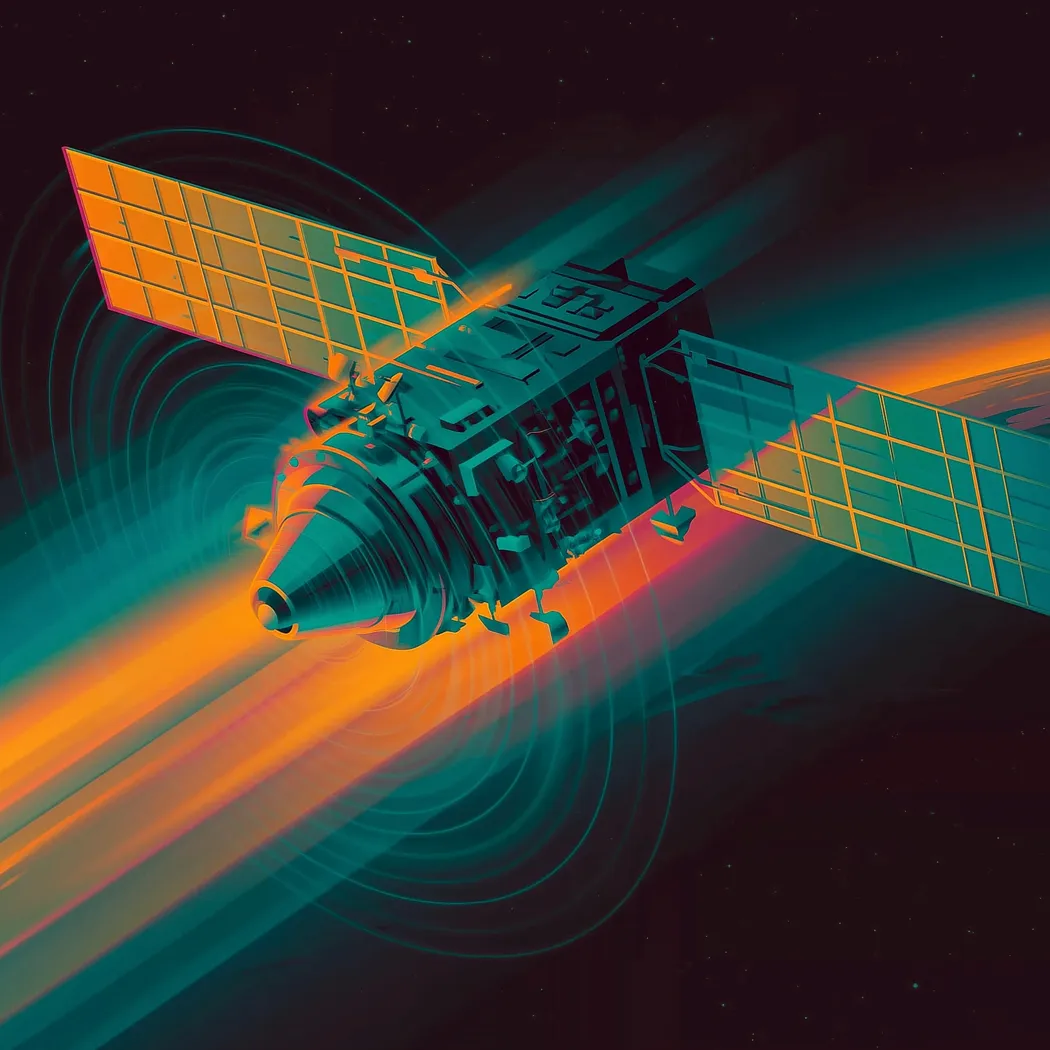
Brian Taylor spent 15 years in aerospace before founding Lux Aeterna, including building the first 60 Starlink satellites at SpaceX from zero to launch in nine months, followed by stints at Amazon's Project Kuiper and Loft Orbital. Those three organizations each took a different approach to the same bottleneck: satellites cannot be built fast enough to keep pace with demand. Taylor's insight was that loosening mass optimization constraints on a satellite opens the door to adding a heat shield, and a heat shield enables atmospheric re-entry, and re-entry enables reusability. Lux Aeterna has raised $15 million across two rounds and is fully funded through its first mission, a Falcon 9 rideshare in Q1 of next year, with a full re-entry and landing in Australia.
The more consequential argument Taylor makes is not about cost but about lead time. The current two-year cycle from mission conception to orbit forces planners to design for problems they cannot yet see, leaving a vast treasure trove of shorter, time-sensitive missions completely off the table. Compressing that window to six to twelve weeks changes the calculus for defense ISR, rapid compute refreshes, and entire mission architectures no one currently bothers to conceive. Operating out of a 6,000-square-foot Colorado facility with a team of 17, Taylor also covers the company's aggressive AI adoption across hardware and software, why he actively recruits engineers who have experienced in-orbit failure, and the process discipline that separates founders who move fast sustainably from those who just move fast.
"You have a success in space and you instantly look forward and you don't look back. When you have a failure and you do a failure analysis, you actually see the 16 other things that almost caused the failure but didn't."
"I tell my team that there is not a limit for how many tokens you can use, because that cost compared to hiring more people is like 10 to one."
"I never had worked on something that big. And I remember having this thought of, man, I'm screwed for any job I'm ever going to have after this that has less scope and less consequences."



Mat Vogels (00:14)
everybody, welcome to another episode of Pirates Only, a podcast where we talk to early stage founders to dive deep into what they're building, the industries that they're building in, and then also get some tips and tricks for other founders that might be listening as well. Today I have a very special guest, Brian Taylor, founder and CEO of
Aterna, fellow Colorado company. I always, always love talking to people in Colorado. We might dive into a little bit on why we think Colorado is the perfect place. For more companies to start, we could bring some of that talent here. But before we go down any rabbit holes, I always like to start with a very clear, what are you building? And we find that it's best to put it in the most...
layman's simplest terms possible, especially for some of the VCs listening that maybe aren't as smart, certainly as you are. So what is it that you are building? And then we can dive into maybe why you decided to go on this journey.
Brian Taylor (01:12)
Yeah, absolutely. First off, thanks a lot for having me. Really happy to be here. Big fan of the podcast. We are building reusable satellites to enable fleet operations in space, which has never existed before and really is the next level to unlock scale in the space industry after launch is no longer a bottleneck.
Mat Vogels (01:36)
And as we will certainly get into, feel like launch is becoming less and less of a bottleneck. And it's been such a cool thing to see so many companies now venturing off into space. Before we go into the industry itself and some of those things, could you talk a little bit about why you chose to build this? Why now? And then maybe what you were doing before to help inspire you.
Brian Taylor (01:47)
Yep.
Yeah, absolutely. So I'll talk a little bit about my background first, which kind of led into why I started this company now. So I went to college for mechanical engineering. was this, you know, structures mechanical engineer in the aerospace and aviation industry. Before this company was about 15 years, about halfway through that career, I ended up at SpaceX in Seattle on the Starlink program. And that really changed my view from kind of
working at prime contractors and what I would call boring companies to SpaceX and really getting this strong kind of boot camp understanding of how you can operate differently within the space industry. I actually wasn't a space nerd growing up and in high school and things like that. I wanted to work on other things, hardware that I could touch. And satellites in space, other than rockets, were very much
this thing that you work on, put blood, and tears into it and then you send it off and you don't see it again. And you just get data back from it. And that always bugged me. Once I worked at SpaceX and kind of understood how much ground testing goes into satellites and how...
SpaceX is like kind of special method of moving very quickly at long term, very low cost. You know, that changed my view of space and what the space industry should be, what it can be, where it is right now, you know, developed opinions about all those types of things. So I started at SpaceX on in structures testing on the Starlink satellites. I did all the structural testing for the first stack of 60.
a lot of really interesting anecdotes about how we came up with the...
you know, stacking mechanisms and how that was going to work and how the stage two was going to work. Like all of that was only possible because SpaceX owned the satellites and the rocket. You know, if we had gone to another rocket supplier and or launch services provider and said, this is what we want to do, they would just laugh us out of the room. Right. So Starlink is not possible without owning the satellite and the rocket. And then after that, I did Starlink Aviation. putting Wi-Fi on planes
I've gotten to experience that on a United flight recently, kind of in the wild, and it is just, yeah.
Mat Vogels (04:17)
and hope it happens more. I still think it's
a unicorn. think one in 50 flights has it. So I'm hoping that they continue to add more and I'm sure they will.
Brian Taylor (04:22)
Yeah.
It will. had to start on the small regional planes because of where they got certification. And so that's why. So if you're kind of flying small flights, you usually feel really lucky getting it versus like, you know, big long haul flights. So it'll come to everybody pretty soon here. So so that was really great. And then after that, I went to Amazon's Project Kuiper. And then most recently, was at Loft orbital. So a lot of that experience was around increasing the rate of building satellites.
SpaceX has one method of doing it, which is when you have very high quantities, you have a lot of leverage with the supply chain and you can do that kind of similar with Kuiper. The loft or roll has a different way of going about that, which is horizontal ⁓ kind of integration where they buy satellite buses from other people and then integrate those and run them very well on orbit. Those are all different kind of business models to solve a very similar problem, which is we can't
build satellites as fast as we want to. And so, you know, I started looking at where the launch industry is, where it's going. We all know that prices are going down, how far down will they go? We're not really sure, but they'll probably get cheaper than where they are right now. And supply will go up with things like New Glenn and Stoke and Relativity. And we're really excited for all of those other launch providers. And so I started looking at what requirements
on a satellite can be loosened up in order to kind of answer some of these issues that I was having as pain points across these satellite manufacturers. And what I realized is we don't need to optimize mass quite as much. You know, still can't, you know, send up a steel brick, but you can you can be a little bit less optimized on mass. And when you do that, you can add a heat shield to a satellite. And when you add a heat shield to a satellite,
get re-entry and when you get re-entry you can do a little bit more and then you get reusability. And that was the key aha moment for me where
This attributable disposable satellite architecture that exists in the space industry, to me does not compute for the scale that we're trying to go to. Falcon 9 launches every two days, which was absolutely unheard of before that, before reusability. And it's because of reusability. So we think that that is like, oh yeah, it's lower cost. But it's actually much higher cadence, much higher reliability, much higher schedule reliability.
today you can go get investor dollars saying I'm going to launch on a SpaceX rocket in two years and they believe you. Before Falcon 9 you could not do that and so that has opened up this kind of giant industry for satellites and more scale but to me not quite enough because now we're limited on how fast we can build satellites. So that to me was the aha moment of kind of nobody else is doing this and somebody needs to do
Started the company about a year and a half ago and we've kind of grown from there. So we can kind of dig in further, but that's the Genesis story of Luxe to Turn Up.
Mat Vogels (07:33)
That's a great, that's great background. can't believe you said a year and a half. Is that what you said? That's awesome. How, how big is the team?
Brian Taylor (07:38)
Yeah, that's where we're at.
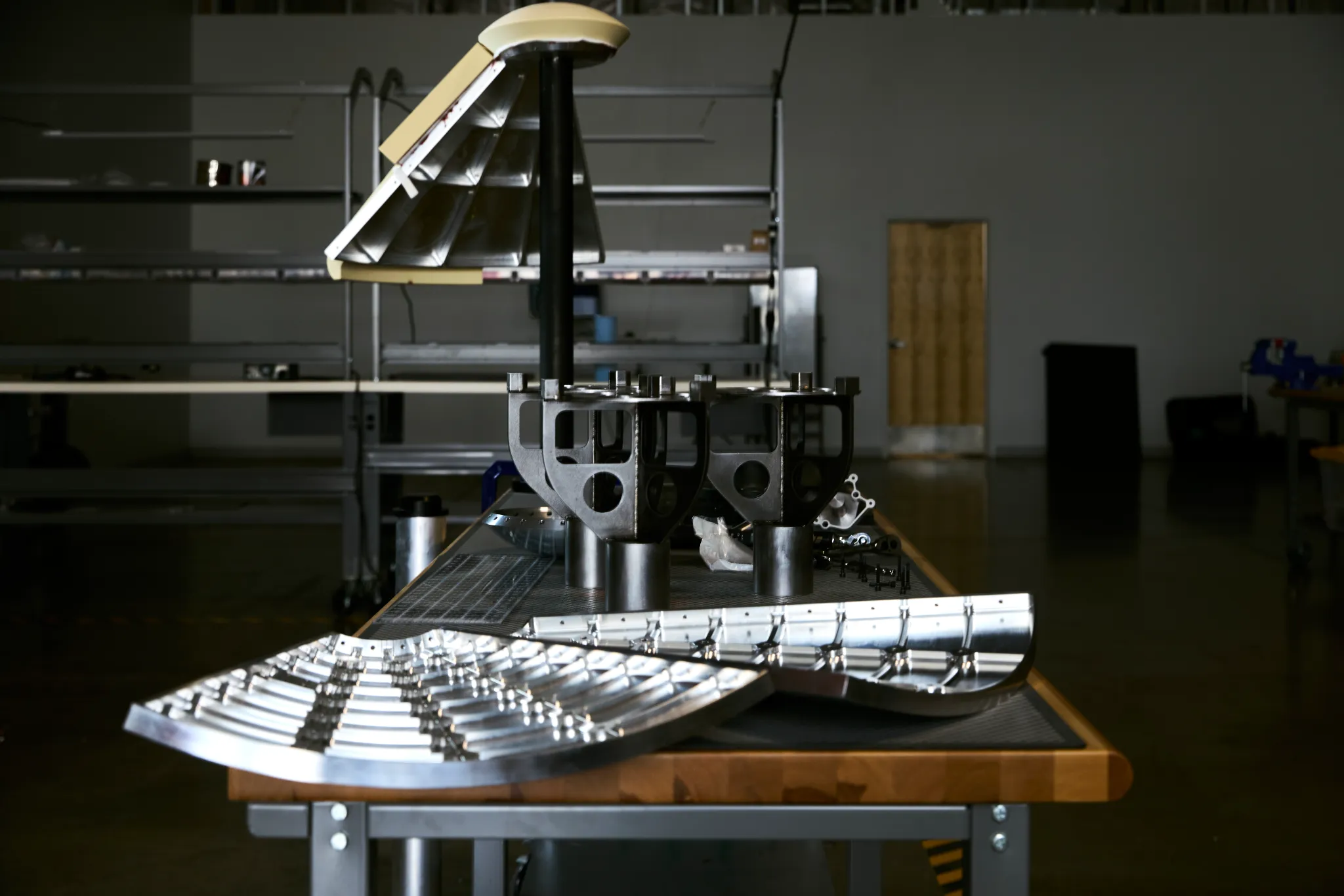
Yeah, we're at 17 people right now. We've got a 6,000 square foot facility that's behind me. We can build two satellites and refurbish a third in this facility and looking at expansion plans for sure.
Mat Vogels (07:44)
Nice.
That's so cool.
I love that.
And how much capital have you raised so far?
Brian Taylor (07:58)
Yeah, so far we've raised about 15 million across two rounds. Most recently we closed our seed round in February this year. ⁓
Mat Vogels (08:07)
That's
awesome.
Brian Taylor (08:07)
And so,
yeah, really excited about kind of what that enables. We're fully funded through our first launch, which is Q1 of next year on a Falcon 9 rocket ride share. And that'll be a full re-entry mission. So we'll be orbital for a couple of months, and then we'll ⁓ come back through atmospheric re-entry and we'll land in Australia with our friends at Southern Launch.
Mat Vogels (08:30)
That's so cool. Yeah, it's gotta be such an amazing feeling to put something into space, but then even more of a good feeling to get it back, because you're exactly right. A lot of the space companies that I've talked to, Matt at Astroforge, which I believe that you know as well, I mean, he would talk about this all the time, where how many things they just send into space and they never see them again. And even then the data that they have on board, if something...
breaks or fries out whatever it's lost. You're kind of done and we'll definitely dive more into kind of what you said on the cadence wise because people I think think of the cost savings that happen but it's the cadence and the speed at which you can learn and iterate that made SpaceX what it is. But I want to pause really quick because I want to go kind of back a little bit on the SpaceX side. What years were you there with SpaceX?
Brian Taylor (08:57)
Yeah. Yeah.
Yeah, it was there 2018 to 2022.
Mat Vogels (09:19)
Yeah. So I feel like that's kind of in this prime. Obviously, SpaceX has been around for longer, but certainly in those late 2000s and then going into early 2020s, that's when people, think, started to see some of those massive leaps into some of these cost changes. When you were there and working on it, I know you were kind of on the starter team, but I feel like
Was the vibe internally, did you feel like you were essentially creating what you created today? When you look at SpaceX, I talked to so many space founders, they point to SpaceX as being the only reason why they can exist. Did you kind of feel that like in SpaceX that you were creating, not just obviously game changing technology with Starlink and what you were doing, but the fact that you would essentially create an entirely new industry with founders like yourself that couldn't exist before.
Brian Taylor (10:07)
Yeah, absolutely. I think I would actually point to the transporter and the ride share program that SpaceX does in general that opens up, you know, single slots from CubeSat to cake topper, you know, satellite positions to folks without buying a dedicated launch or getting, you know, kind of the rare ride share on another main launch. That is what enabled
founders like me to get capital and trust that that capital could be used for a launch on a certain schedule. Absolutely that has spawned so many satellite companies on the application side, the infrastructure side, things like that. My favorite view of any transporter launch is of the stack with all the different types of satellites. So that was a really big key enabler. think
you know, one of the things that really struck me when we were building Starlink was going from these like big giant step changes in order of magnitude. So first off, we built 60 satellites from zero to launch in nine months for that, for the very first launch. And that was, had never been done like, you know,
Mat Vogels (11:18)
Yeah, unheard of, yeah.
Brian Taylor (11:20)
Couple of zeros had never been done. And that was huge, right? And that's not enough to sustain a communications constellation, right? So then this next step change of launching many satellites every launch, depending on every week, depending on whatever the cadence is. That scope and consequence and what that did for the entire world of
giving internet communications to Native American tribes that were near us in the Seattle and Pacific Northwest to ⁓ Australia and very, very remote islands, as well as people that were traveling and camping and doing all this. The scope and consequence of what we were building was so large. And I never had worked on something that big. And I remember having this thought of, man,
I'm screwed for any job I'm ever going to have after this that has less scope and less consequences. And so, you know, that was really important to me when I started this company and I talked to the people that we've hired so far about that, that it's very important that what we're doing is a mission worth fighting for in terms of how large it is and what consequence it can have across the entire globe. And I think that is the thing that needs to
Mat Vogels (12:18)
How could you beat that? Yeah.
Brian Taylor (12:41)
get us up out of bed in the morning and get us super excited to come during the easy days as well as during the hard days. So, yeah.
Mat Vogels (12:48)
Yeah, absolutely.
Could you paint a little bit of a picture of what maybe that looks like in the next five to 10 years as you scale up your company the same way that as SpaceX scaled it started and kind of bred all these new companies getting started now. What do you envision the world looking like when you achieve your mission over the next five to 10 years and then beyond? Like paint a picture of what those unlocks could be.
Brian Taylor (13:13)
Yeah, so, you know, we're definitely addressing parts of the existing market in the satellite industry. But really the way that we see it are these mission architectures that are not even contemplated right now. And we see...
Mat Vogels (13:27)
because of the reentry
or the lack of that ability.
Brian Taylor (13:31)
And not actually the reentry. It's actually the lead time. So the time it takes to go from mission conception or decision to launch and on orbit.
you know, right now, locally for the next year or so is limited by launch. But overall, the next five, 10 years is not limited by launch, but it is limited by satellite manufacturing and the supply chain that feeds into that. And as we scale up, that gets even worse when you need a brand new component for every single component on the satellite. And so when we try and scale that up, that gets pretty difficult. But so there's existing missions that we've done in space.
And then there are wholly new missions that you don't even conceptualize because It's not even possible. So and I'll give you an example of that. So right now decision ⁓ conception to launch is Realistically about two years, you know, that's that's what we're gonna do in terms of building a new satellite There's a couple people have done about
and it was this absolute sprint and then they didn't do another one 11 months after that. So generally, like kind of new concept is probably about two years best case. so therefore, if you need to make a decision that is based on data that is less than two years old, or you wanna bring a technology into orbit that is less than two years old, you can't do it and it's not really a thing that you think about. Now, if that lead time was, you know,
six weeks, eight weeks, 12 weeks, something like that. That's a massive difference in what you would think about taking to space. And you can think about that based on kind of the latest technology for compute, for Earth observation, for ⁓ defense ISR applications. If you have the ability to get something into space in six weeks, and there's a conflict, you would actually plan on doing
that but you don't think it's going to last two years and so you're not even going to contemplate putting something up when it takes two years to get to space. So that's an example of something that we think is going to be normal, know, commonplace, you know, missions that is not today.
Mat Vogels (15:45)
I love that. That's a good example because you're right. There's probably so many things that people in rooms today, if they can only launch one satellite and it takes two years for it to be there, the problems that they have today, you almost have to be a fortune teller. have to predict what problems you're going to be solving in two years, which is in this world is very hard to do, but you're exactly right. If it's a matter of weeks, especially you mentioned conflicts or any particular needs that a country or a company is having right now.
it's going to open up a massive amount of applications. So that's awesome. That's great. Are there other companies? mean, do you? Yeah.
Brian Taylor (16:16)
Yeah, and it also
Like
really quick, it puts this big lag on iteration. So we talked about kind of how SpaceX is one of their superpowers is very fast iteration. When you have that two year life cycle on kind of just getting to orbit, let alone how long you're going to be in orbit, you have a massive lag in the innovation that you can do based on the number of iterations. So when that lead time gets a lot slower or a lot faster, excuse me, you can do a lot more iteration loops. And that means the progress that
Mat Vogels (16:22)
Hmm.
Brian Taylor (16:47)
you can make on technology development, on fixing problems, just compresses drastically.
Mat Vogels (16:54)
Here's another dumb question for someone like me. How long are typical missions for satellites in space? Because today, if it takes two years to send something out there, are these missions that people are paying to send satellites in? they weeks, days, years? What is an average mission like for satellite these days?
Brian Taylor (17:12)
So there's a lot to dig into there actually, just a great question. So generally in low Earth orbit, missions are kind of five to seven years. And there's a couple of things that factor into that.
Mat Vogels (17:15)
Ha
Brian Taylor (17:24)
Generally, the only thing that you can do to get more value out of that mission is to make it last longer. There isn't really more value you can do by by making it shorter. And so that comes into refueling on orbit servicing, things like that, where like, man, if we could get another two years out of this vehicle, you know, we would make a little bit more money. But it's not the same value you're going to get out of the first two years of that vehicle.
Mat Vogels (17:51)
Totally.
Brian Taylor (17:52)
And the other thing is when you design that vehicle for five to seven years, you have to make sure all the components and the payload match that lifetime as a minimum. And so you get a lowest common denominator of what determines the failure of the satellite, and then you make sure everything else matches that. And sometimes that takes a lot of engineering effort and work to make one component, you know, match that lifetime that others, you know, it's very easy for them to hit that.
And if you think about that on your car, if everything had to last 200,000 miles, including the brakes and the tires and everything, know, certain things would get really expensive. Certain things would be like totally fine. But you replace them kind of based on what the technology is that that is used for that. And, you know, certain things can get replaced without replacing the entire vehicle. Right. And so when you go to reusable architecture like that becomes possible.
And that, you know, where we didn't actually have a knob to turn on shorter duration missions, we can now do that with reusable satellites and with a fleet architecture that says, I actually want to design my mission to be one year. I'm going to have costs that are, you know, equivalent to that one year in orbit versus five years in orbit. And I'm going to design my payload upgrade, you know, schedule
according to that. So yeah, that's a couple ways that we change the way you think about how long the satellites last. Another one there is when if you think about the duration of the mission, if it's ⁓ very long, usually you can take a longer lead time to get ready for that. If we get into those situations where you want a six week lead time, chances are you're not going to want a six week lead time to launch and a five year mission. Probably whatever you're doing in space is going
to be done in six months or a year or something like that. So on either side of launch you're either kind of long on both sides you know lead up and duration or you want to be really short and condensed and you get a very high value out of that shorter duration.
Mat Vogels (19:53)
Yeah, I love that. So it's almost like you're solving kind of two problems that existing satellites have today where A, you have to plan for missions that are two years out, which drastically changes what type of missions you would do. But then also because of the cost to send them to space and because they are essentially going to be remaining in space for a long duration of time, those are also the missions. You have to think of what missions are two years away where we have to have and maintain a satellite for five plus years in space.
but there's probably so many missions that are timing critical where we need this in space within six weeks, but then also we need it in space for six weeks and to your point, it only needs to last a year. I didn't even think about the component side of that where so much cost probably goes into making these satellites have to withstand obviously the incredible elements in lack thereof in space that changes the equation entirely. So that's really cool. You mentioned like conflict stuff, are there any other?
Brian Taylor (20:43)
Yeah. Yeah.
Mat Vogels (20:47)
exciting or fun missions that maybe come to mind that people could get excited about or wrap their heads around.
Brian Taylor (20:53)
Yeah, so the other one is this like dynamic upgrade cycle for your payload. So say you want your
Mat Vogels (20:58)
Mm. Mm.
Brian Taylor (21:03)
constellation, your one satellite or your constellation of satellites to have the latest compute capability for whatever reason, instead of kind of doing a design for replacement where 25 % of your satellites have the latest, 25 % have, you know, one year or two years old and kind of you can see how that drifts off. If you say the whole constellation, you know, my value proposition is we're going to have no compute that is older than, you know, one year or something like that.
Or you want to match the consumer electronics upgrade cycle instead of having that match the lifetime of your satellite. Now you can design a mission around the payloads timeline to refresh as opposed to how long a satellite will reasonably last in low Earth orbit. Obviously when you get to Mio and Gio looks a little bit different. But you you can design based on the payload instead of based on the solar array or the clock cycles or you know the other things that usually fail first on
on satellites or the fuel.
Mat Vogels (22:04)
Another kind of random space questions, because I don't get to talk to very smart space people as often. What is the difference technically between lower Earth, middle and then high Earth as far as like the qualifications that you then have to build for obviously, you know, gravity, the speed of the objects that are moving at those different orbits? What are some of the things that maybe the audience would be interested in to know like how different each of those different orbits are? I think a lot of people think it's going to space, but
each of those orbits have very different ways that you kind of have to build for and think about.
Brian Taylor (22:35)
Yeah, totally. one that's quite different is the radiation environment. And that varies across the realm, but you have to design electronics that are
called rad hard or radiation hardened versus kind of not. That's always a statistical game. It's never a guaranteed game like some things are in structures, ⁓ which is where I come from. The other one is really about thermal and power management. So in low Earth orbit, you do one orbit about every 90 minutes and depending on kind of where you're at and
you know, you're between eclipse and power, right? So it's this 90 minute cycle that's going to be on power versus no power. You know, when you're in deep space, you know, like our friends at Astrophores, you've got one side of the satellite that's going to see sun all the time and one side that's going to see sun never.
Right. And that's a very different thermal environment that you have to design for. And so you just cannot take the same satellite for low Earth orbit and fly that in geo or deep space or CIS lunar and things like that. It's not huge differences. Same architecture generally works, but you just have to plan accordingly to match the concept of operations with the design of the satellite. yeah, those are kind of a few. There's a couple other differences as well.
Mat Vogels (23:54)
One of the you mentioned earlier to kind of go deeper into what you're building, you mentioned how SpaceX, essentially in order to create Starlink, had to vertically integrate.
the rocket and sending stuff into space being a piece to make Starlink even exist. Are you kind of taking those same pieces of vertical integration on the creating your own hardware and software side to make all these things work and maybe touch a little bit on, is that a unique thing that you guys are doing as far as trying to control the whole operation within the satellites from software and hardware?
Brian Taylor (24:27)
Yeah, so when Starling started, SpaceX was 15 years old or something like that, had launched, you know...
Mat Vogels (24:35)
That's crazy.
Yeah.
Brian Taylor (24:36)
many
rockets, they had their own amazing ERP system. They had all of the support functions of a corporation. They just had this massive amount of infrastructure and corporate knowledge that really like that was why it was possible to do 60 satellites in nine months, right? We did not just start from scratch as a startup. We did start from scratch as a startup and do not have kind of massive amounts of capital.
or massive amounts of infrastructure that already exists and things like that. That means that we have to approach vertical integration a little bit differently and it's absolutely kind of a phased approach. And so, you know, for our initial satellite, the Delphi, the architecture itself is fully owned by us. It's a customized architecture that it looks very different from a normal satellite because it has an integrated heat shield and we use that as the structure of the bus.
And there's certain components that we have to design because they don't exist in the market at all. However, batteries, reaction wheels, torque rods, you know, other people are making those very well. ⁓ And so we get those from vendors and don't vertically integrate on those. And so we vertically integrate on what we have to. And then as we increase our launch cadence, we will know exactly what we have to vertically integrate on. So it is not a blanket rule.
vertical integration is king and we're gonna do that on everything and we're gonna take you know much longer time between zero and our first launch but it's it's a calculated risk based on or a calculated decision based on every subsystem and kind of what the existing market is what changes do we need does what the market currently offer you know is that sufficient or is it not and so that's really how we look at it for sure we're gonna increase that vertical integration as we grow but if
has to be done in a measured way.
Mat Vogels (26:29)
I think a lot of folks listening are probably building in hardware in one shape or form. So this won't come as a surprise to them. But whenever I do talk to founders that are pure software, I think they're very surprised at how much software you either have to build yourself to help manage the hardware or to manage all these operations. Can you talk a little bit about that on the software that you're creating? And then another topic that we hear quite a bit now, even in hardware companies, is how much AI is benefiting you from the ability to
Excel and it moved much faster. Could you touch on maybe those two things on creating the software side, but then how AI has maybe accelerated you and the team on that too?
Brian Taylor (27:08)
Yeah, absolutely. So...
Yeah, so we we build software to run our satellite it's kind of obvious and so You know, we do not consider ourselves a hardware or a software company We're a spacecraft company and that spacecraft is capable of reentry And you have to do a lot of things to be able to do that That doesn't define, you know exactly what our company is, right? So So we have software and we have hardware and we need to be very very good
both of those things and they have to work together very well. And so we have flight software, which is a separate discipline from ground software, which is a separate discipline from test software, which is a separate discipline from infrastructure. Each of those are software engineers and groups of engineers that have very specialized expertise on exactly what they're building, very similar to on the mechanical side. Even within mechanical engineering, that covers fluids,
thermal structures. You've even got stress analysts that don't touch loads and you've got loads of analysts that don't touch stress, which always I thought was weird. Then you got design engineers that kind of can do some analysis, but not quite enough. And, you know, those are all different disciplines. And so we have that same thing within our software, obviously within a SaaS or a pure software company, they're going to have all those different disciplines. But we also have that in a spacecraft company as well.
Mat Vogels (28:18)
Yep.
Brian Taylor (28:36)
So that is your first question. ⁓ Second one is kind of how do we use AI? So, you know, we work in in the defense space. We're a dual use application. So obviously, the security around the data that we create is paramount to work with the Department of War. That is kind of first priority. Very, very close. Second priority is that we are competitive in the market as in terms of how AI forward we are. So as soon as we get the right
kind of cybersecurity and controls in place. You know, I tell my team that there is not a limit for how many tokens you can use, because they're all it's all that cost compared to hiring more people is like 10 to one. And so, you know, one of the things that that I think hardware companies have, or companies that also build hardware have had to kind of deal with is something around like the shame
or the guilt of using AI, where people kind of don't want anyone to know that they used AI to write a really big document or and it got them 80 % there. Obviously you're absolutely responsible for anything that you put out as an engineer or an analyst or whatever, but
The way I look at it today is if you spent that whole time writing it out by typing every single word, just like a software engineer typing out every line, like I'm pissed because you were inefficient. You know, I don't care if you can kind of tell that it's AI, it needs to be accurate, it needs to be complete, it needs to be rigorous. But we absolutely need to use the tools at our disposal to move as quickly and as efficiently as we can. On the hardware side, it's very similar to somebody that like
still wants to use a drafting table instead of using CAD, that would be pretty silly. But again, a paramount to all of that is the cybersecurity and the data handling and things like that. So, you we have to be compliant there first, and then we kind of dive head first. We can do that, right? So we are compliant on the cybersecurity and we heavily use AI to assist our teams, both on the hardware and the software side. So it can be done. is not a
you do defense, therefore you can't use AI kind of situation.
Mat Vogels (30:51)
Yeah.
Over the last year and a half, have you seen step shifts in some of these, like the abilities that AI has even allowed you and your team to do? I feel like even over the last three to six months, it's just, continues to accelerate. What are some of those big like unlocks maybe that you've been able to see with AI helping your team? And then how do you project that forward? Where do you imagine this unlocking for either your team, but also a lot of people that are in hardware over the next two to three years even?
Brian Taylor (31:19)
Yeah, so I'd say like, you know,
I'm never quite clear on the chronological order. So the last three to 12 months, know, somewhere in there, you know, we saw this massive shift in efficiency of software engineering that exists, you know, outside of the actual big AI companies and stuff and kind of like propagated through the rest. So we saw that for sure. You know, we had one instance where we were planning to hire two contractors as service support on software for the vehicle.
my head of software like forgot about it. And I came back to him a couple weeks later and I said, what happened to those two contractors that you needed for search support? He's like, I don't need them. Like we're able to cover what we needed, you know, using kind of the efficiency gains that we got out of software. So, you know, so that's massive. We actually, we see it very much as a, as an efficiency, you know, multiplier as opposed to kind of taking the roles of our senior engineers.
engineers or anything like that. So, you know, we haven't reduced our actual team size as a result of that in any way. So, you know, that was a massive example that I had kind of personally.
And I don't think that's quite happened on the hardware side. Like we, our engineers still do drawings and do CAD kind of click by click. And I think sometime in the next six months, that's going to change. There's a lot of people looking at hardware design and CAD design using AI and it's like not quite there to the tools that I've used. But something's going to flip and it's going to be there. And all of a sudden, nobody is going to build CAD.
you know, click by click, and it's going to totally change the efficiency on that front. You know, one of the other places that we use it a lot is on drawing checks. And, you know, it's not writing anything there. It can't necessarily change it. But it's, you stare at enough drawings and your eyes like glaze over and you miss these little tiny mistakes and stuff like that. And, you know, AI is great at never having its eyes glaze over. So that's one of the biggest parts on the hardware side that we use it.
We also use it ⁓ on lot of data analysis and kind of post-test analysis and things like that.
Mat Vogels (33:33)
Yeah, I think it's going to be an exciting future in the short term.
as it continues to be, I agree, more helpful on the hardware side where we haven't had quite as many unlocks. I think it's gonna open up a whole new way for founders across all these hardware problems to exist, which is gonna be great. And then also for far less funding and fewer people to build very meaningful things. So it's a great time to be building. It feels like it's a great time to be building in space. On the VC side, I would say,
other than AI, but I feel like AI is kind of its own little category that just obviously has so much large players that control the narrative. I would say space in my mind is equally as hot right now from a industry to invest in that people want to work in space. I find that some of the most talented hardware engineers like yourself, like the challenge of building in space because of how complicated it is. And that obviously attracts some of the best talent. How have you felt?
the momentum, because I feel like it's shifted. been there for the last maybe a couple of years, even when you started, but really has shifted and accelerated over the last six months or so. Have you felt that? What does it feel like to be building in space? Has that been a blessing or a curse on the fundraising side, on the hiring side? Maybe talk a little bit about just the high level space industry and how that momentum feels.
Brian Taylor (34:54)
Yeah, I mean, I think that, you know, our fundraising journey is actually a really good example of that. The lead from our pre-seed round, which we did in Q1 of 2025 with ⁓ Space Capital, they are space specific. They have a portfolio full of space stuff from the application layer to the infrastructure, to what is enabled, like, you know, things like Uber and stuff like that.
Mat Vogels (35:10)
I love space capital. Yeah.
Brian Taylor (35:20)
But they are very space specific, right? So they let our pre seed round, you know, fast forward to doing our seed round is led by a firm called convoy with a K. Yeah, also from Colorado. ⁓ So we love that. You know, they are not traditionally from space or defense tech or hardware. And, you know, they see the change in kind of in the space.
Mat Vogels (35:30)
Local Colorado.
Brian Taylor (35:46)
and it becomes more secure to people that aren't super knowledgeable about space. And they can kind of, you know, venture into that, no pun intended. And they bring this like very fresh view that's kind of gets us out of our echo chamber in the space industry that is extremely helpful. I think there's lots of biases that we have being space nerds that
that we need people from the outside to look into that. you know, we've been able to kind of create a really great syndicate of investors that are a mixture of that, that really help to help to provide differing views on things that aren't just kind of in that echo chamber of space. And so I think we're going to continue to see that people that are traditionally non-investors in space coming into space, you know, the SpaceX IPO, the Hawkeye 360, York,
things like that, those all kind of give security to non-space investors that space is more of a, you know, more safe bet, right? Venture is never safe in general, but it does show that the space companies have exits that aren't acquisitions all the time. And I think that will bring a lot more liquidity and a lot more capital. You know, we've definitely seen that in the news with
with other companies rounds that are very large. And that is from other non-space companies, investors coming into the space. So we've definitely seen that.
Mat Vogels (37:12)
The SpaceX IPO, I think will be one of the most like transformative points in tech history. If only because to your point, it's going to show obviously the most valuable company in the world would be a space company. But then also one of the most valuable companies, the fact that there's going to be so much wealth generation to other space nerds that are going to want to continue to play in space. I think is also why it's going to be so important because
I can't think of another IPO with a set of individuals that are so passionate about continuing to build in space. That's why you see so many founders like yourself that go from SpaceX to founding companies. If all of a sudden you have hundreds or thousands of them with meaningful capital to reinvest back in, I think it's just going to create a whole nother way. We're already seeing it. You mentioned on the investor side, more investors that a year ago were not investing into space and now are that creates an influx of capital.
but I think that the SpaceX IPO alone is going to bring more investors that are now more optimistic about the return on investment, but also now new people entering the arena that are very wealthy and want to continue on this path. I think it feels like I would say there's no better time to be building in space. The other kind of question on that is have you felt the talent pull? think that there's a lot more talent that I think maybe also wants to work in space.
But because there's also more companies that are building in space, is it harder to recruit talent to any particular company? How is that felt from a recruiting side?
Brian Taylor (38:42)
So we have pretty specific criteria right now with where the stage of the company is at. We have a requirement that ⁓
you know, anybody, technical and engineering side that joins the company has to have hardware in space. Great if it's working, actually a little bit better if ⁓ it's been through a failure. You learn a lot more through a failure and getting through it than you do, you know, a successful, you know, launch. One of the funny things is like you have a success in space and you instantly look forward and you don't look back.
And when you have a failure and you do a failure analysis, you actually see the 16 other things that almost caused the failure but didn't. And then you find the other one and you actually learn so much more about your system. So that being said, there's a relatively small pool of people that...
Mat Vogels (39:25)
Yeah.
Brian Taylor (39:35)
that we really go after for recruiting talent. Once we have critical mass of those, then we can take on much more junior engineers, people not necessarily from the industry and things like that, but at our current size, that's really critical. So that being said, these are people that have been in the space industry, in the satellite industry, in the hypersonic industry for eight, 10, 15, 20 years already. And so that doesn't necessarily kind of change as we're
result of the IPO. I mean, I think what I think that we're going to see on the SpaceX kind of liquidity event is there's going to be plenty of people that retire out of the workforce and take early retirement and they're totally fine. Maybe they'll invest in companies like us and that's great.
Mat Vogels (40:23)
Or
maybe they join small startups because they don't care about the money anymore. Yeah.
Brian Taylor (40:26)
Yeah,
exactly. And they care about that mission. I think there's a lot of things. What that will actually do at a macro perspective and will it constrict talent, will it not constrict talent, is kind of unclear. For us, we're finding people that are very driven by the mission that we are building. And you end up that plus the experience level and the discipline that we need. It's a pretty small world that we go from.
people know each other a lot of it's based on referrals and things like that so we haven't necessarily seen a change in that and we haven't necessarily seen any difficulties with that. I would say when you get to new grads and kind of hiring for that I think next year the year after beyond that you're going to see a lot more people graduating with space specific kind of hardware software degrees which I think is great. We will be in the perfect spot to receive all those people and bring them in to the fold.
Mat Vogels (41:11)
That's so true.
Brian Taylor (41:19)
with a great kind of senior engineering team to go with them.
Mat Vogels (41:22)
Yeah. How have you felt that building this in Colorado has benefited or held back or any of those things? I feel like Colorado, some people are surprised, others are not. I think Colorado is one of the best places to build for space. Obviously we just had the space symposium here a few weeks ago. Space is still very much alive here in Colorado. Talk maybe a little bit about what it's like building in Colorado specifically on the hiring side, but even just on the logistics side.
Brian Taylor (41:26)
Yeah.
Yeah, you have to have an ecosystem of somewhat similar companies.
to be able to pull from as well as to be able to pull other people from other locations. So if we recruit somebody from LA or Austin or Seattle and there are no other space companies that they could work at, if by chance it doesn't work out with us, that's like a pretty big risk for them that they're guaranteed to have to move again. But if they come work for us and if by chance it doesn't work out or 10 years from now, you know, they want to work at another company, there are other
to do that with. And that's really important to have that ecosystem. And similarly, we have people that don't all have to relocate. that ecosystem exists. It's very strong. And it's supported by the primes like Lockheed and ULA and Sierra Space and BAE, as well as a large ⁓ array of startups. When I looked at moving back here to Colorado about 10 years ago,
there was the primes and that was kind of it. ⁓ All of these companies, one of that I worked at, Loft Orbital, sprouted up in the last five years or so. that's really great and makes this a really great place to build in. So I'm happy that I happen to love satellites, happen to grow up in Denver and happen to love Colorado. Those all are just luck, I guess.
Mat Vogels (43:15)
Yeah, it's a great place to be a great place to build. What other problems companies you name specific startups excite you besides what you're building in space right now, like you mentioned, it feels like there's so many companies that are starting right now solving all these different problems. Are there any that are outside of what you're building that you look at is going like, that's awesome. I'm glad they're building that.
Brian Taylor (43:35)
Yeah, you know, even when we go to mass as being less of a limiter, the area that we need for solar ends up being a separate limiter on
Excuse me, like maneuverability. And so I'm really excited about kind of power grids in space and different methods to get power, whether that's, you microwave or direct or, know, whatever. There's a couple of companies going after that that we're that we're close with. And we're really excited about that, meaning that we can have smaller solar ray or smaller receivers and get massive amounts of power, you know, as we support the in-space manufacturing, you know, ecosystem.
as an infrastructure provider, getting very large amounts of power is critical to some of the applications that are very early in their phases and kind power being eliminated is a big one. So obviously, that one's really exciting. And
The other one is really launch. Launch, we know will not be the limiter, but it can't get here fast enough from the other companies that we're really excited about like Blue Origin and Stoke and Relativity and Firefly and Rocket Lab. We're really excited about the competition in that space and getting new capabilities and a higher cadence kind of getting going there and obviously Starship as well.
still very excited about launch too.
Mat Vogels (45:02)
Thank goodness that those people that started those companies didn't turn away when all of their investors probably said, isn't SpaceX gonna just beat you and do this? ⁓ It's a lesson for founders out there. ⁓ my gosh. You have to have competition, but I always feel like from the investor side, and I'm very guilty of this, all investors are, you always look at the winner and SpaceX is such a clear winner because they've had such a big head start.
Brian Taylor (45:10)
Yeah, exactly. Yeah. Have to have.
Mat Vogels (45:27)
They've been doing it for a long time. They've perfected it in a lot of ways that they still have a lot of room that they'll continue to improve. But I hear from everybody the same point that you just made that they cannot wait for all these other players to come onto the scene and to continue to meet and match the level of where SpaceX is today. Because I think what people misunderstand about space is that there is an economy just waiting to be had there that is just like...
barely getting started. Obviously there's a lot of wealth and SpaceX becomes a trillion dollar company and there's billions of other dollars going into these companies today. It's still a fraction of what the ecosystem in space can be and will be over the next decade. it's because, to your point, mean, launch being a limiting factor, energy in space, all these things, it's an infrastructure that needs to be built out in space.
Brian Taylor (46:16)
Yep.
Absolutely. I'm super excited to be building in the space industry and kind of enabling the next level of scale. It was really exciting to see Starlink kind of with these applications for the FCC of like 30,000 satellites, which was insane. And then we've got more recent ones that are on the level of 100,000 or a million satellites. you compare those numbers to automotive or consumer
Mat Vogels (46:31)
Yeah, insane.
Brian Taylor (46:44)
electronics, like they seem large on satellites, they are still dwarfed by the automotive industry, the consumer electronics, lot of smartphones, things like that. we have a lot of
you know, we have a long way to go to kind of really hit the orders of magnitude of value that we can get out of the space industry. And, you know, space is big, we have to deal with orbital debris. Obviously, that is a thing that we kind of clean up on our own for our own satellites by bringing them back. But space is really big. And there's a lot of applications that aren't really taking advantage of it fully because previously launch was the limiter. Now it's how fast can you get a satellite onto a rocket limiter, which we're trying to address.
things like power and other and communications and things like that. So really excited to see all of these things, you know, progress.
Mat Vogels (47:34)
I made the other stupid mistake of asking Philip Johnston from Star Cloud last year of like, we running out of space in space? And he got very nerdy and like explained very clearly of like how much space there is in space. So when I was hearing like, ⁓ 30,000, like, are we going to get crowded? And space debris is a problem. Obviously you just don't want objects floating around and hitting things and stuff like that. But there's so much space in space. is, there's so much room to continue to grow there.
Brian Taylor (47:45)
Yes.
Yeah, you think about the ocean and then you extend that out on a sphere and it just gets bigger, right? ⁓ And ⁓ yeah, absolutely. So yeah, there's a lot there.
Mat Vogels (48:02)
Yeah. Yeah. Yeah, exactly. And obviously the different orbits and stuff too. No,
we like to end these conversations with a lot of the founders that are listening. Like I mentioned, a lot of them are interested in starting in space, starting hardware companies.
What's some high level advice or inspiration that you could give some of the founders listening right now? Whether it's mistakes that you made that folks getting started right now can learn from, advice you'd give them on the hiring process or anything that maybe stands out that you would give to hardware or space companies and founders that are looking to be where you are in a year or two.
Brian Taylor (48:41)
Yeah, absolutely. So I would say...
One of the biggest ones is run a process on everything that you do. And it ends up being a very similar process. And this is actually not a thing that engineers do as their normal kind of way.
flow. But like the sales pipeline was this kind of thing that I had never had to deal with as an engineer. You you do initial analysis, then you do detailed analysis, then you get it built, then you test it, and then you fly it. But the kind of sales process in general, both for government, for commercial, as well as for fundraising, as well as for hiring, right? Like it applies across all these other facets of the company that are not technically
⁓
But it is actually the same process of a pipeline and a funnel. And there's a lot of different theories you can follow on that. But if you run that with investors and fundraising, you run that with hiring, you run that with commercial customers, you run that with government customers, you run that with, you know, ⁓ kind of anything that you need to do that's external facing, where you need to get the best kind of thing and hit certain targets, run.
that same process on all of those. That being said, the end of that process is what makes a press release, not the the middle of that process. And so despite whatever you see in press releases of how easy a sale or a raise was, that's not how it actually went. And so, you know, just kind of keep trudging through that and trust the process that you've set up for it.
Mat Vogels (50:18)
Yeah, one of the more common mistakes that we see founders at every level is you do have to move fast and break things, which I feel like is one of the most like misleading quotes ever created. Cause I think so many founders just like they go into it and they become almost too rebellious. But if you can move fast because and simultaneously build out these processes that you're learning and iterating from and moving quickly, maybe you're not the slowest or fastest out of the gate.
but you will certainly be the fastest over, it's a very long journey. You mentioned you're a year and a half into this. You got another decade plus to go before some of these things happen. Building those processes, you're right, is one of the more valuable things you can do. And the earlier you start, the better for sure.
Brian Taylor (50:51)
Yes.
Yeah, absolutely. And the processes I'm talking about are one person processes. This isn't across the company with a QMS or whatever. It's the Excel sheet that you use to track what you're doing versus being like, I can track that on my head. Like you can't. ⁓ So yeah.
Mat Vogels (51:03)
Mmm, yeah.
Yeah, yeah.
Brian, I really appreciate this. This was a great episode. Like I said, space, I think is so fascinating to me and other people. Thank you for educating us on a lot of things, telling us more about what you are doing. Where can folks continue to follow along with you and the company and continue to follow the journey?
Brian Taylor (51:33)
Yeah, absolutely. So our website is luxeturno.com. We've got roles open right now. We'd love to ⁓ see folks apply that have hardware in space and especially ones that have failed and have been through that failure. That's great. We're also ⁓ active on LinkedIn and you can find us there. Great.
Mat Vogels (51:51)
Love it. Brian,
thank you. I hope that I can see you in person here soon. You've extended the invite. I just need to find the time to get down there and see your beautiful space.
Brian Taylor (51:58)
Yeah.
Come on by. You can see part of it behind us. We actually got a clean room installed on Friday. It got done at like 1130 PM. And so we're really excited about that. And you're to start building flight hardware here very soon.
Mat Vogels (52:06)
that's awesome.
Love it. All right, Brian, thank you so much and we'll talk again soon.
Brian Taylor (52:20)
Great, thanks a lot.