Highest Voted Nominees (So far...) (Note: These founders have not committed, this just represents nominations)
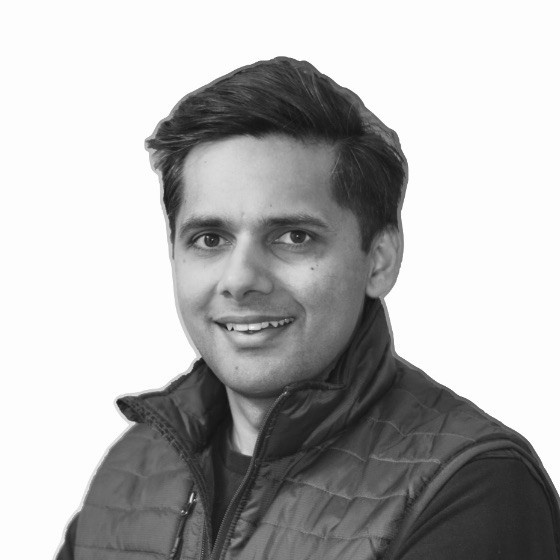
Sumant Sharma
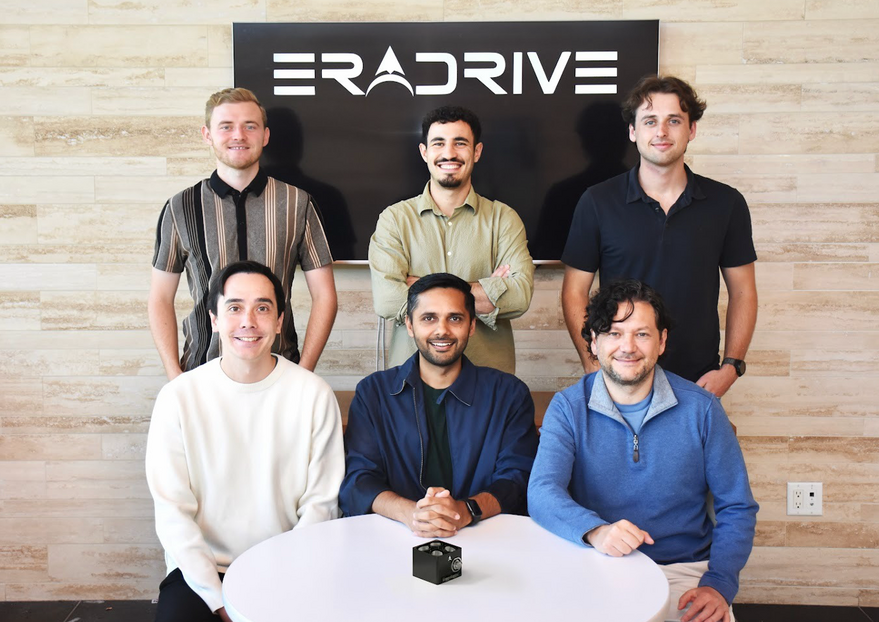
CEO, EraDrive
No items found.

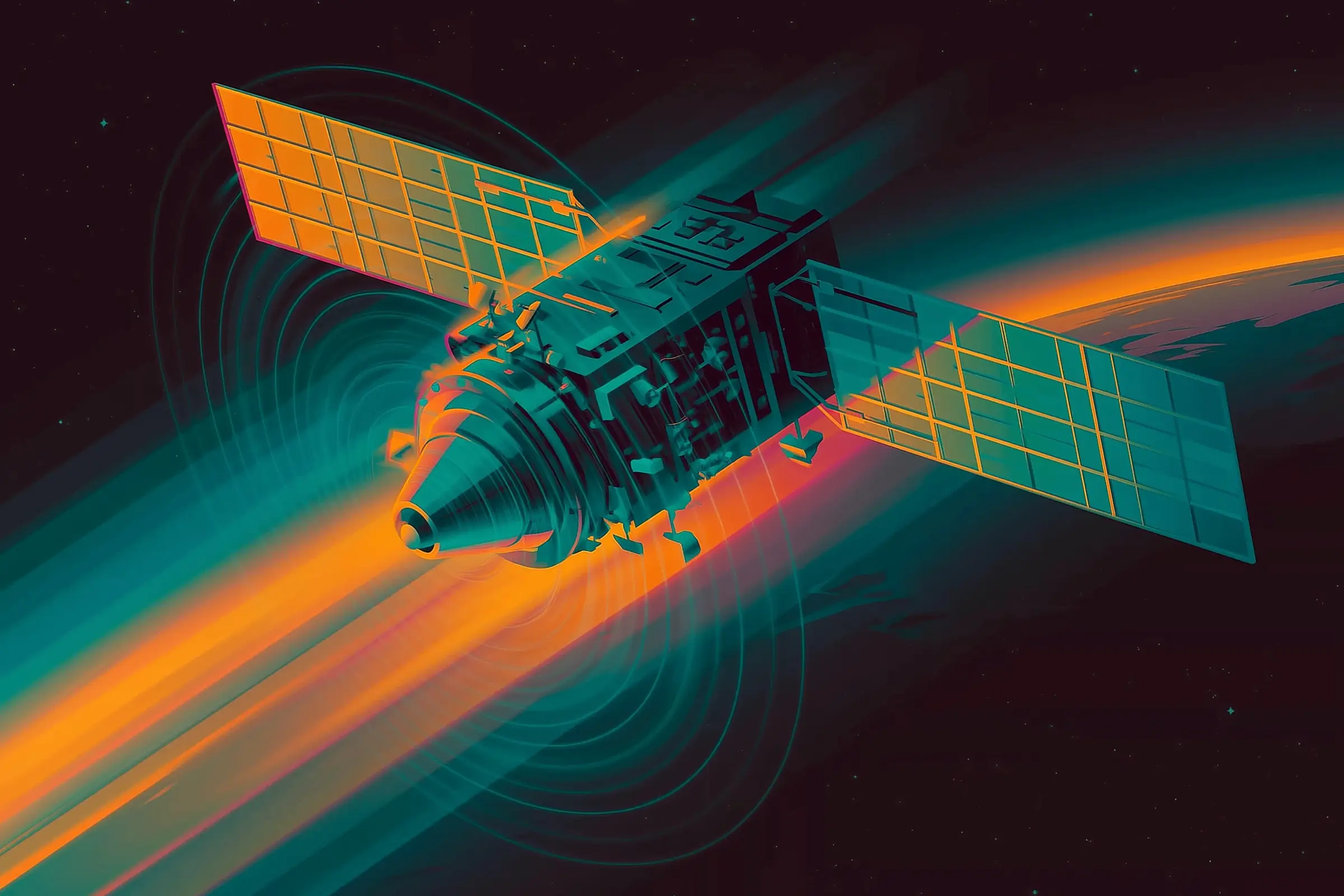
Sumant Sharma, co-founder and CEO of EraDrive, joins Mat to explain why the satellites circling Earth today are effectively blind and micromanaged from the ground, and why that model breaks the moment constellations scale into the thousands. EraDrive spun out of the Stanford Space Rendezvous Laboratory in 2025, but its core vision-based navigation software was already flying first, demonstrated on four NASA CubeSats as part of the Starling mission, the world's first instance of multiple satellites navigating relative to each other using vision alone. That reverse order, technology in orbit before incorporation, became the foundation for a $5.3 million seed round and five active customer contracts spanning civil, commercial, and defense work.
Sumant lays out the three problems EraDrive solves: a coordination crisis as roughly 30,000 tracked objects head toward 60,000 or more within five years, a contested domain where adversary satellites jam and shadow US assets on a weekly basis, and commercial applications like orbital data centers and in-space manufacturing that simply cannot run with a human in the loop. He argues that autonomy in space is not optional the way it is for cars, and paints a future where a handful of engineers steer a million satellites by typing mission intent and walking away. Every captain eventually has to let the swarm steer itself. The conversation closes with hard-won fundraising advice for hard tech founders: sell milestones, not vibes, and let revenue and signed contracts do the talking.
"EraDrive builds self-driving technology for spacecraft. We are building the software and the hardware that lets satellites figure out what they are, where they are, track objects around them, and maneuver without any human controlling them from the ground."
"We're not even at the Roomba level of intelligence where you send them on a task and then they go complete the task and they let you know. Most satellites today are effectively blind."
"Where autonomy today for self-driving cars is an option, autonomy is not optional for space. When you have a million satellites in orbit, you do need automation and autonomy happening on the edge."


Mat Vogels (00:14)
Hey everybody, welcome to another episode of Pirates Only, a podcast where we interview early stage founders to learn more about their journeys, the spaces that they are they are building in, and everything in between. And today I have a very special guest, a portfolio company and fellow black flag founder, which is always special and a treat for us,
Sumant Sharma, the co-founder and CEO of EraDrive You were Black Flag, what what batch were you?
Sumant Sharma (00:45)
right, sir. I was in the second cohort.
Mat Vogels (00:47)
That's right. Cohort Bash Number Two. ⁓ we're actually working on Bash Number Three right now and very excited about the companies that we have coming through there. But thank you so much for being on today. Could you give a quick background on yourself, what you're building, and then we'll go from there.
Sumant Sharma (01:04)
Sure, nice to ⁓ nice to be on this podcast, Matt, and thank you for inviting me. my name is Sumant. I'm one of the three co-founders and the CEO of EraDrive. EraDrive builds self-driving technology for spacecraft. We are building the software and the hardware that lets satellites or multiple satellites for that matter, figure out what they are, where they are, track objects around them, track other obstacles around them, maneu without any human controlling them from the ground.
Our company spun out of the Stanford Space Rendezvous Lab ⁓ in 2025, last year. And our core technology today is flying on four NASA satellites. And really we started the technology. We started the company once the technology had already started flying in orbit and and did it in reverse compared to a lot of other startups.
Mat Vogels (01:49)
I love that. We'll dive into each of those things individually. so you started just about a year ago. How much capital have you raised so far? Do you mind sharing that?
Sumant Sharma (01:56)
Sure, we raised our seed round in November, ⁓ five point three million dollars as part of that seed round. ⁓ Harpoon was one of the investors in that round.
Mat Vogels (02:04)
Yep. And then how big is the team total? You mentioned the three total co founders. How big is the team?
Sumant Sharma (02:08)
Team today is 12 people. We have 10 full-time folks and two summer interns who just started last week. And we're based here in downtown Palo Alto.
Mat Vogels (02:14)
Nice. That's fun.
that's perfect. Perfect spot for it. I I feel like the the Bay Area is, you know, oddly enough, the underdog it seems like for aerospace, but it is certainly not on the AI side. You kind of play obviously a a little bit in in those two worlds a little bit. do you feel like it's it's kind of an underdog space? I feel like most of the aerospace talent we see in, you know, Elsegundo or even in Colorado and Long Beach and those places.
Sumant Sharma (02:42)
Yeah, yeah, for sure. I I think when when we talk with potential candidates, we end up interviewing a lot lot more people who are in LA right now in or LA area or in Colorado than we talk to folks in the Bay Area. It probably ranks as the third biggest hub, I guess, for school. but at the same time, ⁓ you know, when I I'm sure we'll get into it at some point, when we were starting to think about Eridrive, or I was thinking about my you know, starting my own company.
Mat Vogels (02:57)
I'm sure. Yeah.
Sumant Sharma (03:09)
I was following the footsteps of Dan Birkenstock, who started Skybox and and that was started right here in the Bay Area as well. So in my mind, I I've always felt like the Bay Area was the center of space before, you know, my horizons expanded and I realized, wait, hold on, Colorado and LA are much bigger, bigger in terms of ⁓ let's say the number of people who are currently employed in in that industry.
Mat Vogels (03:29)
Yeah. And you mentioned that you were a spin out out of Stanford. We we chatted kind of before we hit record. We are seeing a lot of founders certainly applying to to Black Flag and elsewhere. They're following in similar footsteps, whether they're at an a lab or a university program and they're taking their their research or some of the things that they've been working on and looking to spin it out into a real company. Could you talk a little bit about what that experience was like and and spinning that out of ⁓ of Stanford?
Sumant Sharma (03:49)
Yeah.
Sure. so my experience and and it mileage may vary for for folks, right? So my experience was I started at Stanford as a PhD student. I wanted to work in in autonomy and and in space. And at the same time, Simona D'Amico, who ended up being my PhD advisor, now also my co-founder and chief science officer here, he was starting out the Space Rendezvous lab. and this was back in twenty thirteen ⁓ when
Deep learning or neural networks weren't really quite popular outside of just ⁓ let's say problems on the internet or or perhaps self-driving. so my my core work was to see how we could use this technology for space. And as part of my PhD journey, me and several other PhD students who we started working on very complementary technologies. and our third co-founder today, so Justin Krueger and I actually shared ⁓ the same lab.
and we we were there at the same time why when he was working on far range navigation as a technology, I was working on close range navigation as a technology for for spacecraft. and back in late 24, early 25, when the idea for aerodrive came together, it was very natural for the three of us to to collaborate, where you know we had Simone, the visionary, and and the the pioneer for a lot of formation flying and rendezvous technology that's out there today in the world.
we had Justin, who who's the pioneer for far range navigation and an architect for the NASA Star Fox experiment, and myself who had done a lot of close range navigation work and then had gone out and worked at Boeing for a for a while. ⁓ so it was very ⁓ collaborative and complimentary for us to get started. The process to cut to the chase was ⁓ very simple. You know, you worked with the university ⁓ to figure out some core IP or core technology that you want to license out.
And many universities, ⁓ I would say majority of the un R R D heavy universities have some sort of a technology licensing department. And you work with them, ⁓ they're very you know collaborative. In fact, when they see alumni or folks inside the university wanting to branch out and start a commercial venture. and and that's what we did with Stanford. And and they do these kind of deals, I guess, ⁓ with a lot of
Mat Vogels (06:02)
Yeah.
Sumant Sharma (06:02)
companies, a lot of spin offs I'm sure ⁓ that come out of Stanford and other universities. So it's very
Mat Vogels (06:07)
Yeah, Stanford's gotta be one of the
top universities in doing that.
Sumant Sharma (06:10)
Yeah, so in fact I mean their their process was very straightforward and and templatized, and that's what we followed.
Mat Vogels (06:15)
Do you think that that's gonna be a common trend over the next few years as folks make that leap from kind of use university programs into startups and those types of things?
Sumant Sharma (06:25)
I I think so. ⁓ when I was doing my own PhD and I was in grad school, I was seeing a lot of people just leaving university and and starting their own thing. I now see a growing number of those cases or examples like that. And I I think a primary ⁓ driver for that, at least in our our industry, is the just the the core launch prices that are just coming down and enabling
a lot of new space companies to start up and and to and to be part of that ecosystem in either in the launch side or on the operation side or or or developing some payloads or some technologies or some applications on top of everything. But even outside of space, ⁓ looking at other industries, you know, this is the golden period, I wanna say at least ⁓ b ⁓ the the number of years of experience that I have where building something or developing something has the the the barrier to entry has
has fallen very much due to AI and ⁓ and developing and building things is has become cheaper and easier. So folks who are are in the trenches, who are who are developing core technologies outside of space even ⁓ are are finding it easier to let's say building out a prototype very quickly and then getting it out into the market. What has obviously not become easier is still the go to market side of it and
And and getting the buy-in from customers and the ecosystem for which that you're for which you're building your your product. So that that side of it is still the same, right? You still need to have ⁓ a a value proposition and customers that really need the thing that you're developing. but outside of that, let's say ⁓ prototyping things and building out the first version of something has become easier and easier.
Mat Vogels (08:01)
Yeah.
That's amazing. I think, yeah, go to market is gonna continue to be, I think, one of the hardest wake-up call isn't the right word, but we see a lot of founders in their early stages where they they think of it as an afterthought. And then when it comes down to actually going to market, it's a it's a rude awakening. ⁓ and and we'll we'll definitely dive into maybe some some tips or things that you've seen there. But I'm kind of curious on the founding story side, you mentioned that you had the interest in space, certainly in AI. This is kind of a combination of those two things. Was there
A unique insight or something that kind of clicked that that kind of led you into thinking with Aerodrive that this is what you wanted to do. We kind of mentioned before this, before we hit record, you know, the idea of founding a company is this idea that you want to go on a long tenure journey. I suppose why is is this that problem that you wanted to go on that journey for?
Sumant Sharma (08:49)
Yeah, in fact, we've been on on this journey for the last 15 years or so. So we've already been we've we've been on that ⁓ 10 plus journey, 10 plus year journey. The the core spark for us was really ⁓ getting our software launched on the NASA Starling mission. This was this is this is a predecessor to Aerodrive where when was at Stanford still at that time.
Mat Vogels (09:07)
This was at Stanford when you did this? Yeah.
Sumant Sharma (09:11)
We we wrote some software that ended up being run as an experiment on four NASA CubeSats as part of the NASA Starling mission. And the the spark or or the or the idea for error drive came from when we started to get the get the flight results from these experiments.
Essentially the core technology that we're building on top of is vision-based navigation. And that is exactly what we were demonstrating for NASA Starling. In fact, this is NASA Starling is the world's first instance of multiple satellites navigating relative to each other using vision only, no other sensing modality used. And the driving software behind it is what we currently have at Aerodrive and developing further on top of.
so what we ended up realizing when we started to get flight results from it is that not just single spacecraft or single satellite systems can be driven through autonomy, but obviously you can have multiple satellites be automated and autonomous and do high-level mission objectives just using vision-based navigation. So that was the core finding and learning from it. But on top of it, we realized that when you're using cameras and vision in space to do navigation, you're not just
imaging and and looking at what's what are the other who are the other participants of your constellation, but you're also you end up imaging everything else that's in the background, whether that is the Earth or whether that's the moon or whether whether that's other satellites. And and you can actually
Use that information to your advantage to enable better navigation, but also to solve problems of space traffic coordination and management. And also use that same technology to enable governments to use that for defensive purposes where they are interested in space domain awareness and they want to have essentially real-time knowledge of every asset in space and and where they're located and what they're doing and and what they might do. And so the same core technology, which is
Vision-based navigation can be used to solve space traffic coordination on one side and can also be used to solve space domain awareness and autonomy at scale and automating mega constellations in the long range. So that was a core idea when we started to see these flight results, and that's what drove us to incorporate the company and to start this as a venture.
Mat Vogels (11:20)
Yeah, I love that. I mean, you were it's rare, I think, that you can go from before starting a company, have that type of experience in in having something in production. In this case, production is in space, and seeing some of it come true. so that's an incredible experience and and obviously something that a lot of founders could could aspire to do. One question I have, so this is kind of the stupid question for me, is the technology valuable because is it
Is it there's just a lot of stuff floating in space and then there's a lot of debris and things moving around? So is it the idea that you need this technology to navigate and to move around so that you know things aren't going to be crashing into each other? Or is it, andor is it also just coordinating even long distances? Like is it is it important that you have to remain a certain amount of distance, even you know, miles, hundreds of miles, I'm not sure, in space, and the ability to move autonomously is important there as well. Is it a bit of both? Is there one problem?
Yeah.
Sumant Sharma (12:14)
⁓ no, I I mean it's not a stupid question at all, first of all. so in fact ⁓ what what what your what you're understanding is exactly right. The core technology ⁓ what the solution that we have ⁓ goes on to solve in fact three problems. The first problem is the problem you you you touched on, which is because of falling launch prices or because of a lot of interest in in building out space infrastructure, there's just a lot more objects in space.
today as compared to a few years ago or even a decade ago. so there is a problem of space traffic coordination and management in general, which is a problem of okay, you have multiple satellites flying around in orbit and they may be flying exactly in opposite directions. So this is ⁓ objects which are potentially 16 kilometers a second approaching each other. So you need a lot of exactly so in that case you know you need to not only know what's
Mat Vogels (12:59)
Sixteen kilometers a second, that's fast.
Sumant Sharma (13:05)
close to you or around you, but you need to know with a very high amount of precision and accuracy where other objects are thousands or tens of thousands of kilometers away. And there's nothing like flight radar 24 that's available today for for space companies or space operators. The the way space traffic management or coordination is done today is through the US Space Force, the 18th Space Defense Squadron tracks
objects in space using ground-based assets that they themselves operate or they have other companies operate for them. They collect all of that data on the ground and then they run conjunction assessments or simulations of where things may be in the future. And once they detect that two potential objects may be in on a collision course, they send out emails. And then you and I, if you have a company and I have a company have
Mat Vogels (13:47)
Mm-hmm.
Sending slacks like ⁓
no
Sumant Sharma (13:52)
We we
get a message saying, hey, you guys should you guys should talk so that you can plan our ⁓ how to do this conjunction assessment. And in that case, you know, the the the ideal case is that you're a US-based company with propulsion on board, and I'm also a US-based company with propulsion on board. We talk to each other and we we both do maneuvers, or one of us decides to do a maneuver. the worst case scenario is that ⁓ you may be on the other side of the world on in a in an adversarial let's say nation compared to the US.
And you may your satellite may not have any propulsion on board. And in that case, ⁓ there is no way for me to communicate with you or for you to even take an action if there was a way for us to communicate. In those cases, you do need intelligence on board, you do need vision-based navigation on board to navigate with objects which are tens of thousands of kilometers away, all the way down to a few meters away. ⁓ so that's one problem. The second problem is ⁓ which is the problem of space becoming a contested domain. It used to be that space was for a
for a number of decades ⁓ an a a place for commercial activity. for sure, space got started or the industry got started because ⁓ the US and the USSR were in a in an arms race with each other. ⁓ but in the last few years, last few decades, China and Russia have increasingly started to maneuver their satellites close to US-based assets. and there are reports of this happening every week, every month where
⁓ US or or ⁓ US assets are being visited by Russian or Chinese assets close taking images and China has demonstrated technologies to to destroy satellites in orbit. So the US is obviously
Mat Vogels (15:24)
Is that happening right
now, really quick, not to interrupt you, is that how much of this is happening right now where there are satellites or objects that are essentially being blown up in space in in nefarious ways?
Sumant Sharma (15:34)
⁓
So so this doesn't so p people ⁓ or countries don't do this routinely, but they demonstrate the capabilities and and that becomes a new new ⁓ let's say weapon on the war game board that they can then use. ⁓ and and China has demonstrated this technology, Russia, India, a few other countries have demonstrated these technologies, and and the threat of it is is quite real. What is what does happen?
Quite frequently on essentially on a on a weekly, monthly basis is Russian or Chinese satellites jamming using RF, GPS, or other technologies in orbit, which inhibits US government satellites or US commercial satellites to routinely do their operations. So in those cases, the the government wants to have a methodology or a technology that enables them to navigate in space.
And to react in space on at a moment's notice, not on a week's notice or a monthly notice. So in some cases, there are flybys that happen from Chinese satellites ⁓ to US satellites. And it's only after the flyby has happened that the US ends up realizing that, there's something like that as that has just happened because there's no on-edge intelligence or on-edge autonomy in play. so so that's the second problem. and then the third problem is of
Our customers, commercial customers primarily who are embarking on commercial applications which require autonomy on the edge, specifically in space assembly and manufacturing, whether that's of pharmaceuticals, whether that's of orbital data centers, whether that's of putting together swarms of satellites to do telecommunications or or or space-based solar power, all of these applications they require either
hundreds or thousands of satellites or they require satellites to precisely navigate around each other in a way which is not possible if your core navigation technology is ground based or if your core co control loop is ground based. So you do need to put autonomy and automation on the edge. You do need vision based navigation on the edge for some of these core applications, which are just not possible without without autonomy on the edge. So those that those applications also benefit from the things that we are developing at Eerodrift.
Mat Vogels (17:43)
That's amazing. ⁓ I think each one of those things obviously are are ⁓ incredibly large business and opportunity. could you on the on the first problem, do you have an idea? What is like the number? Is there a number that people would be surprised with at how many objects are currently floating around in space?
Sumant Sharma (18:00)
⁓ so objects more than ten centimeters in size, things which are which are ⁓ problematic to let's say to to to our to our customers, there are about thirty thousand of them. So that includes all active satellites, all defunct satellites, that includes rocket bodies, ⁓ there are thirty thirty thousand of them and and then if you start to decrease that number, if you go down to five centimeters or two centimeters or one centimeter, the the number rises exponentially.
and in the future, and this is this is just what I'm talking about, present, right? And and and you can you can go take a look at news headlines from the past where the ISS has to take ⁓ evasive maneuvers because there is a ⁓ there's a leak somewhere because of tiny, tiny objects that come in and and hit the ISS and and then there's a leak and then the astronauts have to to take shelter. Those types of objects are obviously there are way more in number and there is ⁓ and then there are meteorites.
Which which come and visit the Earth, right? So there's our millions more objects that that we have to track in space. that's one number. but then if you look at what's happening in the future, you have SpaceX filing for launching one million satellites in orbit. Amazon Leo, for example, they ⁓ they plan to launch about 10,000 satellites.
And then there are 50 other mega constellations with hundreds to thousands or tens of thousands of satellites that they want to launch in orbit. so credible estimates, if you look at in the next five years, ⁓ we're roughly gonna double from 30,000 to about 60 to 70,000 satellites in orbit. So that's that's the curve that we're on. And it's only gonna accelerate with Starship coming online with the launch prices going from thousands of dollars per kilogram to let's say hundreds of dollars per kilogram.
You're gonna have players like StarCloud come into the picture. You have you'll have players like s ⁓ you know there are fifty other mega constellations I could name here, that are gonna come into the picture because of the launching ⁓ or or the falling launch prices.
Mat Vogels (19:48)
Yeah, that's incredible. From on your technology side, and apologies if I missed it, is this something that you can retrofit essentially onto any object that's already there? Or do you have to work with these satellite manufacturers ahead of time to integrate your your product in, or where does it lie kind of in the integration process?
Sumant Sharma (20:06)
Sure. So so generation one of our product today is ⁓ actually something that we can retrofit to any satellite which is which may already be in orbit. In fact, of our five active contracts, three of them are are customers who had already launched prior to signing the contract on with Aerodrive. And in in those cases, we are uplinking software that runs off of
Commercially available off-the-shelf cameras or star factors that these ⁓ customers are already flying and and using their flight compute and using their processors. obviously, Gen 2 and and beyond, we are ⁓ we are putting together some of our own hardware, integrating hardware with our customer satellites, which are going to be launching in in the future. and in those cases, our Gen 2 and Beyond autonomy obviously can do a lot more because of the fact that we can
design some of this, ⁓ some of these cameras, some of and and and and pick our own processors and pick some of our own comms modules. And in those cases the capabilities that we offer to our customers are a lot more compared to the Gen One of the product that we are selling today.
Mat Vogels (21:06)
Yeah. I I think that ⁓ the fact that you have that flexibility is is a superpower and that you can continue to to scale up there. Let's talk a little bit more about like the space industry in general. I I mentioned to you ⁓ earlier that I think space is arguably the the hottest or second hottest category for
For startups right now. AI, like I said, unfairly although you could say you're an AI company too, so you get the maybe the best of both worlds. But pure AI, I think, kinda steals the cake as of right now. But I think space is is is the sector that's right there is being one of the most excited to
build in right now and certainly from an investor side, it's one of the more exciting ones to invest in right now. Could you talk a little bit about how you're feeling just in the industry in general as a founder, both from you know the customer demand you're seeing, the the talent that's wanting to work in space, and then even from a from a fundraising standpoint.
Sumant Sharma (21:59)
Sure. ⁓ and I'll just mention that there is this third hottest space that we are also hitting, which is defense. So we we sit at the intersection of AI and space and defense. And these are all ⁓ three very active domains of ⁓ activity, whether that's on the commercial side or on on the investment side or on the government side. So we're definitely seeing a lot of demand signal from commercial players and and government players. I would say
Mat Vogels (22:06)
Yeah.
So true.
Sumant Sharma (22:25)
⁓ a surprising fact here, maybe I I I don't know if other participants of your podcast have said this in the past, but a lot of the space activity and a lot of the space demand is coming today from the government directly or through government backed programs. so it could be that we are we are we are selling to either directly to the government or we are selling to a prime contractor that is then ⁓ serving the government at the end. so a lot of that demand today is is coming in in
And when I say demand, I talk about dollars of of revenue today. that's coming from the government side. on the commercial side, that's where the demand is exponentially increasing in in the future for us. even though if you look at the US Space Forces budget or the proposal for the budget, it has increased roughly 77% compared to last year. and it's only gonna go up from there looking looking at the trends from the past.
the the investment coming in from the US Space Force and Department of War, Department of Defense is definitely increasing. But then if you look at the amount of investment coming from VCs or or private equity firms into space, that's also increasing ⁓ and much faster in comparison to, let's say, how fast the government is spending in in the space ecosystem. so we are definitely feeling that. In fact, we sell into
not just civilian space. So obviously we have ⁓ our active contracts with NASA. We have some active contracts with defense prime so prime contractors who are then selling it to the Department of War. we also sell directly to commercial operators who have nothing to do with the with the government or defense. but then the dollars of if you just compare the the raw dollars then I think eighty to ninety percent of it is coming from the first two ⁓ compared to the third.
Mat Vogels (23:59)
Wow. Yeah, so like you said, you have the three RGB three hottest spaces right now all on on your side, besides kind of what what you're building, and you can pick from any of those three spaces, but maybe a combination of the three. What are some of the other technologies that you're excited about in in those domains that you're you're kind of playing in?
Sumant Sharma (24:18)
Yeah, for sure. I I I do see a lot of activity in in-space assembly and manufacturing in general, whether that's companies building whether whether that's companies doing in-orbit servicing like Astroscale or whether that's companies doing in-space assembly and manufacturing of pharmaceuticals, for example Barda, or or or companies like StarCloud that are planning to build orbital data centers. All of these
⁓ applications of of how all all of these applications are or all of these business models let's say weren't quite possible a few years ago or five years ago but these are very credible business models today there's a lot of demand for ⁓ again from government and from commercial users for telecommunications or or or space-based solar power or space-based manufacturing of pharmaceuticals.
which these companies are are going to to sell into and are selling into today already. So those are these are very promising and very exciting to me. And these are exciting to me because you know my start was as a as a PhD student back in the day in in the Stanford Space Rendezvous lab. And my the the the project that I worked on was closed ring navigation and and specifically to do in-orbit servicing. And when I was working on that technology,
when I was working on those algorithms and and building up the data sets to train machine learning models. At that time it felt like in-orbit servicing would be great, but it's it was mostly as tech demonstrations. But today, these are there are real contracts being signed between commercial entities wanting to pay for in-orbit servicing. So it's it's very close to heart for me. it's it's it it it shows a future for space where there's a lot of collaboration and and sustainability. so instead of
satellites being thrown in like ⁓ you know junk and and then collecting in orbit. people are thinking about hey, how do we develop a satellite which becomes a platform that we can then build on top of and then and then service and continue to use as infrastructure. so that's super exciting to me. the other things that I'm super excited about, like everybody else in space, I'm super excited about development with with Starship because that's really gonna reset ⁓ again
This for the second time, the economics of launch prices and and and costs for everybody else wanting to get into space. and the third technology I'm super excited about are optical intersatellite links or or space-based compute, because that also unlocks some applications for us where we could we could collaborate and and and and and train and and deploy models in orbit without having to to really to send anything down down to the ground.
Today our architecture allows us to downlink a very small amount of telemetry and use that to really train our models. as compared to a lot of other approaches where you do really need access to a lot of images and and telemetry. our models already downsize the amount of telemetry that we need ⁓ and and really ship the most important bits of pieces of data that we need on the ground. But in the future, when you have
Orbital data centers running in orbit, there would be no reason to to send data down to the RAM. so I'm really excited about that.
Mat Vogels (27:14)
Yeah.
Yeah, that's we're ⁓ investors in in StarCloud at ⁓ at Harpoon. And I think one of the conversations that we've had with folks when they think, well, is that really like the most like the best way to have data centers is to to send them into space? And part of the conversation, the one of the reasons I'm so excited about what they're building, is that the the support that they're going to have within space itself. Like the the industry and the infrastructure being built in space requires compute too. It's not just that the data centers are being built there to then
send compute back down to Earth, although that w that will happen certainly. But the fact that there is a need for high powered compute in space that isn't being solved, it's it's obviously a very perfect match, especially for for companies like yourself.
Sumant Sharma (27:58)
For sure, for sure. I mean right now we have to worry about ground stations and we have to worry about where the how far the ground stations are from, where exactly the data is stored and how quickly we can ⁓ we can we can uplink the algorithms back up and in future, obviously with with with the compute layer already in space in situ, that whole chain will be cut short as well. So I'm I'm super excited about that.
Mat Vogels (28:21)
Yeah, I love that. When you think about the next five, ten, fifty years even with space, we can get a little sci-fi here if you want to, but I always find that folks that are building in space tend to think a lot about the sci-fi natures of space and like where we're going and all those things. What are some of your thoughts on may that might surprise some of the people listening here that maybe aren't as in tune with space? Where are we gonna be in five years, ten years, fifty years? Take it as long as you want on ⁓ on on the space side.
Sumant Sharma (28:27)
Let's do it.
For sure. I I I think I would probably start from popping a a ⁓ a a notion that a lot of non space people have about space, which is that which is that satellites already ⁓ you know operate by themselves and satellites already have some systems to to coordinate amongst each other and make sure that they don't run into each other and and satellites already have like automation built in on
That's not the case today. so I just wanna pop that right now. So where we stand today is in fact ⁓ how
Mat Vogels (29:15)
Kinda dumb. Like
the satellites are kinda dumb today.
Sumant Sharma (29:17)
Yeah, we're they're not even at the the Roomba level of intelligence where, you know, you send them on a task and then they go complete the task and they let you know. we're at the stage where ⁓ you know how space operations had to be done back in the day when there were a few satellites in orbit or or a company would send up maybe five to ten satellites and they would have a team of ⁓ let's say quote unquote fifty GNC engineers, autonomy engineers who would
Mat Vogels (29:20)
Yeah.
Sumant Sharma (29:41)
not just develop the software but then also would be responsible for operating the satellites in orbit. So they would continue to be let's say babied along the mission and once the mission was done you know that's that's the end of ⁓ life of satellite one and then you go operate satellite two. so in the future and and when we talk about you know what's gonna happen in the future satellites will not just be acting as a single entity
There will be mega constellations, just like how there's a mega constellation already called Starlink, there will be 50 other mega constellations which are which are all acting and deciding together and and and swarming to act as a single system. Autonomy would at that stage become, let's say, the operating layer for the large constellation. So instead of 50 GNC engineers ⁓ today operating, let's say 10 satellites in orbit.
There would be 50 engineers on the ground operating a million satellites in orbit. Where you know autonomy today is let's say for for self-driving cars, it's an option, right? So you can still get in your car and drive around ⁓ in your car. Autonomy is not optional for space. When you when you'll have 10,000 satellites in orbit, when you have a million satellites in orbit, you do need automation and autonomy happening on the edge such that you can you can really abstract away the the the
the routine operations that the satellites are doing. And in some cases also describe at a high level the mission intent for the constellation. Close the lid of your laptop and walk away and let the swarm figure out how to act. So so that's one of the ⁓ one of the ⁓ the the storyboards I like to use with our customers is is exactly that. And and in fact we have now prototypes built in-house at Aerodrive where we are doing where we take natural language from ⁓ our customers
They type that in and then and then they see the aerodrive cloud software and and and aerodrive edge software take that and and and figure out exactly the GNC control commands that need to be run on the satellite, and then close the loop where you get the data coming down from 50 satellites into that same set of models and algorithms, which then alert the user about things that they need to be paying attention to. and then
that the user can then take an take an action on based on that. So that's the future that we're building towards where you have constellations being run by a few people in sort of the other way around today where you need a constellation of people on the ground managing a single satellite in order.
Mat Vogels (32:02)
Yeah, I didn't I didn't even think about the the human scale. I mean the inevitability of AI and autonomy in space is a requirement. Because you're exactly right. You mentioned already, I mean, Starlink alone with or or SpaceX with a million satellites. There will be millions of satellites in space. And if it's already a multiple number of people to satellites, w how we we can't keep up. We can't train millions of people ⁓ to to help in the in that process. So at that at that point
Sumant Sharma (32:27)
And and that's just on the routine
operation side. What happens to
⁓ in orbit servicing or refueling of satellites of high value targets and assets that would have to be done at scale. So if you have a million satellites and sure some of them are being put up because they're naturally gonna have drag and and then they're gonna deorbit but you'll still have high value assets in in higher orbits where they need to be serviced. and you still have the issue of space being contested and how how does how do you put a data center in space and and really not have a security guard out there to to
Mat Vogels (32:34)
Yeah.
Sumant Sharma (32:57)
watch out of who's coming close to your data center and and who's jamming RF signals around it. So you you'll need autonomy for that. And and this is just around the Earth. And when we talk about the moon,
attention today is in the ecosystem. How do you set up lunar colonies? How do you set up constellations around the moon and then eventually around Mars when every satellite requires, you know, somebody babying it from the Earth. So you do obviously need some autonomy for that as well.
Mat Vogels (33:24)
It's I'm watching ⁓ for all mankind right now on ⁓ on Apple TV. Have you have you watched it?
Sumant Sharma (33:28)
no.
Yes, sir, I have, yeah.
Mat Vogels (33:31)
Yeah.
So it's I'm I'm only in season three. But it's one of those it's it's such a fun thing to see from a from a progress standpoint where we we could be heading as we start building out on the moon and potentially Mars. It's it's an entire infrastructure that you know, with potentially thousands or or millions of people, and obviously Elon Musk, it's civilizations of people going into space and the infrastructure and like what you're building and and all these technologies, it's
We're we're so close, like it feels like we can understand a lot of it, but to scale it up in practice is just is just gonna be a fascinating, you know, decade, decades to to see.
Sumant Sharma (34:08)
For sure, for sure. And and and I I I can't underline it enough that, you know, when when we have lunar colonies or when we have Martian colonies, there w the the number of machines around the number of humans is like the ratio is gonna be
you know, much greater compared to how we operate on on the Earth. And ⁓ and in those cases, you know, infrastructure would have to be built out to to have a GPS equivalent around the Earth or around the moon and GPS equivalent around the Mars and ⁓ and and and so on and so forth. And and same thing goes with surface level robotics and surface level autonomy. and ⁓
You know, I now I'm thinking back to all of the seasons of for all mankind and thinking about all of the the the machines and the robots that they have there and and all of that have some level of autonomy and automation in there as well.
Mat Vogels (34:53)
They do. Yeah,
i i to your point, i it's a
It's a requirement. It's just like there there's gonna be the multiple of robots to humans or machines to humans is is kind of unfathomable. And so you cannot expect a single human to operate all of those different pieces around it. it is, it's truly an ecosystem being built in space from the ground up. And that's part of the reason that I think over the next decade or so it'll continue to be one of the most invested into spaces. Not only like I mentioned earlier, VCs love large markets to just throw money in.
To, but I think that there's a true economy and a revenue generating economy that's here. It's not just for science exploration. the the ecosystems that are gonna be built are gonna lead to an incredible breakthrough. So you mentioned with Varda and some of the the manufacturing aspects that space allows us to do. it is gonna be truly a decade of of space exploration for us.
Sumant Sharma (35:46)
For sure.
Mat Vogels (35:47)
Speaking on the on the founder side of space, we always have founders that love hearing from other founders, especially those that are building in in hard tech. What is some advice that you would give to founders listening right now that at the very beginning of their journey and and thinking about making the leap? Maybe they're in a program like Stanford and they're thinking about joining or starting a startup. maybe they're just kind of thinking about an idea right now. What advice would you give them in in maybe taking that leap?
Sumant Sharma (36:14)
Yeah, yeah, for sure. And I would again underscore it with the fact that we are still also in our early stages of the startup, right? So it's not like I have you know decades of ⁓ building up. We we totally missed it. I I'm not gonna ⁓ I I'm not I'm not lying here. We totally totally forgot about it in the middle of all of these customer contracts and and things happening in orbit. We we blew past
Mat Vogels (36:20)
Yes.
Started last year. Yeah. You're you' have have you celebrated the one year birthday yet or not even?
Ha ha ha.
Sumant Sharma (36:38)
you know, end of March is when we incorporate it and we we forgot to celebrate it. But I'm sure there will be more reasons to celebrate in the future. ⁓ but yeah coming up
Mat Vogels (36:45)
For sure. Yeah. Well, that's maybe one piece of advice is don't be afraid
to to celebrate the small things. ⁓ but yeah.
Sumant Sharma (36:51)
And we we say
that to each other every time and then we forget the next milestone. We we we say, you know, the next one we're not gonna forget, but then something happens and we're like, ⁓ this is you know, holy shit, this was this was last Friday. We should have celebrated. ⁓ no, I I think that's that is for sure. Like definitely ⁓ enjoy the journey because it's not ⁓ it's not every day is something unique and every day every day is something new and there is there are ⁓ the roller coaster emoji is the one which is the most
Mat Vogels (37:03)
Yeah, yep, exactly.
Sumant Sharma (37:17)
Use in our chat spaces at Aerodrive because you have the highest of highs and then the lowest of lows the next day. But apart from that, I think I I think to a persona that you painted, which is somebody in a lab, somebody at Stanford who is thinking about doing a startup. I I would say you know the the core piece of advice I got from
from from somebody who was ahead of the in the founding journey ⁓ compared to me was that you can if if you have an idea that you are convinced on and you have a couple of other friends or or engineer engineering folks around you convinced, don't let that be the sign of ⁓ dropping everything and and starting the company. make sure that you can go out and and convince
Ideally a customer, obviously, who who could who could say, yeah, I'll I'll buy your thing or I see your ⁓ proof of concept or I see your your V0 and I'm happy to sign ⁓ sign a contract. That'd be amazing. But at the very minimum, call up a couple of people or a couple of two or three people who are let's say on just on the edges of your ⁓ community of of professionals who are who are on the customer side.
and and convince them and and talk to them and hear hear their needs exactly how they would could be using your product or they could be utilizing your technology. because a lot of the people who are are of my persona who have the technology ⁓ figured out, they think and or I and I used to think that then we have everything, all of the all of the core things here and then I could just go raise money and then I'd build it out. In fact
When I graduated from from Stanford with my PhD back in twenty eighteen, twenty nineteen timeframe, I wanted to start a start a company doing on orbit servicing. And at that stage I realized that the technology may be there, but if you don't have a market, nobody's gonna give you a single dollar to to to go build the thing. So you have to have a customer, you have to have the the go to market strategy figured out, and and the and the gold standard of it is to the VCs, you know, you could always
tell them that hey look this is what the customers are paying us for and this is what the customers want and this is why we're building it. So convincing people outside of your core inner circle of friends or or engineers, I I think this is this is what ⁓ I would recommend and advise people. and other than that I think another small one is about when you are and this is something that we are doing right now at Aerodrive, once you have the founding team together
when you're hiring, I think do it slowly and method ⁓ in in in a in a systematic fashion. Really learn exactly what skill sets and and and folks that you need ⁓ and and marry you know three things which is one people who are in i excited enough about your your your industry people who are excited about working in startups and people who are excited and who would love to work with you as people so having those three things
come together is super important because if you only have let's say one stool ⁓ or one leg of the stool or two legs of the stool then it's it's very difficult to form a long term partnership. so in fact our founding team are a lot of the people that we worked with back in the day at at Stanford or or in the companies that we've worked in since. so these are people who are already in the industry, people who are excited about space, people who wanted to do a startup and and people who already love to work with us and we love to work with. So these are the
kinds of people that we are we are bringing on board and and who are choosing to work with us at aerodrive.
Mat Vogels (40:34)
Everything you said there is exactly right and also easier said than done. and props to to you and the team 'cause obviously I think that you are building a phenomenal team and are doing it the right way. So congrats on on
Just over a year worth of work, and I I have no doubt that that you guys are going to continue to have some success. Maybe the one more piece of advice is any founders on the fundraising side. we get a lot of founders that are currently fundraising, actively fundraising. Any specific feedback that you would give them ⁓ as it relates to raising around you obviously raised the the five million dollar round earlier ⁓ or last year. Any advice for fundraising hard tech founders right now?
Sumant Sharma (41:14)
Sure. I I would say ⁓ the one thing is to s to sell ⁓ milestones, ⁓ not vibes, is is what I would say. So map the fundraise to concrete technical unlocks, really look at it as a small business grant from the government, right? So SBIR, SDRs have been around for a for a long time. And this is exactly at least how I've learned VCs like to operate where they are paying for the next set of unlocks for the company and
Mat Vogels (41:21)
Mm.
Sumant Sharma (41:40)
people who are in the in the first fundraise, right? So the first time that they're raising, in most cases they only have a prototype or in most cases they let's say they only have an idea. so the the right storytelling is obviously part of it. So you have to have a really big vision ⁓ to to map out exactly what is happening in the ecosystem and and to map out how you'll address that market. so having that high level vision is super important. But then as you're fundraising, it's really important to to
Not just use smokes and mirrors to to sell vibes, but to really sell milestones and and be real about where the technology is today and where it needs to be for the next set of unlocks. So using that as part of the storytelling is good. I would say, you know, again, the thing that happened and and and worked for us ⁓ very well was ⁓ revenue and contracts preceding fundraising. so we de-risked using
Contracts with customers and and revenue that was already coming in the door. So the customer so for the VCs it was easy for us, easy for them to look at us and and say that yes, these are technical founders who know what they're building and they've been at it for a while. But at the same time they've figured out part of the go-to-market strategy by by convincing customers ⁓ to pay to use what we are selling to them. So revenues and contracts are the gold standard, right? And and if you have them, there is
there is ⁓ very little reason for VCs to to to doubt the storytelling. so having a huge vision, use ⁓ having a huge market to sell into, milestones for fundraising, so exactly what the what the what the funds will unlock is number two, and revenue and contracts from customers if if that's possible.
Mat Vogels (43:12)
That's that's amazing. I and I'll reiterate it from the on the VC lens, each of those two or three points as well. You need to have ⁓ a big milestone or sorry, a big vision, because VCs wanna know that if they gave you a million dollars, is that gonna turn into a hundred million dollars because you're gonna hundred X. So that has to be the the big vision. VCs also really like to know that they're giving you money that's gonna be put to use. so whenever you can say we're gonna use this money to hit this milestone, specifically that milestone.
Milestone is going to be doing XYZ. It's putting a prototype into space. It's securing this customer contract. VCs like to know that their money is being put to good use in and kind of quickly.
And the reason you need those is we need to identify and understand market pull. So knowing that there's an actual market here, because then obviously that that helps with the two other the milestone and the grand vision as well. So very important, exceptionally done. Suman, thank you for being on today. We covered a lot of information in a little bit of time. Thank you for going deep into space, talking more about what you are building.
Where can people continue to follow along with you and your team and and aerodrive? And and then we'll be sure to put links in the in the show notes as well.
Sumant Sharma (44:27)
Sure. yeah, we actively post on LinkedIn with all of the company and technology updates that we are having. obviously follow us on LinkedIn and we are continuing to hire. So please go visit aerodrive.space slash careers if there are potential folks who want to work in space and who want to work in a in a company which is
building the future for how mega constellations and satellites will operate in the future. Aerodrive is the place to be. So those are the two I guess cells I would have for the podcast.
Mat Vogels (44:53)
Yep. I mean you mentioned it. You're building in three of the hottest spaces right now with AI, space, and defense. what perfect place for ⁓ for people to go and tackle those problems.
Sumant Sharma (45:04)
Thank you so much, Matt, for for having me on. In fact, and thank you so much for the support through Black Flag and and all the support Harpoon is giving us.
Mat Vogels (45:11)
our our pleasure. You're doing by far the the harder job. So thank you for for allowing us to be on the journey with you. thank you again for for the time today. And I'm sure that we'll we'll chat here again soon. Have a good one.
Sumant Sharma (45:22)
Sounds great.
See that.