Highest Voted Nominees (So far...) (Note: These founders have not committed, this just represents nominations)
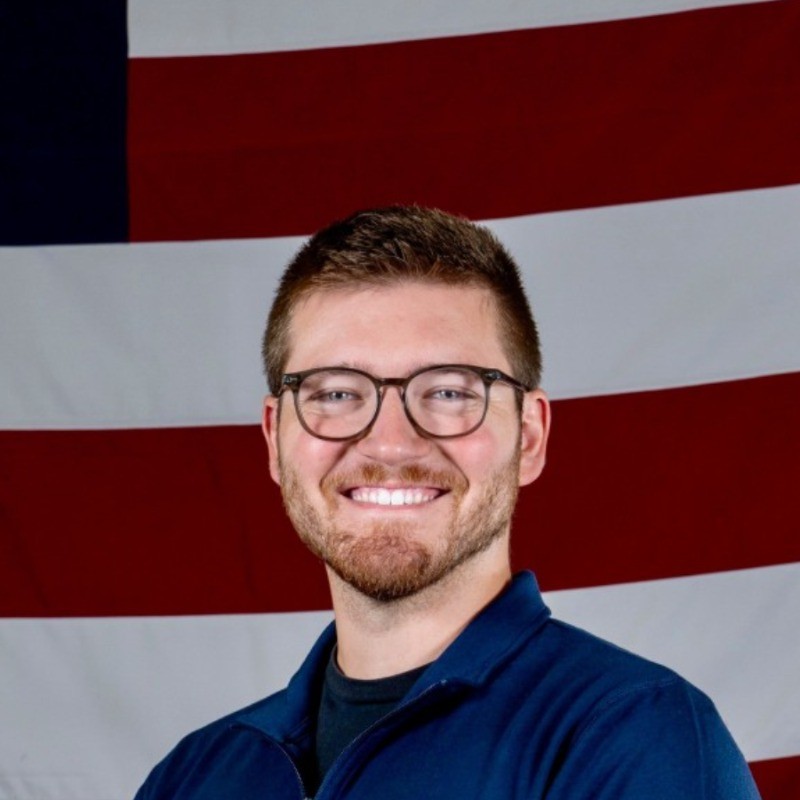
Chandler Luzsicza
Founder & CEO

No items found.

Chandler Luzsicza spent nearly five years at SpaceX as a propulsion engineer on the Dragon capsule and Starship programs before a brief stop at autonomous vessel company Saronic convinced him to found Galadyne in late 2024. Backed by a $4.8 million pre-seed led by Andreessen Horowitz, his nine-person Austin team is applying the commercial space playbook to what he calls an American missile crisis. The numbers are sobering: congressional war gaming estimates suggest the U.S. has three to eight days of critical munitions available for a South China Sea conflict, and replenishing just 20% of THAAD inventory transferred to Israel during a recent conflict could take three to eight years. The cost picture is equally grim, with per-round prices on legacy platforms reaching $13 million before a standard two-shot doctrine doubles that figure.
The root cause, Chandler argues, runs deeper than procurement dysfunction. Solid rocket motors depend on a single domestic ammonium perchlorate facility so hazardous that workers who handle it have historically been called "angel pushers," and standing up a new one would take a decade the country does not have. Galadyne's answer is to chart a new course entirely: liquid-propellant systems loaded at the point of use, so the production line handles only inert metal components and can scale toward gigafactory throughput, targeting tens of thousands of units within three to five years. The episode rounds out with hard-won advice for early-stage founders: build conviction from first principles before you pitch, and reach out to tier-one investors far sooner than feels comfortable, because the proof bar at large funds is often lower than founders assume.
"We don't have that many, period. We can't make that many to replenish if we were to go exhaust a significant piece of the stock. And they're all super expensive. Three things that are completely antithetic to how SpaceX solves problems."
"If we can't make 10,000 of them, I don't want to talk about it."
"I want to serve the country. I was never in the military. And I think that maybe me doing this is actually the best way I could serve the country than joining the military."



Mat Vogels (00:14)
Hey everybody, welcome to another episode of Pirates Only, a podcast where we interview early stage founders to talk about their journey, what they're building, and then maybe a peek behind the curtain of what is going on in the world, and also maybe a peek into the future. So today I have Chandler, founder and CEO of Galladine. You guys are building, I think, something that is not only truly
awesome from a technical perspective, but it's also very relevant to what is going on in the world today. We do have a role in this podcast that I do not like to do the introduction. So I'm gonna pass it over to you to make an introduction on yourself and maybe spending 60 to 90 seconds explaining exactly what you're doing and in the most layman terms possible.
Chandler Luzsicza (Galadyne) (01:00)
Yeah, thanks for having me, Matt. This is is great. Super excited to be here. So yeah, my name is Chandler. I former SpaceX founder and CEO of Galladine. I spent a little under five years at SpaceX working across the Dragon capsule program, as well as the Starship program, lead propulsion engineer on Starship. I was a responsible engineer of the Draco engine on Dragon, which is responsible for getting the capsule from low Earth orbit to the space station and back home in one piece. So spent a lot of time at SpaceX working on liquid propulsion systems.
And what we're doing at Gallaudin is trying to take all of those wins and technological approach in commercial space and go apply it to the missile problem set. So we're in an American missile crisis is how I like to characterize it. And I think we need drastically different solutions if we want drastically different results. So we're going and applying a liquid propulsion backbone to missile systems across strike and intercept and building the all up round to make it real. We got started up.
around October of last year, so we're still pretty fresh, but we're making what I would call lightning progress on what is a relatively large rocket and launch system to go bring this to the war fighter.
Mat Vogels (02:00)
I love that. We'll definitely dive into some of the technology and certainly the problem that you kind of highlighted, but really quickly for a lot of the folks, a lot of the founders listening, how much have you raised so far who were some of the investors that you have backing? there's some pretty impressive ones.
Chandler Luzsicza (Galadyne) (02:14)
Yep. So we raised a $4.8 million pre-seed back in, I guess November-ish timeframe. Andrius and Horowitz led with Aaron Price Wright as the partner on it. And also brought in Michelle Valls from PAX Ventures, and then a couple Angel Checks along the way from MVP Ventures and a couple other folks. We're crushing as hard as we can through this year and looking at maybe a raise later this year to go capture a seed round. But so far,
Just trying to make a small pot work for some pretty amazing things.
Mat Vogels (02:45)
mean, based on your progress, I have no doubt that you guys will be able to go out and raise something later this year. And you guys are, how big is the team and you are in Austin, is that right?
Chandler Luzsicza (Galadyne) (02:53)
Yeah, so we're
in Austin, Texas, right by the airport. The team size right now is right around 10. So I think right at nine. So we're getting pretty close to that magic 10 number, which is going to be super sweet. And really just capturing as many disciplines as possible. So we're well covered in what is generally a very multidisciplinary problem in rockets. You need electronics, you need structures, you need propulsion, need combustion devices, which is a different flavor of propulsion.
A lot of different people, a lot of different heads that need to each be extreme owners in their own right. we're, think, building a pretty killer team so far, so I'm pretty excited.
Mat Vogels (03:24)
Yeah, I've talked to a few companies that are building at least in similar spaces and you, the space you're building in is almost a mix between obviously like aerospace, things that go boom. It's like the hardest parts of all these various technical areas and you kind of decide to package them all into one thing. Maybe that's a perfect way of segueing into you're at SpaceX. Was that right before you started? you at SpaceX?
Chandler Luzsicza (Galadyne) (03:46)
No, actually. So I left SpaceX in February of last year, took a month or two off to look for the next exciting challenge. And I actually found Sironic. So that's what brought me to Austin. As I joined Sironic, joined the team pretty much right as Marauder Design was kicking off and was able to contribute to almost all of the fluid system design on that ship before departing in full send in Gallaudin in October-ish time frame.
Mat Vogels (04:12)
Yeah,
Saronic is awesome. big fans of Saronic and what they're doing as well. Then what, I mean, that's not a long period of time. So there must have been something in your psyche that was like, I need to go out and do this. Because those are two companies. And in fact, one of the things that we like to call out, one of the reasons why we kind of chose, you know, Black Flag and Pirates Only and these things is it's a very pirate move to leave, in this case, two exceptional companies within 20 or 12 months of starting this.
Typically it takes like a very special conviction to go and do that. Could you maybe walk us through why you decided to build this and go the hard route?
Chandler Luzsicza (Galadyne) (04:48)
Yeah.
One could question my financial priorities ⁓ given recent news. But no, man, I mean, I'm about doing hard things. Like that's what drives me as a human being. Like I need to fill my very always active brain with as much hard problems and new problems as possible. And SpaceX scratched a lot of those itches for sure.
Mat Vogels (04:53)
Yeah.
Chandler Luzsicza (Galadyne) (05:12)
And that's what drove me to do so much killer work there. think Wistronik is a different problem set that didn't afford as many of the multidisciplinary aspects that rockets do. So really it was a mix of, love hard things, I need to go sink my life into something. I need to sink my entire life energy into really solving a major world problem. But also the rocket problem set is the perfect suitor.
Because of what I said earlier with the team complexity, just because we have those people doesn't mean that every person in their domain doesn't need to think about the other domains. And that's what I love. I love the cross-disciplinary nature of rockets, how deeply technical and difficult a lot of these problems are. then especially, as we'll get into later about how we're trying to apply these technologies to the warfighter in a way that they're not comfortable with, they're not used to.
huge simplicity element to it as well, which I love. I love elegance. I love simplicity and making the engineering solutions as dumb as possible to enable production rate, lowered cost, and ultimately ease of use. And, all those things together, I'm like, man, you know, I'm 24. I need to, I got to go hard and fast. So let's go do this now. I'm not going to waste any time.
Mat Vogels (06:12)
Hahaha.
Yeah, I love and you can tell me that that kind of thoughtfulness and care going into the brand itself, which is beautiful, by the way, the brand, the logo, the website, everything there. And also maybe a late congratulations. You were also nominated on the Black Flag 100 list, which we released just a couple of weeks ago. So a lot of founders are also excited about what you are building. And I always get very excited when I get to go through the websites and all these things and go like, good website. My background is in web design and product design. So I love seeing that.
Chandler Luzsicza (Galadyne) (06:20)
Thank you.
Yeah.
Mat Vogels (06:42)
I have a belief that it translates if you can present well as a brand it translates into all these other things. But speaking of brand and name is there any lore behind the name itself as well?
Chandler Luzsicza (Galadyne) (06:52)
Yeah, there sure is. Your favorite Lord of the Rings reference is hiding in the smoke there. It's not as loud and proud as other ones in the market, if you will. But in Lord of the Rings, I always loved Legolas. I thought he was the coolest by far. with Legolas, bow and arrow is like the thing. bow and arrows aren't too dissimilar to rocket systems. And I was like, I wonder if there's some lore behind Legolas' bow.
Mat Vogels (06:56)
Yes.
Chandler Luzsicza (Galadyne) (07:14)
And I dug into it and name of name of his bow is the bow of Gallagher. so I took that and piece it together to make a new forward, simple, modern sort of defense tech name. yeah, it's a, that's why the logo sort of resembles an arrow as well. kind of piece of that. Yeah. Yeah. My, I, I got my team, actually he, he.
Mat Vogels (07:20)
I love it.
That's all I just gonna say. Now the logo, the logo makes sense. See again, strong brand ties into everything and it makes for a good story.
Chandler Luzsicza (Galadyne) (07:36)
was classically trained as electrical computer engineering, but he spent time in the SaaS world beforehand in product as a product manager. he's actually been driving, his name's Manu, he's been driving a lot of our web design on the website, which you just complimented. So he'll be happy to hear this. Yeah, shout out Manu.
Mat Vogels (07:49)
Well, props to him, because it's beautiful. It's very well done. Yep, yep, exactly.
You mentioned earlier, because I do want to dive into, we'll dive into the tech maybe next, but one of the things you hinted on, which a lot of people I don't think realize, you mentioned the shortage that we have as a country from an arsenal perspective, specifically from a missile perspective. Can you talk a little bit about that? You had a post when you launched about it being exceptionally thin.
or shockingly thin is maybe even the right way of putting it, which I think is what you said. Can you talk more about that? think the average person maybe doesn't understand truly how thin it is.
Chandler Luzsicza (Galadyne) (08:24)
Yeah, absolutely. I think we actually have another piece, wrapping up here soon. That's going to, that's going to drop that, that, you know, I'll put it across my socials and stuff too, whenever it does go public, but it will be an even deeper dive into all of this as well. And why, you know, maybe the logic chain of, how we're solving it makes sense. but, to dig into it here, the, the reason why surprising or shocking is, is in there is because for me, like I was coming from commercial space, I didn't think about missiles or defense really at all until I went to Saronic.
They're very isolated rocket worlds, similarly surprising. having not really spent much time thinking about the missile crisis or not even knowing it was a crisis, but the missile situation, when I started digging in to publicly available information, I realized we don't have that many period. We can't make that many to replenish if we were to go exhaust of significant piece of the stock. And they're all super expensive. Three things that are completely antithetic to how SpaceX solves problems. So that's what initially got me very frustrated, but it was rooted in being surprised initially.
to kind of quantify it, which is think helpful and what made it real for me is, think Palmer Lucky has made this, has stated this quote a couple of times by now, but there's a congressional war gaming committee that will spit out estimates for how they foresee certain conflicts going. And if we were to enter a broad scale combat situation today, it's estimated that we have three to eight days, single digit days worth of critical munitions to go fight in something in the South China Sea as an example, which to me I'm like,
what like that that is that's not okay. Like I've been operating under this guise that almost the primes had us taken care of. And I don't think that's true, unfortunately. And I think we've we've we've maybe gotten a little lax on on what we need to defend ourselves or our allies, and to really, you know, protect the world. Ultimately, I think the next level of the surprising stats, though, to quantify the next element of production, right? I think it's maybe helpful to look into a case study, which is
Mat Vogels (09:45)
Yeah.
Chandler Luzsicza (Galadyne) (10:07)
The one I usually references is Thad, so a pretty capable intercept platform that Lockheed makes. It's terminal and sort of end of mid-course phase intercept platform. We gave 20 % ish of our stockpile to Israel to go protect itself in the 12 day conflict last summer, which is about the time when I was starting to dig into the situation in the first place before founding the company. And they exhausted it and it's going to take us three to eight years to replenish what we gave them. And that's 20 % of our stock.
And this is before any of the stuff, you know, occurring in Iran in the last month or two at this point. Um, and then the, the, the real kicker, the twisting of the blade, if you will, into the American taxpayers, just how expensive all of these things are. So we're paying, you know, for that same platform that we're paying $13 million per round of that. And that's not even considering the two shot doctrine. So we're going to go intercept a threat. We're launching two, which is now $26 million that we're paying for. And I think it's, know, if it was a brand new platform, maybe.
But this is a 20 year old platform that is has only moved cost wise with inflation. So again, antithetic to how SpaceX solves problems, iteration, drive down cost, increased production rate. None of that's happened. and I think, you know, to, the credit of the department and, and some of these, you know, prime contractor groups, all these framework deals have been popping up over the last month or two that, that are on some five to seven year timescale to potentially for expression. These are all good things, fingers crossed. They actually execute on it. but, but I think everyone's sort of waking up to.
Oh my gosh, like we can't get the things we need. We don't have enough to sustain a large scale combat situation. And this Iran conflict is not helping. Like it's not helping really what the eventual real problem is going to be, which is in the South China Sea, not in CENTCOM.
Mat Vogels (11:43)
Yeah, I mean, the TLDR and some of those things that you just said, too, which is incredible is that a week of inventory, three to eight days of inventory, and then we have three to eight years to replenish it. And then the costs that you mentioned the millions of dollars that it takes for these we had Dan at Firestorm CEO Firestorm on the last episode. And one of the things that he brings up is just how different the world is of defenses, it just relates to you have these drones
that
are getting very cheap, cheaper and cheaper and cheaper. And a lot of these missiles are being used essentially as a deterrent and to take these down. And the cost difference is absurd. It's a thousand times, if not more of a cost difference from what we are doing. The other thing I wanna add onto that, we've seen this with other industries as well, is even when we look at the stockpile of equipment that we might have, certainly on the missile side or torpedoes or any of these things,
It's the fact that a lot of these have been collecting cobwebs for years too. We don't really know if they work. So even if we can say that we have X amount in inventory, we haven't necessarily turned those pieces on in a while either to see if they can still run or they were built decades ago in some cases, certainly years ago. So the technology that they have is not what it is today either.
Chandler Luzsicza (Galadyne) (12:47)
Yeah.
Thank
Yeah, not necessarily to draw a line between those points, we've all probably seen some flavor of the news recently, but even some of these exquisite platforms, strike platforms that we rely on deeply, Tomahawk to name it, it hasn't been performing fantastic in the times we've been using it. We've had unexploded rounds not affecting the mission that they need to be, and ultimately leaving technology out in the field for potentially adversaries to pick up.
And I think, you know, maybe that's a function of the cobweb thing too, cause they've been making Tom mock Tom knocks for a very long time. but, yeah, it's, definitely an interesting, interesting point. Like we're, just now starting to spin up usage again. And it's like, man, like fingers crossed. Hopefully they still work. And I mean, you know, and there's a lot of stuff that goes on behind the scenes too. That's not going to be super public. Even, even some stuff is public. Like I think literally last week or maybe a month ago, but they announced news last week as we did a test launch of a minute, man. so, know, there, there's still some kicking the tires type work that's happening in the background, but.
But who knows, right? Like who knows how encompassing that is from a family or lot perspective across the various munitions that are in the arsenal.
Mat Vogels (14:01)
Yeah. This is a good time to dive into specifically on the technology of liquid propulsion. It doesn't seem obviously like that's the first thought that people had when they were thinking about how do we think about these from first principles, but because of your background, obviously it makes a lot of sense. So maybe can we talk a little bit about why that is an advantage in whether it's in a single device, but also maybe when you think about scale.
Chandler Luzsicza (Galadyne) (14:25)
Yeah, totally. I, there's, there's so much to dig into, into here, but I'll keep it brief to start. I think, I think it's helpful to kind of lay out the, true, the true problem that, you know, I built enough conviction in to start this company to go solve. so obviously the, the, the missile crisis is the high level. don't have enough, can't make it fast enough. too, they're, too expensive, but really like that's just complaining about the situation. are root causes underneath that, that are actually, you know, yielding the situation we're in.
One of those and one of the two that I really started this company to found is directly related to solid rock and motors. So I bet tons of people have been seeing in the news recently. There's, all this chatter about SRMs. There's new entrants, there's old entrants, big deals, most of which is good and positive. But, really to break it down in layman terms is there's, there's two buckets of problems. my opinion, there's casting, which is if you make an analog to, to baking a cake.
you know, making an SRM is like baking a cake. You have a bunch of ingredients, your flour, your sugar, your baked soda, whatever. don't bake cakes that often, admittedly, but that you need to bake the cake, which is the SRM. We don't have enough factories to make enough cakes. there's historically been two, people or two groups, two companies that are able to produce at scale. There's some new insurance who are making very strong strides to do so, which, which again is great. if we go, if we go bring online a bunch of new casting facilities, which there's hundreds of million.
millions of dollars aiming to do right now, again, generally good, unless they come with the upstream raw materials, which is the other bucket of problems, it actually puts everyone else in a weaker position because now everyone is trying to fight for what is still a finite batch of raw material. So that brings me to the second bucket of problems, which I don't think is spoken about enough, which is the energetic raw materials needed to bake the cake, like literally making the flour, the sugar, the baking soda. So, you know, what, what that, what that is, and we're really what the key one is, is ammonia.
So that is pretty much your unlock oxidizer piece in a high performing solid rocker motor. And the scariest bit about it is, or I guess there's many scary things that I can break down, but the scariest bit to me is we have a singular place in the United States that makes it. And the department of war will only buy domestic, which is probably the right decision, but we have one place in the country that can make it.
The next bit is this stuff, as you may expect, is not the safest substance in the world. Literally people who move this stuff around a factory have been referred to in the past as angel pushers because it has been so dangerous of a thing to move around that people have died. We used to have two places that made it up until I think the late eighties. think generally referred to as the pep con disaster where two people died and 300 people got injured because the facility blew up. so not easy to make. Um, it's, it's one place in the country.
And so, even, even aside from a covert operation, potentially taking out this facility, it could take out itself. And at that point, we don't make missiles. We don't make high performing missiles. So that fragility scared the crap out of me. And to be, to be honest with you, where I started was not the way that we're going down right now, where I started, you know, conceptualizing idea was what if we made more of this material, right? Like what if, what if someone started a company to go make a lot more of the ammonia perchlorate, the other raw energetic materials needed to make high performing solids.
Mat Vogels (17:08)
Yeah.
Chandler Luzsicza (Galadyne) (17:26)
Unfortunately, what you realize is the regulatory environment because of how dangerous this stuff is, is five to 10 years. you, you like, would be wildly surprised if anyone could turn on an ammonia and perchlorate facility from scratch, particularly as a new entrant in less than 10 years. and you look at current geopolitics, we don't have 10 years. So for me, the answer was crystal clear, which is we're going to do the space X thing. We're going to delete the problem in its entirety. And we're going to go solve an architecture that I know will work at this scale.
which is liquid propulsion, go solve for it and go solve the things that have been generally perceived as problems by the war fighter since the late eighties. So that's really a lot of the why. generally the problem that I built complete conviction around and ultimately the solution that I built complete conviction around. I very carefully note every time I kind of walk through this with somebody new that all of these efforts in solid rock motors is fantastic. Like that needs to keep happening.
Like, Galladine in no way is saying that solid rock motors are bad. We need solids. I can't make a performing liquid system that's this big. We need solid rocket motors. So really, really where we plug in very nicely is with the bigger things, where you can kind of hide the extra mass of a liquid propulsion system behind what is a generally larger vehicle. So yeah, I think that's a super high level. There's a ton of things I could dig into about the specific approach, propellant choices and all that stuff too, but.
but happy to go into whatever you think's helpful next.
Mat Vogels (18:50)
Yeah, I mean, at a high level, I think that it's fascinating that there's
again, you kind of hinted on the supply chain issues. My guess is that there's even like further or deeper supply chain issues that even if you chose to make the material that there are certain aspects that we couldn't even source here in the United States either. So not only from a or a dangerous substance standpoint, but obviously a supply chain issue is probably getting into that as well. When you think about maybe on the scaling of this, if you look forward three years, five years, 10 years, do you feel like
your selection or choice in this? it give you the advantage to, I mean, maybe just from like trying to think of like a comparison or a number, is it a multiple, you know, faster, do you think? Or like where, is it a cost? Is it both? What from like a comparative number standpoint are you looking at over the next five to 10 years?
Chandler Luzsicza (Galadyne) (19:34)
Yeah.
Yeah, it's both production rate and cost. I think there's dramatic wins in going this approach. I think the most interesting analog to make to how a liquid propulsion-based missile could be viewed, especially interceptor, but even for strike to some degree, is you can view these things as cars. You can view them as empty cars that do not have fuel in them yet, because they're not going to get loaded with liquid propellants until the point of use.
Or at least that is the that's that's the architecture we're baselining. So what that enables is production. So if you don't have to deal with the energetic thing on the production line, and you're not like pinkies out dealing with exquisite, you know, SRM on the production line, you actually converge towards more gigafactory style opportunity. Like you're actually enabled to go build these things with, you know, off the shelf.
Mat Vogels (20:22)
Yeah.
Chandler Luzsicza (Galadyne) (20:27)
you know, metallic components, like you're able to go roll sheet metal and go make tanks, go weld tanks, and then and then go, you know, finish your rocket, and then it gets loaded up with the with the propellants at the actual point of use. So that's gets me super excited is, is, you know, so long as you design vehicles or design, you know, capabilities that that drive enough simplicity into the vehicle architecture, you will be enabled to go as fast as gigafactory. And what that means is thousands like like thousands and tens of thousands, you know,
Mat Vogels (20:40)
Yeah.
Chandler Luzsicza (Galadyne) (20:55)
maybe even hundreds, but I think tens of thousands is probably the more realistic number within three to five years. of course that's eager, but I think the architecture actually almost counter-intuitively lends itself in favor of doing that because of how you can kind of view the platform itself. And a lot of the stuff we're trying to focus on is how can we almost take a modular approach to these platforms so that we can leverage the same first stage.
across a strike platform and an intercept platform. So when we go build that factory of the future, we can go spit, uh, you know, a ton of these rockets out or a ton of these first stages out, and then just marry it with the respective payload for strike or a second stage for the intercept mission. Um, so I think, I think maybe to speak to the cost point though, like obviously the, the, um, economics of scale will, will play in with, with the production rate a bit, but I think separate to that, you know, how, how I think about.
our cost reduction efforts are more so from the vertical integration front. So, you know, I'm trying to take as much of the SpaceX playbook on that front to go and strategically vertically integrate as much of our platforms as possible. So I own the engineering. Like I don't want to outsource engineering. I want to be able to own the engineering, be able to iterate on it, make it better and better and better over time, drive down costs and drive up production rate. What that also enables us to do is not get stuck in a bunch of sticky contracts with subcontractors so that we can turn up and down.
the volume of said subcomponents whenever we need. So if we're in peacetime, we can turn that down with little to no impact to ourselves. Like maybe we scale back, but at least we have the control to do it. We're not stuck failing out a subcontractor or something similar. So I think the nature of that too will naturally drive down cost from the get-go. But then as we start looking at scale, it'll give us complete ability to do those sort of efforts and bring down costs and increase production.
Mat Vogels (22:41)
That's been one of the things I've been most impressed, impressed with you and this conversation. But I think a lot of founders these days are taking an approach that's different than what we saw even, you two or three years ago where, you know, three years ago, a founder would say, we need to make.
a better missile or a better drone. And I'm going to spend the next three years doing that. But then when they've done that, they get to a point where they very clearly understand like, can make one, but I can't even make five of these. then, you know, certainly not a hundred or a thousand of these. And I actually noticed, I think there's a, there's a strong correlation between folks that were at SpaceX. And I'm not sure if that was just in the ethos of obviously what was being bred there, but you almost start on the opposite side first. And then you kind of reverse engineer it there too. It's like, how do we make, we need to make 10,000 of these. So we need to start there first.
and then work backwards on how do we go from 10,000 to then one and then controlling everything in between. Is that kind of when you were thinking about it, was that, there been learnings or design decisions certainly from scaling being a requirement versus maybe even trying to make the single best one but having to apply the scale factor into it? Yeah.
Chandler Luzsicza (Galadyne) (23:45)
Every single decision. Like I
mean that with my entire heart, every single decision, even like from month one of starting detailed design of what this platform is going to be, always production. If we can't make 10,000 of them, I don't want to talk about it. And where we do have pokeouts, which are going to be natural, we need to keep like complete visibility to what those are, where those are, so that we can fix it in the future. Cause like I say this to people in the government and the military all the time. I give
I don't know if I can swear on this podcast, but I give no shits about a science project. Like I am all about production. Like everything we're doing today in the speed we're going at is to get to production. It's not to go fly a rocket. Anyone can go fly a rocket. Like we need to go build 10,000 rockets and we need to go engineer the rocket that will actually be able to do that. So it's totally a SpaceX thing. you know, we were, we were kicking off Starship like V2, had its ups and downs, downs first and then ups.
⁓ And we were designing V2 and from the beginning, you know, we had Elon saying to the public that we're going to build a thousand starships a year. And you hear that and you're like, holy shit, like this is a skyscraper that we're designing that's going to fly to space and come back and we need to build a thousand of them a year. So literally every decision and every process that you go try to leverage, it has to be for scale. It has to be for rate or else no one wants it. Like you, you like, I don't want it like at that point, cause I have a
Mat Vogels (24:39)
Yeah.
Chandler Luzsicza (Galadyne) (25:05)
an intrinsic sense of ownership and everything I do. it's like, I don't want to fail the mission. So everything I need to do needs to support scale. if you know, it starts not necessarily supporting scale in the best way, what's the plan to get there? And people are cutthroat about it, right? And there's there's no BS taken. It's like, that's, that's what we're here to do. Like, we're not, we're not here to make one, like you said, it's like, we're here to make 1000s. So definitely, I think it's cool to like, I've made the same recognition where there's tons of other companies that have
Mat Vogels (25:16)
Exactly.
Chandler Luzsicza (Galadyne) (25:31)
SpaceX roots in them right now and they're doing it the same way, even with like housing, which I think is super cool. Like American Housing Corp down the street from us actually, they're taking the same approach and Riley's a SpaceX guy, right? And he thinks the exact same way and we totally jam all the time on it. So I think there's a lot of it to your point and it's super cool to see. I hate to say alumni group, but this group of people who are spinning out, who will spin out post IPO, it's gonna continue to change the world. It's super exciting.
Mat Vogels (25:37)
Yeah, they're awesome. that's so great. Yep. Yep.
We,
I mean, that's so true. We're, weeks away from a SpaceX IPO and we're all very excited about it from certainly on the investor side, there's going to be liquidity. There's going to be, you know, an exit event that's going to release. But I think that what it's going to do is it's going to give the inspiration. Certainly a lot of folks are at SpaceX right now that are going to go off and build incredible things. But to, to everybody that's interested in building for, for space, but space has so many applications even here on the earth. I'm so excited.
or how many companies are going to start coming out of that IPO. It's gonna be absolutely incredible.
Chandler Luzsicza (Galadyne) (26:36)
Yeah.
Yeah. I mean, some, people will, will be bold or quote unquote bold enough to, go start their own thing. But, but I think just the talent density that, that will feel the liquidity, feel the freedom to go join a lot of these critical efforts too, as a, as an IC or an individual contributor like that, that will be super, super meaningful too. And just, and just really bump up the intensity and speed of all these efforts that are already going fast. but, to go even faster, it's gonna be pretty sweet.
Mat Vogels (26:47)
Yes.
Yeah, we're excited. Let's talk a little bit about some of the industry of defense in aerospace right now, because I mentioned this before we started recording, where if you would have told me that a year ago that
defense a year from now or at that point a year from now was going to maintain momentum and perhaps even be a hotter place to be building in or investing in. I wouldn't have believed you. I felt like it was already almost oversaturated a year ago. It doesn't seem like it's slowing down. So I always like to hear from a founder's perspective. How does it feel for somebody building in that space? Do you feel like the momentum is there? Is the demand still there from a customer base, from an investor base and all those things?
Chandler Luzsicza (Galadyne) (27:42)
Yeah, it definitely is. I think, I'm not just saying that. think, you obviously the itch that we're scratching is a hot one right now. And I will not take credit for the timing on this at all. Like I started thinking about this before a lot of stuff really started popping off. Like I guess the 12 day conflict was sort of happening there, but that's about when I started digging in and it wasn't really for that reason. It was more so just curiosity. But I think, you know, the current
acquisition environment across the highest levels of the Department of War and as it's starting to trickle down to the lower level, you know, all through the acquisition offices. I think there's so much fantastic intention in all of these offices through all these people who want to go fast and want to go bring new tech in and support the war fighter. all so amazingly intentioned. And, you we have tons of meetings, tons of super productive meetings digging through what, you know, in my case,
Would have been a non-starter 10 years ago. Historically, since the early 90s, I'd say, the Department of War would not have even let me in a room to talk about liquid rockets. It would be a non-starter. But now it's this maybe interesting mix of desperate, right? Because they can't get what they need from the people they have been relying on. But also there's a lot of new faces. There's a lot of people being empowered to go do things that they haven't been able to do before.
And those people want to make change. They're also tired of the situation. They're the ones living it and know more about it than I do. And they're living with it every single day. And they want to go do right by the government, the taxpayer, and the military, and go really make meaningful strides. And I think that's all trickling down to all these efforts. And I think what's important from the company side or from the private side is you need to have conviction in what you're building. You need to have complete conviction that this is actually a useful thing.
What pisses me off more than anything is seeing money grabs. like there's there's certain efforts that seem like money grabs out there. And it's like, what are you actually doing? Like, what is the point of this thing? Do you do you have an almost Steve Jobs level of conviction that the world needs this thing? If you don't, then why are you doing it? And for me, it's like, I draw that analogy, and actually, I think I'm Steve Jobs in any way, shape or form. But I think it's interesting, because no one no, no one knew they wanted the Mac before they got the Mac. No one knew they wanted the phone before they got the iPhone. And it's like, in my case, it's like, they don't know that the liquid rockets are
possible for these use cases. But we're going to prove it is, and we're to be there to deliver it at scale. And fortunately, with the current acquisition environment, they're actually enabled much more so to be able to act on it than they would have been five years ago. So yeah, it's super interesting. think spaces are getting more saturated, including the Missile One, too. So it kind of takes a different eye to flesh out maybe who's real, who's not. Some of the spaces may be like you alluded to me before the call, but drones are dense. And it's hard to sift through what makes these opportunities special.
and not just a copy paste of someone else, if it wasn't clear already, our space is super unique. How we're approaching this problem is one of one, maybe one of two, if you stretched it. And particularly our approach to it is one of one. So I think that's important too. But it's really an amazing time to be able to serve the country, is how I think about it. I want to serve the country. I was never in the military. And I think that maybe me doing this is actually the best way I could serve the country than joining the military.
using my talents to the best to really support the war fighter.
Mat Vogels (30:56)
That's awesome. That's, you're exactly right. I will say though that I feel like I'm yet to meet a hardware founder, certainly on the defense side, that is going into this thinking it's going to be, they might think it's easier than it is, but they realize very quickly that it is not, but certainly not to get rich because as you probably know, it is a very long road before you can get to an Andral status or something like that. We see a little bit more of that in AI these days where there's like little bit of a get rich quick skein.
going on but certainly not as it relates to hardware in defense so that's absolutely true.
Chandler Luzsicza (Galadyne) (31:29)
Yeah. And if it is, they're going to find out real fast.
Yeah. Yeah.
Mat Vogels (31:32)
Yeah, well, that's exactly that's what I mean. It's like by the time they're talking to investors and doing it, those people have
already dropped off. So it's not we don't get to see a lot of those people, which is fortunate for us. Do you attribute maybe some of the did Andrew, I guess, in a way, the same way that SpaceX is obviously steering the way for a lot of the aerospace companies, certainly in space companies. Did Andrew kickstart some of those conversations? It seemed like Andrew maybe showed that.
Chandler Luzsicza (Galadyne) (31:38)
Yeah, that's good.
Mat Vogels (31:55)
we weren't as safe with some of these existing suppliers or companies. And then they kind of showed that it was possible to build something again in the private sector that can compete against those. But then I think you hinted at this, too. And I love your thoughts. There's also obviously a political alignment that's also shifted because even five to 10 years ago, the reason why those those larger companies that have been around forever kept going is because the decisions within government were to keep them going. And what came first was it kind of at the same time. But did Andrew show the way and then people started
questioning it or was it just kind of a little bit of both sides at the same time?
Chandler Luzsicza (Galadyne) (32:29)
Yeah, it's a good one. I think the Anderolles, the Palantirers, even the SpaceX inclusive showed how to do business with the government. They're continuing to pave a way for folks like myself to be able to make an impact. But I actually find that maybe more conversations I've had, almost more so on the Hill, funny enough, like more Senator, Congressman in some of the budget offices like SASC and HASC, like the Armed Services Committee folks.
Mat Vogels (32:33)
Yeah, of course.
Chandler Luzsicza (Galadyne) (32:53)
I'm finding that what they're realizing is maybe it is somewhat motivated by an andro like being there to say, we can go provide similar type solutions, but for a little bit cheaper and maybe at more scale and actually deliver on it. Maybe that's sort of in the subconscious, but I think what people are more so realizing recently is how they put all their eggs in one basket. that basket isn't paying dividends. Like they're not getting the things they need from the people who they're betting on.
And it's leading to them being desperate for new solutions or new people to come actually provide for them. so, you know, they could go write a hundred million dollar check or $500 million check to a Lockheed or Raytheon, but they may not actually deliver on those things in the time that, they initially allotted or ever, like I'm finding some of these contract opportunities. I won't state which ones, but there's like $500 million being given out for a preliminary design review. And it's like, who knows if they even hold that date. And also, why are we paying $500 million for a PDR? Like, it's crazy.
But I think it may be actually motivated by what initially is starting as a sense of being desperate for solutions and not being fulfilled by the people who they've counted on for years. I think DepSec Feinberg, I think is his title, but Feinberg has been pushing all these fantastic initiatives with the primes, admittedly, ⁓ to get them in check. Because they owe it to the American people to do right by them. I think
Mat Vogels (34:04)
Yeah.
Chandler Luzsicza (Galadyne) (34:10)
Feinberg has been a fantastic impetus to go and do that along with obviously Secretary Exceph. ⁓ But I'd say that's probably the extent of my thoughts.
Mat Vogels (34:15)
Yeah.
Yeah.
And the budgets are kind of backing it up. We're at $900 billion so allocated for defense this year. $1.5 trillion next year. And I know a big piece of that, obviously on our side, certainly on the harpoon side, have a lot of strong relationships with folks in those offices. And their opinion is that a lot of these budget increases, although some will continue to go to the primes, maybe with some more strict rules and timelines and those types of things. But a lot of it is meant to go towards companies like yourself and some of these newer programs that are
Chandler Luzsicza (Galadyne) (34:23)
Yeah. Break it up. Yeah, we'll see.
Mat Vogels (34:49)
to get a real shot at showing that they can do better. In fact, we talked to so many portfolio companies that, whenever I'm not going to name a name for some of these, but some of these primes when they get a contract for something very specific, some of the portfolio companies are companies we know they start going like, that's awesome, because they're going to drop the ball in two to three years, and we're going to be ready to pick it up like then. So there's there's already this competitive nature. And I think that you're right, the fact that you're getting a shot in some of these rooms.
Chandler Luzsicza (Galadyne) (35:06)
Yeah.
Mat Vogels (35:15)
is the first step and it's going to be exciting over the next handful of years. Obviously no one likes a conflict and we're not rooting for conflicts here, but in order to continue to innovate on these is going to be important.
Chandler Luzsicza (Galadyne) (35:26)
Yeah, absolutely. think, yeah, with, with regard to the conflict thing, I think that, you know, obviously we're in one right now. I think that alone, separate to any potential, um, South China sea related conflict. Um, I think that is enough of a reason to, go and rearm, um, because we're, not, as we talked about, it's like, we're not in as good of a position as a lot of people assume. Um, and I think we're actually probably entering what is going to be the most active rearmament period in the next five to 10 years. Then we have since we're war two, like with oppressed.
Mat Vogels (35:54)
Across the world, across
the globe.
Chandler Luzsicza (Galadyne) (35:55)
Exactly. And it's, it's building up to hopefully deter something from happening. Like that's my thing too. Like, you know, to, put it super frankly, you know, if we go, if we go build, you know, hundreds, if not thousands of launchers that each have six to eight missiles per clip pointed in a certain direction in the South China sea, that will, that will not encourage a conflict to start. And, and, and really that's, you know, that's my goal is, is to provide enough force, that we can deter what, what, potentially could, could come up.
Mat Vogels (36:00)
course.
Let's talk a little bit about some of the other things that you're seeing in this space. The reason we created the Black Flag 100 list was because we wanted to get the feedback from founders. They tend to know who's building really cool stuff. You mentioned American Housing Corporation and there's other industries doing it too. Maybe we'll start in defense and then I'll ask you separately for areas outside of that. What other industries problems, if you want to name companies, that's fine too, on the defense side that are doing something completely different than what you're doing?
Are you most excited about right now or see maybe the most potential over the next few years?
Chandler Luzsicza (Galadyne) (36:53)
Yeah, totally. I mean, I'm a little bit biased towards Sironic because I spent some time there. Um, but what, what I think Sironic does very well, that not a lot of other people who are at their tier are doing as well as focus. Like SpaceX wins because of focus. They don't have a million products to go and scale all at the same time. They have very few that they have, you know, really, really talented, high talent density teams going to go and attack. And I think, I think Sironic has architected their, their, you know, product roadmap very well towards that too, which is we're going to
be hyper-focused on a limited set of products and get them to scale fast. so I think across maritime, I'm a, I'm a huge product of Saronic. Actually, my wife's works there now as an engineer. We've, tagged out. So I left to start this company. I'm like, okay, guys, I got a replacement for you. My wife's coming in and she's better than me. She'll, ⁓ she'll, she'll come and crash and, Doug and yes, they've been some of the other folks like sweet. sounds great. but Saronic is definitely super interesting in maritime for me. I think.
Mat Vogels (37:34)
Nice.
Hahaha
Chandler Luzsicza (Galadyne) (37:48)
Across counter drone, I get really excited by the directed energy folks. I could get really fired up about other solutions and why they're good or bad. But I am super pro direct energy. I don't know him. No, I know of him, but I've never spoken with him. But I realize is the company that comes to mind there. I love it. Like I think that's super sweet. know, Israel has been doing some really interesting testing with bigger systems, but similar concepts that seem to be, you know, showing good results. So.
Mat Vogels (37:56)
Do know Michael over at Aurelius? Okay. Yeah, yeah, yeah.
Chandler Luzsicza (Galadyne) (38:14)
That gets me really excited. Um, I, I don't know. I, I still think it's kind of silly to, to send like any singular intercept thing towards another thing that gets trashed. I'd much rather go invest in some ground station that can, that can handle it all. So I really liked that angle. Um, trying to think elsewhere, one, one that's maybe crossing the line of defense and maybe, maybe it's more dual uses Ulysses. Um, yeah, Ulysses is sick. Uh, so Mr. Mr. Will, I like, I like him a lot.
Mat Vogels (38:36)
Still use.
Yep. man, Will is
the best. We invested in them in their last round along with Andreessen too. They're incredible. They're absolutely incredible.
Chandler Luzsicza (Galadyne) (38:50)
And
it's just, to your point earlier, their branding, phenomenal. Those guys, they love it. You can tell, they're fully invested in.
Mat Vogels (38:57)
They have an unfair advantage. We joke
internally that even with the Navy, like you go anywhere, the ocean has a strong brand. Like the ocean is such a great brand. Space may have it beat a little bit, but the ocean just by default is beautiful from a brand perspective. So they can ride that wave too.
Chandler Luzsicza (Galadyne) (39:10)
Yep. Yep.
Yes. I really liked them. We've already spoke about American housing. think Riley and team are fantastic and they're, approaching it from a really interesting angle, very space sexy in nature. And it's, very cool. and then maybe to hit the space thing as well. I, maybe it's not a, interesting poll by any means, but definitely worth acknowledging that, impulse is, is reaching juggernaut status. And I think they're going to run away with a lot of this demand because
Mat Vogels (39:17)
Yeah.
Chandler Luzsicza (Galadyne) (39:37)
Obviously the team from the top down, with Tom Mueller at the helm, like I know Tom, we've spoken a couple of times in the past and you know, you can't bet against Tom. Like he's, he's going to win and he's, he's been able to pull, he's been able to pull the best talent to like a number of my friends have, have, you know, left SpaceX went to impulse to go join that mission. And, you know, what is, what is also a defense mission too, like, and they're not super shy about it. Like they're.
Mat Vogels (39:49)
juggernaut yeah
Chandler Luzsicza (Galadyne) (40:02)
obviously going to be a part of this space intercept program and that big coalition with with Anderol. And I think they're going to be like driving a lot of the really complex engineering effort on that on that program. So except super, super pumped to see them execute on that and zero doubt that they're not going to not going to win it, win it all because that that team is too killer. And they haven't been around that long, which is which is fantastic. Like the pace.
Mat Vogels (40:23)
That's the crazy part, yeah.
Yeah, I think over the next five to 10 years, I think, again, we talked about the SpaceX IPO pushing a lot of these companies that are already there to move even faster. But the capital, all these things, there's going to be so many industries created in space. We were fans of all the atomics and nuclear companies and just the abundance of energy will also now create all these other opportunities to all those actually, they should be probably close to you. You guys must be close to all as well with your office.
Chandler Luzsicza (Galadyne) (40:52)
Yeah,
I don't know them, but they are also, yeah, you're totally right. They're definitely on the side of town that we're in. just, I don't know where their office actually is.
Mat Vogels (40:57)
Yeah, they're,
yeah. But it's, I'm just so excited over the next 10 years. How can you not be a techno-optimist over the next decade? As long as AI doesn't take all of our jobs, ⁓ I think we should all be okay. Cause there's so much, there's so much that we're gonna be building. And I think it's gonna apply to so many of different areas of our life. So that's, it's exciting.
Chandler Luzsicza (Galadyne) (41:09)
Yeah.
Yeah, the one area I guess I should have touched, given how much hype is always around it, but the nuclear area, I'm actually less excited by the small larger reactor people. I'm much more excited by the similar to our angle, but the more building block side of the house. so obviously there was some turban flavor people, like I think one recently announced almost stone, which is pretty interesting. but the, the one that I think I get most excited about is, that I'm liking on the name of the company. think it's, is it standard nuclear?
Mat Vogels (41:35)
yeah.
Chandler Luzsicza (Galadyne) (41:44)
Or no, it's not standard nuclear. It's the one founded, it is one, but not the one I'm thinking of. It's the one by Scott Nolan from Founders Fund. General Matter, yeah, they get me pumped up. Like I think that that guy has so much clarity.
Mat Vogels (41:44)
Yeah, I'll say I'm notaries one.
Yeah, general matter. Yeah.
We, we talk about general matter is
being, think similar to SpaceX in a way where SpaceX is, is singular in what they've built and then how important the product, the end product of what they've built is. General matter has some room to grow and then the nuclear industry kind of has to rise up in demand and meet the milestones as well. But if they, if they do that and everything goes to plan, they'll be just one of those generational type of companies because they're, they're, they're going to be the picks and shovels to arguably the energy solution of
future. So yeah, we're big fans of them too.
Chandler Luzsicza (Galadyne) (42:24)
Yeah. Yeah. There was a, there was a,
there was a recent, I forget who exactly, I think he was like a former and recent partner, but he he's been doing like a lecture series at Stanford recently. And he brought Scott in to talk about, about, about his efforts and the, dude's clarity of thought on the problem. The solution set is just, is just so amazing. Yeah. He's, he's former, he's temporary. Space X guy. Yeah.
Mat Vogels (42:38)
man, yeah, Scott's an exceptional, yeah. He was obviously, I was gonna say, again, that's another SpaceX.
think what Founders Fund's done well obviously is bringing in and attracting those folks that have just such a singular focus. So it makes them really good investors too, but then when they have that thing that they actually wanna go and tackle, the focus that they bring into it is exceptional for sure.
Let's round out a couple of questions in here. A lot of founders are listening to this and they look up to you. They look up to folks that have even less than a year old, but you've done an incredible amount of work since then. You've raised capital from notable investors. Any advice at a high level that you would give founders that are maybe a year behind, that are gonna look to start a company sometime in the next 12 months or so. Advice that you would give them on maybe getting started.
fundraising, things that maybe you learned in the first six months that you want them to be aware of, any direction you want to go.
Chandler Luzsicza (Galadyne) (43:31)
Yeah, totally. There's a couple of things I'd love to share. Um, I think one is maybe when I kind of touched on earlier a little bit in a partial rant, but I I'm all about conviction. Like you, need to build a conviction in what you're building. Like you need to, you need to believe it all the way through through your heart. You need to wake up thinking about it. And, and that, that can come from just spending a ton of time with the content. Um, so even if you're working a day job, like there's, there's no excuse. Like I started building this company while working full time at Sironic.
which, you know, give or take if that's a recommendation or not. yeah, you can do that. No, but it's but essentially like, you spend a lot of time proving to yourself that this is the right thing to do for, you know, a certain industry, country, whatever the motivation is. And I think, you for me being a technical founder, I needed to prove to myself that technically, my thing can work.
Mat Vogels (44:01)
We'll bleep that out. Yeah. Yeah, no.
Chandler Luzsicza (Galadyne) (44:23)
from, you know, first principles or high level architecture design standpoint. So I literally spent the first month, you know, in, in, my, in my office working, you know, six more hours into the night, proving to myself that the math closed, like making sure that this size rocket from this size ground system could work. And then once I had that belief and I saw it in the numbers, like, okay, let's go raise capital and make it real because it can obviously be real. so really to summarize, just, just really.
really focused on the conviction. Cause then that will translate into your pitch when fundraising will translate to your pitch when recruiting. It'll, it'll make it all like feel natural, which, which for me, like, I can't imagine talking about anything else, right? Like I, live and breathe this stuff because I love it and I want to go solve a problem. I think the, the other thing, maybe, maybe a little bit more, practical or, or, or tangible, advice is, is related to fundraising. I think I made a mistake when I was fundraising and it's not, wasn't a critical one. Cause obviously we, we, did an okay job.
Mat Vogels (45:14)
I was gonna say it couldn't
have been that bad. Yeah.
Chandler Luzsicza (Galadyne) (45:15)
Yeah. I think
the mistake was with regard to time, because the goal with fundraising should be to stop fundraising as fast as possible and get back to building hardware. and that's no offense to the venture capital community. love spending time with everyone in this community. I learned so much talking to all these people, but really for your, for your business, it's like you, you want to get back to building. and I think the, the one thing that I wish I maybe did a little bit differently was, you know, expand my horizon to, especially with, with a pre-seed round early initial round, but expand my horizon to some of the.
that the tier one, you know, deeper pocket funds sooner rather than what I thought should have been done later. Cause for me in my head, initially I'm like, man, I want to, I want to give myself the most time to put together the best pitch with all the resources, all clicks. I've heard all the questions, but what you, what you end up doing is it is actually just maybe wasting time to around that you could have closed way sooner because the amount that you're asking with respect to the fund size that those tier ones are dealing with is, is minuscule. So the amount of conviction
or the amount of proof points that those investors need to jump on your ideas is actually maybe lower than some funds that have a much, much smaller asset under management. So, you know, I think the way I did it was like kind of stair step up in, in, you know, fun size, you know, uh, you know, perfect fit nature, that sort of stuff. When, when maybe, uh, maybe recommendation would be like to, to, you be bold, reach out to some of those, those bigger name brand firms sooner.
in the, in the cycle, because it might stick sooner and then it enables you to get back to building your business and building the hardware. so that was something that, that I thought was really interesting. And I talked to the number of folks about that after we closed the round and I reflected on, things I could have done better and what I would have done if I would go back and do it again. and that was probably the biggest thing.
Mat Vogels (46:50)
We see that a lot. think a lot of it is founders are, especially when they're just getting started, they don't want to shoot their shot. They feel like they want to practice a little bit, like to go to an Andreessen right off the bat, it feels really stressful. But yeah, you got to shoot your shot. You got to shoot your shot. out to, and you always, you got to reach out to more investors than you think as well. we have a, you know.
Chandler Luzsicza (Galadyne) (46:59)
Yeah.
Yep. And what I found, and what I found without like,
without, without like, sounding biased because of the nature of this podcast, but I I've actually very much enjoyed learning about the venture capital angle along this road, like being purely engineer all the way up till, till that point. I've learned so much about the community and from all these people who are now friends and, very talented investors and how they think about things. And, know, I honestly treated each call, which was much more like an interview than maybe what I would have assumed is going to be like a boardroom style pitch.
Mat Vogels (47:28)
Mm-hmm.
Chandler Luzsicza (Galadyne) (47:36)
But you learn a lot about these people and their fantastic connections as you move through it. maybe the other bit I would say is like, really think about it from that perspective. Don't be stressed about you getting like grilled or whatever. Like look at it as an opportunity to learn from these people too, because they're going to love sharing about what they're doing, how they think about the problem, how they think about your problem. And then you can learn to either directly improve your own business, but just go into the future more empowered with how this community thinks and how you can enable yourself and the business to go faster in the future.
Mat Vogels (48:02)
Yep. Well, shout out to our sister podcasts of fundraising, which is exactly what you just covered there, ⁓ because
Chandler Luzsicza (Galadyne) (48:06)
Yes, you had Brandis.
had a Brandis Woodall. Is that your last name from also?
Mat Vogels (48:13)
She was awesome, she did so good on the podcast herself and I've heard her name brought up so many times since then. For her, I think there's a true sense of...
A conviction and then two, I empathy. think it's rare that you have an investor that can hold conviction and make decisions on their own. Shout out to investors. We're trying our best. But also I think Brandis is she has she's so empathetic and founders gravitate towards that because they want a little bit of empathy. It's doing something really hard. So yeah, her episode was great and she's obviously a fantastic investor over there.
Chandler Luzsicza (Galadyne) (48:47)
Her and Mike, shout out also Capital, but her and Mike are really, really good humans. I really enjoy spending time with them. They're not invested in us, but I've gotten to know them pretty well over last couple months and they're good people.
Mat Vogels (49:00)
Honestly, when I talk to founders that give high praise to investors that aren't on their cap table, for everybody listening, that's one of the highest, you know, sense of praises that you can kind of have. So you should be reaching out to also. ⁓ Well, Chandler, thank you so much for being on. Where can folks continue to follow along with your journey, what you're building and then with the company as well?
Chandler Luzsicza (Galadyne) (49:05)
Yeah.
Yeah.
Yeah, totally. So LinkedIn is probably the best, unfortunately. That's where we're the most active. So LinkedIn slot all the way, just kidding. It's, pretty intentional stuff on there. so definitely on LinkedIn, just Galladine by itself. and then I'm relatively active on Twitter through my, or X on my individual accounts. So just, think it's underscore, Chandler L potentially, but there's, there's, there's like three, there's like three Lujas says in the world. So if you get the spelling from this podcast, you'll find me.
Mat Vogels (49:27)
where your customers are.
We'll link to those as well.
Yeah.
Chandler Luzsicza (Galadyne) (49:49)
⁓
Mat Vogels (49:50)
There you go.
Chandler Luzsicza (Galadyne) (49:50)
and, and that's probably the two, two hubs to, to follow along. then like I teased earlier, we, have some material coming out through a couple of different forums that will probably be spread on there too, that, you know, can, can follow along with us as well as our sub stack.
Mat Vogels (50:03)
Awesome. We'll love it.
Really appreciate you being on. It's really impressive what you've done in such a short amount of time. Not only from the capital you've raised, who you've raised it from, but the way that you are approaching this and the progress that you've made in just short months is incredible. So congrats on that. Maybe we'll do a check-in here in the next year or so to do like a before and after and you'll have way more learnings in the next 12 months too. Maybe, maybe, maybe.
Chandler Luzsicza (Galadyne) (50:22)
do it.
Way more crow's feet. Way more of these guys. This is not good for 24.
Mat Vogels (50:32)
You gotta start, you know, you'll wait until you have kids and then you'll start leveling out.
Chandler Luzsicza (Galadyne) (50:39)
Absolutely. Well, thank you for having me. This was really fun.
Mat Vogels (50:40)
Absolutely.
Yep. We'll chat again soon. Bye.
Chandler Luzsicza (Galadyne) (50:43)
great.