Highest Voted Nominees (So far...) (Note: These founders have not committed, this just represents nominations)
.jpeg)
Dan Magy
CEO, Firestorm

Michael LaFramboise
CEO, Aurelius Systems


No items found.

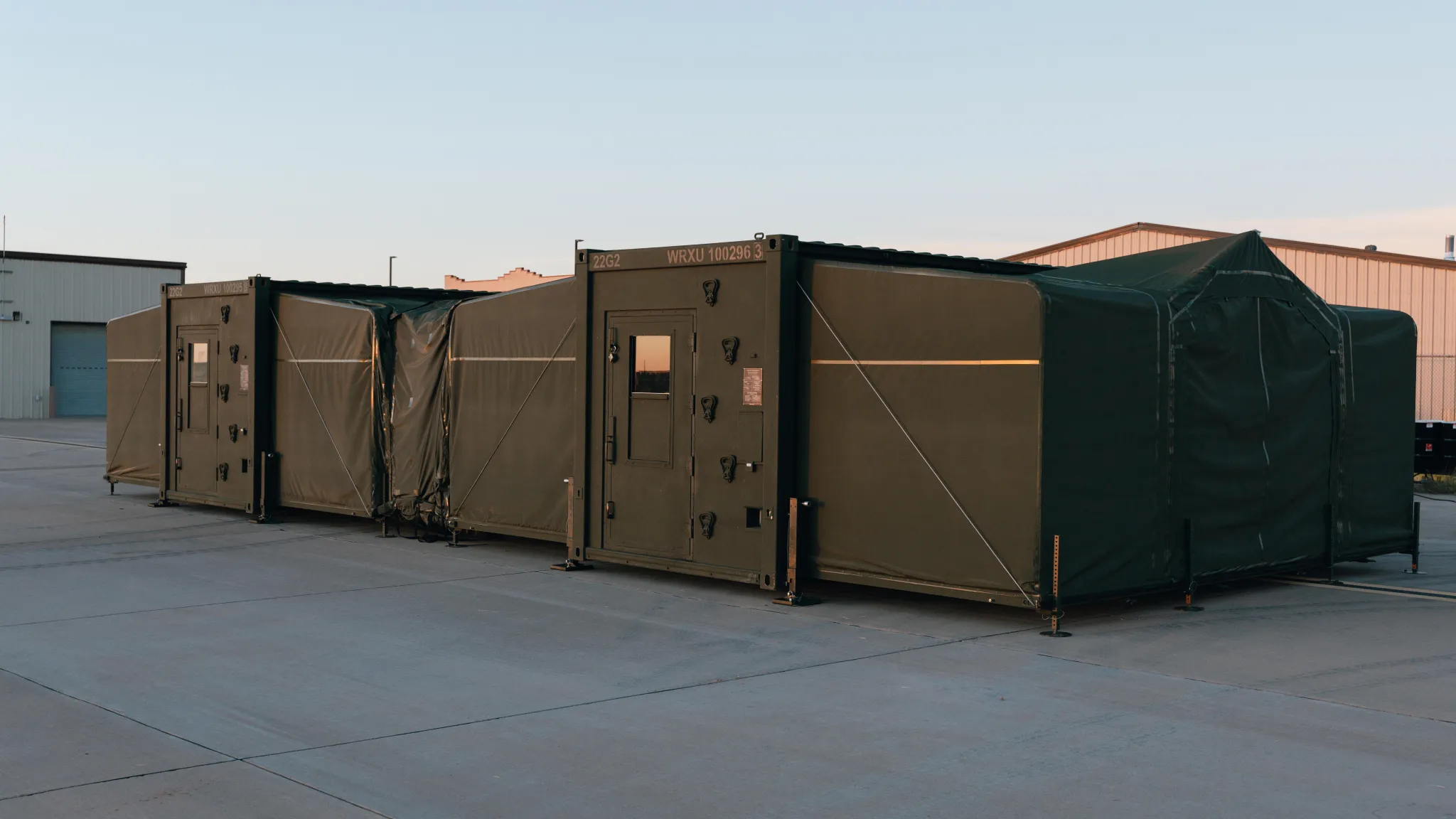
In this episode, Mat sits down with Dan, CEO of Firestorm, and Michael LaFramboise, CEO of Aurelius Systems, two founders tackling the drone revolution from opposite but complementary angles. Dan conceived Firestorm after watching ISIS use $3,000 DJI drones to fight the U.S. military to a standstill in Mosul, and spent the years since rethinking drone manufacturing from first principles: stop building artisan Ferraris and start stamping out Camrys. Firestorm now produces four drone models and its flagship XL product, a containerized expeditionary manufacturing facility that can be parked in any available lot and immediately begin printing drones at the point of need. Michael LaFramboise built Aurelius Systems around the other side of the same equation, bringing low-cost, AI-driven directed energy weapons to the counter-drone fight with the goal of collapsing the marginal cost of a drone shootdown to a dollar or less per kill, using electricity instead of missiles as ammunition.
The conversation covers the full scope of where the drone arms race is heading and what it means for American defense. Dan lays out a stark production gap: Ukraine and Russia each plan to build three to seven million drones this year, while the U.S. will produce closer to 30 to 50 thousand. Both founders agree that the winners in drone and counter-drone are largely already decided, that new entrants face brutal supply chain and procurement headwinds, and that the real fight now is go-to-market rather than pure technology. They also look ahead to unmanned ground vehicles reshaping land warfare in Ukraine right now, the emerging threat of satellite blind-and-destroy operations in low Earth orbit, and the long arc toward directed energy systems in space. For any founder bold enough to chart a course into hard defense tech, the shared advice is blunt: hire a lobbyist first, demo constantly, and plan for everything to cost twice as much and take twice as long.
"Ukraine says they will build anywhere from three to seven million drones this year. The Russians say they will build similar numbers. The Chinese, if they want to build drones, they could build 100 million. I think we'll probably build 30 to 50,000 drones this year."
"I believe there is going to be a drone arms race. It's who can build the most, who can hide them in plain sight. It's going to be almost like mutually assured destruction with drones. This is the new nuclear weapons."
"What we essentially offer is a dollar or less marginal shootdown cost. We use electricity as our ammunition. Your magazine is essentially the battery in our system, and that gives you tens of millions of dollars in ordnance equivalent from a single battery charge."
.webp)



Mat Vogels (00:14)
Hey everybody, welcome to another episode of Pirates Only, a podcast where we bring together early stage founders, typically building in the same industries or spaces to talk amongst each other about what they're building, what they're seeing in the space they're building and beyond. And today I have two very special guests, Dan, CEO of Firestorm, Michael, CEO of Aurelius. We have a rule on this pod that I don't.
butchered the details on what you're building, because I tend to ramble way longer than I need to. So I usually kick it off to the guests pretty quickly. Dan, let's start with you. Can you give a quick two minute version of what Firestorm is building?
Dan (00:53)
You
Absolutely. So I thought of the idea for Firestorm based on fighting ISIS drones.
in 2015, 2016. ISIS used DJI off the shelf drones and basically fought the US to a standstill in Mosul until they brought a bunch of, we'll say it, non-prime products in there that could actually attack the signal hopping and jamming of these off the shelf products. And what I was really impressed by was how basically ISIS was able to, with the $3,000 product, take away the idea of like,
kind of precision in guiding things with a very low cost drone. We've had a monopoly on that since the end of the Cold War and these drones really changed that. So in the buildup to war in Ukraine, I was like, man, you know what we're gonna need is a lot of drones and we're gonna need to support countries around the world who have non-benevolent neighbors who wanna take over their land with basically allowing them to have a, like how do we turn them in all into porcupines? And so the thought was,
Isis is able to do this. Why don't we like basically bring mass-producible drones to folks? So we started with a modular multi-mission drone that was 3D printed. And the whole idea was rethink the process of building drones from the ground up. Stop building these things like some sort of artisan Ferrari, start stamping them out like they're Toyota Camrys. And in the process of basically building that drone that could do multi-mission,
we were approached by the end user and they said, hey, you know what we actually have a really big problem with is resupply. Could you put your industrial 3D printer in a box and send it to us so we could actually build these drones where we need them as opposed to waiting months for a resupply to come. So with that in mind, we started building what we call the XL. The XL is one of our hero products. It is an expeditionary manufacturing facility. HP, whose printers we use in there, saw what we built.
They came to us and asked us for a decade long exclusivity because they want to go sell this to the commercial space. They view this as the future of contract manufacturing. You can drop a factory in a parking lot, you plug in power, you print for six months, you pick it up and you leave. So, Excel's really grown and basically there's a symbiotic relationship between the four different drones we now make out of Excel, the repair parts, the other people's drones we're now working on building out of Excel as well.
And we see this world of contested logistics, which is again, one of the Department of Orr's six priorities for the next decade, as being kind of unsolvable unless you solve it at the point of need as quickly as possible. So this week we're debuting a new piece of software that lets me as a non-technical founder be able to see any factories I have up and running anywhere in the world.
and the ERP, so the supply chain that can plug into it. And now as soon as a drone leaves the line, I can order another one at the click of a button. So that's how we think we're going to solve expeditionary manufacturing. It's going to be, I'm sorry, contested logistics. It's going to be expeditionary manufacturing matched with centralized manufacturing capabilities to create this like very robust web of manufacturing capability. So that's what we do at Firestorm. We build stuff, we build the software to make it easier to build stuff and
We build the factories that enable that.
Mat Vogels (04:02)
You can tell that this man just raised a successful series B because that pitch was perfect. So yeah, locked in, locked in. We'll definitely dive deeper.
Michael LaFramboise (04:07)
Locked in. Locked in. Dan Dan you stole
Dan you stole my my car analogy. I'm I'm doing the c I'm doing the car analogy. The the Ferrari the Ferrari
Mat Vogels (04:14)
⁓ Hey, we have room for two car analogies here. ⁓
Dan (04:17)
told you the car? Who gave
you the car analogy?
Michael LaFramboise (04:23)
Well, I haven't heard you I thought it was mine. I thought you gave it to me. I haven't heard you use it before, but Gotcha. I see. I see. Yeah. Mm. Amazing.
Dan (04:27)
I lend least it.
Mat Vogels (04:29)
Yeah, it's a good car analogy for a car analogy. We'll definitely dive deeper into
some of the reasons why when you're building, Dan is certainly in today's world, so important, but also ties into what you are building, Michael. So give us a rundown on what you're building and maybe a brief story of why you started as well.
Michael LaFramboise (04:49)
Yeah, for sure. So I I started out in the optics industry at one of the main main American Optics Prime building high-power fiber laser systems for material processing, and we did a bunch of work in directed energy as well, and then I moved in into sales, and we would support a lot of directed energy components as well. And you know, at this time, like early 2020s, there are not too many companies doing this.
And basically everyone is making a Ferrari. Dan, everyone is making a very bespoke, super pimped-out laser system, you know, $200 million for a gigalaser. Really cool. These systems can shoot down like MQ9s from 10 miles away in a couple seconds, so they're really cool. The problem is the systems are like hundreds of millions of dollars. You know, you can't make them in any kind of scale. It's a big issue.
That time, you know, I had I had probably a little bit later than Dan, but I had seen, you know, a lot of things happening in the drone warfare space, mass producer. I'm not gonna go over the whole drone thing. It's probably been said a billion times, but but especially for small drones like group ones, group twos, and like even group threes as well, like directed energy is a really, really attractive way if you can get to actually do a hard kill on a system for a very low marginal shootdown cost, while the operational benefits are quite robust, right? Like if you can hold hundreds of kills within a battery.
charge like a commercial battery for a laser system which is what we do you're starting to talk about you know on a twenty dollar on a twenty dollar electricity charge and a battery tens of millions of dollars in ordinance offset for actual drone shoot down so that's extremely attractive to our end users and our end operators as well. Problem historically has been CapEx is obscenely prohibitive to actually get some of these systems out there. So at Aurelius systems what we focus on is in a world where everything is a Ferrari, hyper bespoke, extremely hard to repair in the field, we want to be not the not the Toyota Corolla
The Ford F-150, Dan. It's about being Ford Motor Company. It's about being FOMOCO in this world. Exactly. McCoFunner and are from Detroit. we have an office there and we we work out of there as well. And so it's it's yeah, it's really fun. It's really great. vertical integration is a big thing that we launched, I think, in the last couple weeks. Matt, I can talk about that a bit, but basically it's clear that there's a big supply chain issue for the laser sources in our in our country. And so a big focus for us is vertically integrating, making our own sources, and then working in the civilian industry as well.
Dan (06:30)
We love Michigan.
Michael LaFramboise (06:53)
well for the laser cutting annealing. SLS, 3D printing, Dan, we're gonna make some lasers. Maybe we can make three D printers. What do you think? Let's get distracted. Let's go let's go on a yeah, let's go out in there. Yeah. Yeah.
Mat Vogels (07:02)
Yeah.
Dan (07:04)
Hey, go raise that big round dog and then I
have a bunch of ideas for how we can waste the money. You know what I mean?
Michael LaFramboise (07:10)
Gotcha. Well we have some
Mat Vogels (07:11)
Yeah.
Michael LaFramboise (07:11)
we have we have a we have some pretty legit announcements coming out in the next month, so we'll we can talk a little bit more after that. Yeah.
Dan (07:15)
You heard it here first.
Mat Vogels (07:15)
Is part of that, Michael, obviously for your own individual needs,
but are you going to resell that ability as well then to third party providers that,
Michael LaFramboise (07:22)
Of course of
of course, NLite is a company that exclusively does high power fiber lasers for directed energy and material processing, but their stocks up like seven hundred percent this year on their on their directed energy sales specifically. Market's exploding. There's probably like three factories in the country that even make laser sources for directed energy. Like we would just we would just sell. I mean, there's a ton of other directed energy stuff that you would do other than the small system. We'll get there eventually, but right now we'll we will definitely sell into into other directed energy component companies as well.
Dan (07:51)
How often a day do you get to say the words, the phrase, fire the laser?
Michael LaFramboise (07:55)
Which
Mat Vogels (07:58)
Fire the laser.
Michael LaFramboise (07:58)
When we're out when w y it's it's part
of the it's part of the operating procedure for a for I don't we don't say that verbatim, but like firing laser call call in response.
Mat Vogels (08:06)
Do you have swag though? You gotta have swag with
those on there, with your logo and Dr. Evil just going like this or like this.
Dan (08:11)
and it's just doctorable.
Michael LaFramboise (08:11)
yeah, we yeah, we have swag coming out. Yeah ⁓
not not that dude. My my CTO wants to die. He gets that all the time. It's so often. He's just like please stop telling me to stop telling me about lasers on sharks. Stop telling All right, we'll put out yeah, we'll put out put out some lasers on sharks material. Yeah.
Mat Vogels (08:19)
I'm sure, even in VC meetings.
Dan (08:20)
Yeah. So lean into it, bro. Lean into it. Lean into it.
Mat Vogels (08:25)
Yeah. Brand is everything.
Dan (08:31)
I have one of those like unit
X patches around here somewhere from the Ukraine dudes or the DIUX guys and their motto, their patch was a shark with a laser on its head.
Mat Vogels (08:41)
It's so funny, think Dan, you guys are some of the kings of swag. And you make them like one off. It's not stuff that people really know about. But I feel like at some of these events, people will come back, they're like, Dan was handing out these patches or these shirts or these like tiny things. And then no one ever like, you can't get them anywhere else. They're very exclusive.
Michael LaFramboise (08:42)
Gotcha.
Dan (09:00)
Let me give me a minute. I'm going to show you guys
Michael LaFramboise (09:01)
Yeah,
Mat Vogels (09:01)
Yeah,
Michael LaFramboise (09:01)
I
Mat Vogels (09:01)
find some, find some there.
Michael LaFramboise (09:02)
need some. I need some. Matt, we do have a a a sleeveless turtleneck design coming out. Sleeveless turtleneck. Yeah, it's gonna be sick. It
Mat Vogels (09:07)
sleeveless turtleneck. What is the purpose of the sleeveless turtleneck?
Dan (09:12)
Who is
making design decisions in this company? Hey, do you have sleeves on right now? Do have sleeves on right now? Rip them off. Do a live.
Mat Vogels (09:15)
Yeah.
Michael LaFramboise (09:15)
Me, me, I I found a picture of it, I sent it to marketing and they they have a design ready. I have sleeves on but I shouldn't. I shouldn't.
Mat Vogels (09:20)
haha
actually maybe that's the thing it's a ripoff sleeve
turtleneck shirt yeah exactly all right dan what do you got yeah there you go yep china bad boy club it's an exclusive club yep
Dan (09:29)
I'm over here, buddy. I'll take care of your sleeves.
Michael LaFramboise (09:30)
With buttons, with buttons. Ooh. Ooh.
yeah. That's pretty sick.
Dan (09:38)
We were put on
the Chinese sanction list. So I ordered about 5,000 patches from China to see if it worked in India and it says bad boy club. And of course they showed up because China is spectacular capitalists. We got some other cool ones too. We make customized, not just the company, we make customized like coins wherever we go. Like when we had NATO in the office.
Michael LaFramboise (09:44)
That's that's a list we
That's the list I wanna be on. Holy crap. Are you sanctioned personally?
Dan (10:01)
You know, we did that thing where we rented the parking lot across the street at AUSA, we call it Battlefield. We're doing that right now at SoftWeek. I don't know when this is going to be released, but we do this where I find parking lots next to events. And then I do five to 10 year leases on them. So that I don't have to pay 50 to $200,000 to go put my XL in there. And then this is a really popular one too. It's our XL. It's our 20 foot. And it pops out. And then you have your drone factory all set up here.
Mat Vogels (10:18)
Yeah.
that's so cool.
⁓
can I do you have any more of those? Like I said earlier, my son would love that. All right. I'll make I'll make a pickup there. All right. Well, this isn't this isn't a swag wars conversation, although we can go down into that. In fact, one of the things that that is so sweet. That is so cool. All right, Michael, the bar is set.
Dan (10:44)
Ta-da. Okay, I'm sorry.
Mat Vogels (10:46)
You know, you need to you need to start at least with the laser swag, but you need to move into printable objects as well Actually, you should just bring little mini lasers. I don't know how how hard those are to do I know they're like banned in so many places now, but just a little laser like the little pointer lasers Yeah, yeah, yeah, yeah, yeah, yeah
Michael LaFramboise (10:52)
Dude, do the
Yeah, make a little one? For sure. Little laser pens? Laser pens with the back end? Totally, totally. ⁓ I s
Dan (11:07)
Once we can show it.
Michael LaFramboise (11:08)
I
swear to you, dude, you guys have no idea the sleeveless turtleneck is gonna be so hot. Every gym you go to, people are gonna be in. We're just gonna make more money on that. Like have you ever seen it have have you ever seen a sleeveless turtleneck?
Mat Vogels (11:15)
Reindustrialize next month and...
Dan (11:19)
What Michael's actually saying is he's been on steroids for a year and he wants to show his arms off. He's like, want way to justify this. They're like going through his finances. They're like, dude, you spent like $40,000 on self care this year. He's like, yeah, blood doping, dude. I got to show off the fricking turtleneck, sleeveless turtleneck.
Michael LaFramboise (11:23)
Yeah.
Mat Vogels (11:23)
Ha
Yeah, exactly.
Michael LaFramboise (11:34)
Yeah.
Mat Vogels (11:34)
I'm...
sleepless turtleneck
it's a recruiting cost you'll have the most fit team at least that'll be that'll be something there yeah okay okay ⁓
Michael LaFramboise (11:42)
And crop tops. And crop tops. Yeah, yeah, for sure. You guys make crop tops,
Dan? For the ladies?
Dan (11:47)
⁓ I don't
think they want me in one. Just big old fat belly with some tattoos on it. It'd be great.
Mat Vogels (11:50)
You
God.
All right. Like I said, this isn't swag wars. In fact, one of the things that we were gonna, I we've been trying to do this episode for a while and the original title was gonna be like drones, drones, drones and more drones. And I still think it applies today. So from the VC lens, we see if I could put a category of like the most common.
Dan (12:00)
sorry.
Mat Vogels (12:17)
product or like service or company idea that I see it's it's drones in one way shape or form it's either making the drones or building a piece for drones or shooting down drones or any of these drones underwater drones above-surface drones underground drones now all over the place could you maybe Michael starting with you could you talk a little bit about this industry just the drone industry in in general is it's is it a bubble is it still as hot is it is it kind of feels is there enough demand out there to do that
But then also, why did all of a sudden, it feels like over the last few years, and there's probably a very obvious answer, why did drones all of a sudden become the most important thing that we need in this country and that the rest of the world is still starving for as well?
Michael LaFramboise (13:01)
Yeah, for sure. Let me comment about so I'm counter UAS. Let me comment about drones and then ask Dan and then ask Dan about counter UAS also and then I'll go. Yeah, we'll we'll we'll chop it up. And then Dan, if I'm ignorant, just let me know. But but basically I mean the w like you know, we exist as kind of like we we know that like proliferative drone warfare is massive, especially for our enemies, and then we will continue to produce our own as well and we will continue to scale up the companies that exist. and so as a response to that we exist for for
Mat Vogels (13:08)
There you go. Okay. I like it.
Michael LaFramboise (13:27)
For Counter Drone to address them at like the the biggest question in warfare, the biggest step function in warfare, you know, probably on the order of gunpowder, maybe on the order of like on the lowest end, maybe the action like the idea of like a Mauser action rifle versus like a blunder bus is kind of how it is. This massive step function, non-state actors can proliferate ridiculous amounts of destruction in a way that they couldn't be for. I think in the Americ like going to like kind of more more like mark like more like market or like financials, I don't know how you want to call it, but in my mind, Dan, let me know what you think about this.
I feel like like there are a lot of like drone there are like COAS companies coming out right now. I don't see that many n like new new drone companies coming up. I get the feeling that the drone companies that are gonna win exist right now and have existed for a while, like Firestorm. Like I think you guys are four years old, five years old, Dan, something like that. Yeah. Like I I don't know if I would go start a drone company like right now, like in the Western ecosystem.
Mat Vogels (14:08)
I would agree.
It's we still see I
would still say that if I could pick a category of the most common startups that we see getting wanting to get started, it is it is building new drone companies, though. So there's still a demand or there's a perceived demand. Founders out there are waking up thinking we need to go start a drone company still to this day.
Michael LaFramboise (14:25)
Yeah.
Yeah. Yeah. But one w
one way attack strike drones I think is different from like are you using a drone for some like civilian application, right? Not every drone is not every drone, not every drone, right? Yeah, so if like if you're like I'm gonna go make a group one like a Nero's or I'm gonna go make a mass producible group two like a firestorm for example, I don't know if I would do that. You're gonna have a really hard time. 'Cause there's gonna be there's gonna be more than there's gonna be more than one
Mat Vogels (14:39)
Yeah, I would say it's more defense focused is what I'm referring to here.
Yes.
Michael LaFramboise (14:57)
And it j our space is exactly the same. Like there's gonna be more than one there's not gonna be two hundred. There's gonna like five, ten, fifteen, something like that that have a scale differentiator, right? That are able to be successful and reach the market multiples that they need in order to provide a good return to to VCs. That's just my opinion though. I don't know. Dan, what do you think, since you're you rip this every day? Yep.
Dan (15:03)
time.
I totally agree. mean, I
look at everyone saying, well, Androl is going to solve this problem. Then you'll get their production numbers, which were shared and wired. you're just like, that's the VCs are actually missing it. I think there is space for a couple more. I also think the bigger sized drones are totally wide open. If I was starting today, I'd go build a big drone from scratch.
Michael LaFramboise (15:35)
Yeah. Like a Lucas? Like a sha like a shahead clone?
Dan (15:39)
Yeah, a Lucas or bigger for sure.
Michael LaFramboise (15:41)
What what kind of what kind of like it
it l i I I feel like the the the fly the flying Dorito shape is like you know like the bull the bullet the bullet is the optimized right like the bullet is the optimized thing to kill people to do what it does. It's evolved over five hundred years, it's perfect. Is the flying Dorito the ten thousand dollar flying Dorito is that the optimized shape for like a one way group two, group three type strike drone, or like a group three like big thing? What do you think? No.
Dan (15:49)
Yeah, it's actually called DeGrito, so go on.
I will not answer that question too. Maybe in about a year I'll answer that question.
Michael LaFramboise (16:12)
No I see. Okay. Okay.
Mat Vogels (16:14)
⁓ Can you guys
for the audience here to what's difference between group one group two group three is it just size based and what are those sizes to kind of distinguish those? Five base
Michael LaFramboise (16:23)
It's vibes based.
Dan (16:25)
Street Vibes.
Michael LaFramboise (16:25)
It's vibes based. It's vibes based. There's general guidelines. I think it's b it's based on like weight, like payload capacity. Right. Yeah.
Mat Vogels (16:32)
Do have an idea what are those weights like roughly?
Michael LaFramboise (16:35)
Group one is my gosh, I shouldn't know it off the top of my head. Group one is like is I think like fifty pound max payload weight, something like that. It's lower.
Dan (16:39)
I'll look it up right now.
Mat Vogels (16:42)
Okay, so like really small, yep.
Dan (16:44)
lower.
Mat Vogels (16:45)
wow.
Dan (16:47)
Uh, so cause group two is 55 pound max. Um, group one is less than 20 pounds. Um, and it operated altitudes under 1200 feet. Group two is 21 to 55 pounds and they operate up to 3,500 feet. Group three, this is where it goes. It's really weird. It is from 55 pounds to 1300 to 20 pounds.
Mat Vogels (16:48)
So.
Okay.
Dan (17:15)
And that can go to 1800 feet. Group four is 1300 pounds that operate below. They, they weigh way more than 1320 pounds and they operate below 18,000 feet. And then group five is that same weight, but above 18,000 square feet and have a long.
Mat Vogels (17:15)
That's a big range.
Michael LaFramboise (17:31)
And where do you just get to like
a plane?
Dan (17:34)
Precisely.
Mat Vogels (17:35)
Yeah, yeah, exactly. Well, and then where does the like a drone? Because I think when people think of drone, they think of like the consumer drones they see flying around in parks. But when we talk about drones here on this podcast, it's essentially the everything you just autonomous vehicles that are flying like on their own type of drone. Is that what we would kind of consider for the audience here? And I've been taught myself.
Dan (17:55)
No, I think that a drone is also like a
small, pilotable drone, like a DJI that you could go buy at Best Buy. You know what I mean? I think just the concept of drone is and probably will continue to change based on, like, what we're seeing. Because, like, now when I talk to, like, you my uncles who, like, you know, they're dudes, so they know a little bit about war.
Mat Vogels (18:00)
Yeah.
Yeah. Yeah.
Dan (18:18)
They're like, yeah, so like, I see all these drones the Ukrainians are making and then their brain, there's no difference between like the FPV. So the small little quadcopter frame. And then also like basically a Cessna that has been put a Starlink on it full of explosives. It's very interesting. So I think that's how we, I think we should describe it not from like a, we know better than you, but from like a lay persons.
approach if that makes sense or at least that's how I would recommend we do it you know what mean so
Mat Vogels (18:44)
Yeah. How
much, I mean, this is kind of the hint on there, but maybe for you, Dan, how much did the war in Ukraine kind of kick off this all of a sudden perceived demand for four drones? Is that kind of a point in time that you look at as being like a before and after moment?
Dan (19:00)
I think the people who understand what was happening in Ukraine it was, but then I would say until the war in Iran recently, you still had people saying that drones were a Ukraine thing. Okay. And I'd hear that in the Pentagon and that is super disturbing. That's super frustrating. And maybe because it just happened.
Mat Vogels (19:10)
Wow, yeah.
saying that it's not an Iran
thing, was just a Ukraine thing and that problem is solved? how do you mean? Got it. Yeah.
Dan (19:19)
Yeah, was a Ukraine problem. Like that's just how wars fought, right? And
then all of a sudden the Shaheeds start blowing up all of the global oil infrastructure and they're like, well, I guess it is a real thing. Do you know what I mean? And so I believe there is going to be a drone's race, a drone arms race. It's who can build the most, who can hide them in plain sight too. It's going to be almost like mutually assured destruction with drones. Like this is the new nuclear weapons.
strongly believe that because you could cripple a whole country if you have the things in the right place. Again, don't think of drones as toys. Think of them as basically an equalizing force for owning precision. So in the 1980s, 1990s, 2000s, we own precision with our like cruise missiles, right? We built GPS. We have this ability to like do, you know, pinpoint strikes because we never we knew we're not going to build as many tanks as the Soviets. OK, now with the
like the cost of consumer electronics bringing all these things down. Now, precision is in your pocket, right? We no longer have the kind of monopoly on it. And so, you know, basically for most drones, like they allow you to be precise either with GPS or not GPS. It's pretty fascinating. And then when you layer on vision models on top of it, this is why from day one, I've literally said the only way as a former RF counter UAS guy, the only way you will be able to stop drones in the future.
is either is with a kinetic takedown or frying their laser or frying their optics with a laser. That's why I love Michael's company from the moment I heard it like I just believed in it.
Mat Vogels (20:48)
I definitely want to dive into the laser piece just from a high level and context setting here. What is, you mentioned that we're behind on the drone side. Can you put a number on it? Like how many drones do you think we have in the United States versus how many drones do you think exist in like China?
Michael LaFramboise (20:48)
Thanks, baby.
Dan (21:02)
You are not going to like what I'm about to tell you. So Ukraine says they will build anywhere from three to seven million drones this year. The Russians say they will build similar numbers. The Chinese, I assume, will be somewhere in between 10. If they want to build drones, they could build 100 million, right? Okay. I think we'll probably build 30 to 50,000 drones this year.
Michael LaFramboise (21:16)
Ten ten X. Yeah. Yeah.
Mat Vogels (21:27)
my gosh. Is the why it seems like the Ukraine war is not something that is new. This is why I think, you know, from the VC side, we still see founders and companies that are going, we need to build more drones. Have you seen the numbers? Like we're an order of magnitude behind. Is it a lagging thing? Is it there are companies out there that are building it, but it just takes obviously time to scale it up or what's the bottleneck?
Dan (21:49)
think it's the bureaucracy. think that
the government's trying with a bunch of these new kind of ways in which to fund companies. But I think there's also just a general thought that like...
Andrew will solve will be the innovation solution for stuff. I think that's, know, historically there's five to 10 winners. That's like, so that's, that's my take. And I think we're going to be a winner here because of our approach, both like centralized and decentralized manufacturing, and then doing sustainment, which sustainments, nothing, something no one talks about. Hey bro, do an upper decky instead. okay, good. Great. and.
Michael LaFramboise (22:22)
I got two in, dude. I'll I'll put in another two during the course of this, dude. I'm I'm in the zone.
Dan (22:27)
But I don't think you've seen the contracts really materialize. think drone dominance is a good first step, but the government still addicted to buying expensive stuff, right? You look at what Australia and the UK have done. They basically ripped up their defense doctrine when it comes to drones, and they're like 20 % exquisite, 40 % multi-use, and they each have different definitions of that. It could be 50, 20, 100 times, 40 % single use. That is a spectacular way to think about drones.
Right? That is a spectacular way to spend your money. Because if you saw Zelinsky, I think yesterday or two days ago, he's like, it cost me a thousand dollars to kill a Russian soldier right now. That's what it cost me. And they're, I'm killing 90 % of them with drones. So he's like, it's a math game at this point. Like that's how good we are at building them and deploying them. Just keep the money spigot going and we'll just, you know, it's a meat grinder over there. It's pretty crazy. So that's my take. Michael, you think?
Mat Vogels (23:16)
Well,
yeah.
Michael LaFramboise (23:18)
about the about scaling of manufacturing. I totally agree with you in terms of like I mean VCs VCs in the private capital markets have totally leaned forward on this.
Which I think we should be pr we like really proud of as a country, that like people actually care and like there's a lot of money from the private markets flowing into this space. I think and you know, a lot of the companies like Firestorm and some of the other leaders, like and we we as well on the C UAS side, like we should have enough capital to like last out through the bureaucracy, it'll probably like as the contracts come through. but those can't come soon enough because you need the end users to to come through with with contracts to scale up the production. And it's really crazy because Dan, I don't know if you experienced this, I I would imagine so, but
Like to to even qualify to to bid and have a successful chance of winning a major contract, you have to have your supply chain and your production capacity done. You have to be tooled up already. Like there's no there's no you win the contract and then you tool up. Right? So you're ready, you're burning money when you set this thing up, right? And so and s yeah. Yeah. Yeah. Yeah.
Mat Vogels (24:00)
Yeah.
Dan (24:10)
It's criminal what he is describing and it is real. It is a huge problem, right?
Mat Vogels (24:17)
Yeah,
so that's the bottleneck right there in a lot of ways, yeah.
Michael LaFramboise (24:18)
Yeah. And and and the private and the private markets
yeah, but the private markets will give you know, there's like markups and defense, like the rounds are bigger and everything. Hard di because it's hard and hardware especially, 'cause like the rounds are bigger to be able to supply it, but you definitely raise like larger rounds for sure and you dilute more, because you need to be able to to you need to be able to live and you know, like a like a random act of Congress, like this doesn't this didn't affect us too much, I don't think, but like Sibers died for a year and so there's like a whole there was a whole pre seed wave of twenty twenty five that probably
Was stunted like six to nine months from the siber stuff not coming through, right? And so you gotta like navigate it. I'd say like the Trump administration and the current one is a pretty aggressive one compared to we started in the Biden administration, and like we got all the signal that we needed, and it was good at the time, but like definitely like I think if you started in 2017, like it was probably really hard to live long enough to continue up here. but it's clear, but every but like everyone knows, right? Like and like Dan, you're saying you're talking to people in the Pentagon, like we've seen like.
Some people are like, like we only want X, Y, or Z that was important ten years ago. for sure. But like all of our like people that we talk to, like everyone's really, really excited, people are leaning forward. It is definitely faster than three, four, five years ago. It is definitely faster. But that would just make an argument it's not fast. It's not fast enough. Yeah. Yep.
Mat Vogels (25:27)
Yeah. And it still needs to be faster. Yeah, exactly. Yep.
Dan (25:31)
Exactly.
Mat Vogels (25:33)
So you touched on, we touched on the drone, kind of the manufacturing side. Dan, you kind of set up the T for the counter drone and Michael, what you're building may be being the only or the best solution to truly meet the demand. You mentioned millions of drones being produced by adversaries. We obviously can't produce enough drones to be the counter attack there.
Michael LaFramboise (25:51)
Yeah.
Mat Vogels (25:52)
maybe explain a little bit on what you're building. Lasers is kind of the easy way, but what exactly is happening? What are the lasers doing? And then why is it considered? Why should it be the number one counter for this problem?
Michael LaFramboise (25:56)
Yeah.
Yeah, for sure. I mean, so let's fast forward two years, right? Like Dan's company and several of these other companies are making massive amounts of drone. We're making the five to ten million a year that we need and we're looking to scale up from there, right? you know, if you make it's it's a one making a one-way attack drone is like less complicated than like making an interceptor drone for another drone with the explosive on it, and those can be really expensive. There are some companies that are
you know, trying to get marginal cost down to low tens of thousands of dollars per system. But right now, where we move to is like we moved from the, you know, several hundred thousand dollar missile or million dollar missile down to like the one to two hundred fifty thousand dollar kind of Andoril drone type interceptor. There are people working on scaling out fifty thousand dollar interceptors, maybe something like that. but at our company we just look where the ball is going and it's all about give the whole like driving core KPI on the business side for us is like marginal cost to shoot down. And then the operational capacity of having that.
So what we essentially offer is like a dollar or less marginal shoot down cost. And you know, electric we use electricity as our ammunition. your magazine is essentially the battery that's there in our system or the fuel that is being used to generate electricity from your alternator in your vehicle. And so that has a massive, massive, massive marginal cost utility there. And that's something that our end users are really, really excited about and really, really focus on. Let's say you could even make the five thousand dollar missile or five thousand dollar interceptor, right? You're still like a couple
couple multiples of the cost of the drone, but it's not too bad and you could probably reduce at scale. But you can't carry like 500 missiles, right, in in a truck, like depending on the size, right? And then how do you resupply that, right? And so so what we what we're able to do beyond just that very, very low marginal shootdown cost on the hard kill is we give you you know hunch like tens of millions of dollars in ordinance equivalent. I I said this earlier, tens of millions of dollars in ordinance equivalent just in a battery charge on our system. So it's really
attractive here, that's what really we really focus on. and I think what's really attractive as well is you know we are able to essentially get like I'm not going to talk about specific ranges but like if you use a kinetic a kinetic method like a machine gun for example your range is extremely extremely limited and you we your end effector moves at several hundred meters per second maybe something like 350 meters per second 700 meters per second our end effect is many multiples of the distance that you can fire with a with a rifle or a saw or something like that.
that and our end effector moves at 300 million meters per second it literally is physics limited by the speed of causality so we can instantly target we when we turn on we instantly hit target and we what we really focus on is very very high precision to be able to keep spot on target for you know a short period of time to be able to get to be able to get a kill. So that is really really really what we focus on. We bring speed out into the field we bring distance out into the field and the distance that we're shooting on is something where you have to use like a block three missile or you have
To use like a $200,000 interceptor. And so we really focus on getting that capability out, get the standoff distance out to protect our troops. Right now, the way the US Army works, and our first customers of the army, we use the way that we kind of prosecute warfare, right? We're extremely aggressive by doctrine generally, and we love to do fire and maneuver and we move, we fire, we move, we fire, everything like that. The Ukrainians can't move at all. You can't leave the trench. You get blown up the second that you're out there. And so, you know, we have a lot of we have tank, like there are Abrams that are.
deployed in Ukraine, they stop deploying them. They get blown up by drones.
It's crazy. So that's the future survivability of our main battle tank, right? And and at least our first product, the Archimedes, like the small lightweight edge deployed, totally autonomous battery power turret is really focused on unlocking fire and maneuver again, doing a Dukes and Cruise type style counter IED thing for making these bubbles of defense for your maneuver elements. Yeah, so that's that's what we're focused on. That's everything like that. I can well, if you want, we can talk about the general general COAS market as well, but it really comes down to like missiles or interceptors, RWS modifications, and then direct.
Mm-hmm.
Mat Vogels (29:52)
It seems like one of those things where you hear it and it's like, well, of course that should be the best solution out there. What is the hard part about bringing it to full scale? Why isn't it the first thing that people think of and why are you the leader in doing it? Yeah.
Michael LaFramboise (30:04)
Yeah.
Yeah.
Yeah, for sure. People have been let down a lot by like the Giga Laser projects. So like the hundred million dollar super lasers that are they're sick I they're incredible pieces of technology. Which is awesome. They're dope. I think the thing is, like before before we had to address the like a like a counter drone application, you know, we were we were gearing up, and this is true across everything, we were gearing up to to compete with n with
Mat Vogels (30:12)
Yes, yeah. Exactly. The Death Star lasers.
Michael LaFramboise (30:32)
with like sovereign full state adversaries that are fielding tanks and aircraft carriers and stuff. and so for something like that, like a small missile, you might want to use like a Gale laser. there's a a use case there, I would say. but what we what we really realize is that a lot of this isn't a robotic is a robotics and AI issue. A huge amount of what I focus on on research and development and production is developing software. We don't buy software from anyone. We build the entirety of our fire controller, we run AI on the edge, we care about inference latency, everything like that.
And so that allows us to get an ultra, ultra precise targeting system that works for a laser, which you can't buy, like barely anyone makes that. And then on the laser side, we essentially have to address the big supply chain issue on our end by producing our own our own laser sources. And we get cost down by use leveraging commercial laser systems instead of the super pimped out like AFRL things.
Mat Vogels (31:18)
Let's think forward three to 10 years. There's probably multiple layers as it goes into it. But Dan, what do think of the future of warfare? It's gonna probably continue to evolve. Where do you kind of see it going? it obviously, I think of drones today, I don't know if it's more of a one versus many. Drone swarms are the thing that people talk about now. Is that kind of the next layer of it or where do the evolutions kind of go from here?
Dan (31:40)
I don't want to look into my crystal ball. I think we're still like out there a little bit of ways for like.
AI and swarms. One of the big things that as a counter RF counter UAS guy, lot of the swarm technology, it communicates on RF. And my whole thing is like, dude, you're talking like gnarly, calm, sonite environments, and you're going to be trying to like send each other. Yeah, it's going to be tough. Do I think, because I know we might be building it that you can like give something a picture of something and it will go hunt for that thing.
Mat Vogels (32:01)
Coordinate, yeah.
Dan (32:10)
That is already being built and deployed. You're seeing that in Ukraine as well.
I think really what you're going to see is whoever can scale the hardware platforms that allow for different pieces of software to very easily be put on and interoperate with it. like turn the drone into an iPhone and just run a bunch of different apps on it. That will determine what direction we go. Okay. So I think that you got to go back to Stalin or like the picture behind me, right? Of all the airplanes flying over Tokyo Bay at the end of World War II and realize that quantity has a quality.
of its own, right? Having a lot of stuff and having, then trying to shoot those things down is very tough. It's very time consuming and it's incredibly costly. but I also think that like we still in this country, and I think for a lot of folks, we're going to love the exquisite stuff that can do like pinpoint, decapitation. You know what I mean? Like to, to knock out Iran.
and I use that figuratively, we had to use a lot of different, like very high and costly systems and bombs. I think that the day the cruise missile is gonna be...
Short-lived I think that that's basically what drones are gonna be able to produce. They're basically cruise missiles already They're just cheaper and they can't go as far and when that's unlocked I think that's gonna be when the game changes right because now you're not waiting for a theon to make 300 a year or a hundred a month or whatever at three million a pop Right, you could go set up production lines globally and you just have this arsenal of 10,000 cruise missiles that you can rip
Mat Vogels (33:38)
Yep.
Michael thoughts on that? Any other any any change of opinion there?
Michael LaFramboise (33:44)
No, I think we're
I think we're totally aligned. Tot totally makes a lot of sense. I mean I think I guess something I guess something I would say is like like the defense primes, a lot of like there's a lot of stuff that probably doesn't make sense to make, but like we still need to be prepared to be competing with like like how do you take out an ICBM?
Like in in flight. Like what do you do about that, right? Like there's I know there's there's some massive there are even more intense hyper lasers being built than any that have ever been deployed by US primes right now to address questions like that, right? And that's probably very, very useful. But there's this whole thing that Dan and I are focusing on on the offense and the defense side that is hasn't been focused on. That's like prob that's probably the greatest threat right now. I mean how many I think we've lost si fifteen, sixteen soldiers in Iran?
so far or something like that, in during the Iran conflict in the region. And it might be more at this point. And like they're they're dying from FPV drone attacks. Like it's not enemy aircraft carriers or enemy tanks or enemy infantry. Right? That that's that's just not what's happening. We can defend against those things. so that's what I think about.
Mat Vogels (34:28)
Yeah, yep, like that.
Aside from drones or maybe some of the things that you guys are building, are there any other defense technologies or aerospace technologies that you guys are excited about right now?
Dan (34:54)
Michael, you want to go first? I'm incredibly excited by unmanned ground vehicles. If you look at how aggressively they've been deployed, this has been the silent killer in Ukraine in the last three to four months. This is why Ukraine is actually gaining land. I had a Ukrainian commander who helped design the entire original drone army. I interviewed him on my podcast.
Michael LaFramboise (34:55)
You go. You go, you go, you go.
Mat Vogels (35:07)
interesting.
Dan (35:17)
I asked him, what was your big learning? And he said, nothing is more powerful than a 50 caliber machine gun, close to human beings. Okay. And I mean, what do you mean? He's like, yeah, we're just putting 50 cows on these things now and we, are coordinating with air and land. it's, basically everything we've done as humans combined arms. It's being recreated on the battlefield right now. And I think it's going to be incredibly powerful.
Mat Vogels (35:28)
Just letting them go.
So
what do these look like? Are these just like four wheeled vehicles? Are these like humanoid robots or what does that look like? Yeah.
Dan (35:43)
Yeah, yeah,
I'm not to the point where we're gonna have figure drones with machine guns. mean, the Chinese are saying they're working on it, okay? But tracked and untracked vehicles that can carry heavy amounts of stuff. Because in a drone conflict, I don't know if you guys see this, but the Russians are using donkeys and horses to do resupply now.
I they're actually out of vehicles. Like think about what that means, right? That means everything we have designed from a warfare perspective over the last hundred and I don't know, yeah, a hundred years since we had cars in World War I, that is just going away. And the kill zone, like when the war started was like a couple of kilometers. Now it's 50 to 60 on each side, okay? So.
I mean, it's like a total rethink of what is happening. And so how the war is being kind of prosecuted now is attacking supply chains deeper and deeper so that you can starve the people who are on the front line who actually have to hold the ground. So, ground robot with gun holds ground. That's like where we're getting to. And it is terrifying and crazy to see.
Mat Vogels (36:50)
I
don't know, I see the videos online. I don't know if they're true. think most of them are AI, but you see like the dog robots with the attached turrets and things like that. That's kind of what I imagine in some of those things. ⁓ Yeah. Yeah.
Dan (37:02)
That'll be part of it. I mean, you're seeing a
bunch of that too. The Chinese are very open with what they're doing. They're going to use a lot of that stuff for like close quarter combat and for like room clearing and urban environments. They're putting guns on the top of the dogs so that that's like what you have to take out first. It's interesting.
Michael LaFramboise (37:19)
Yeah,
for sure. Love it, men. space. Space warfare. So I think in our spa like how do you so like my dude, without an atmosphere, like I have a really good range on my system. Without an atmosphere it's like ten X. It's crazy. And so and so when you're talking about like
Mat Vogels (37:21)
Michael, what about you?
Okay. Star Wars in real life, yeah.
Michael LaFramboise (37:37)
Low Earth orbit is definitely the first one. You know, there are thousands and thousands and thousands of enemy satellites, Russian and Chinese, that are well or not not not technically enemy, but things we need to be prepared for, right? In terms of like how do you deal with like mass amounts of satellites in in orbit, right? And how that's how they get their connectivity, that's what you need to be prepared for. We have enemies that definitely have weapons in in orbit. And so I think that in low earth orbit, there's probably some kinetics you could do, you can make an argument about it. But if you're talking about like, let's fast forward ten years, like what do you do about in the
What do you do about like translunar or trans or transmartian warfare? Are you gonna wait like two years for a missile to hit Mars, or you gonna wait like several minutes for your light pulse to hit Mars? Right? Like we have this whole product roadmap. I've got Death Stars in my p in my pitch deck. They're not called Death Stars, they're gonna be a little bit little bit smaller, a little bit more beautiful. I'll call them whatever. You want them you want them called that. But I think Reagan was ahead of his time, dude. Star Wars is Star Wars is
Is real, is legit, there's a lot of things happening and so especially as we continue and productize and move upscale into other products, we will we'll move up into orbit.
Mat Vogels (38:41)
I mean, I think of obviously, you know, the Star Wars side of one, I don't know if you guys have watched like the expanse series, which goes into very specific like Martian versus Earth and the technology and kind of the advanced warfare that happens there. In the short term, though, what does that kind of look like there? Like you mentioned, there are objects in space that are communication satellites being maybe one realm of those, but also.
Dan (38:46)
So.
Mat Vogels (39:00)
defense and potentially offensive applications of devices that are in space, what is it truly just gonna be that we're gonna start fighting and shooting in space? Or is it gonna be objects that are in space that are still just focused on the ground and then pointing downwards? When does it actually become a true battle in space?
Michael LaFramboise (39:19)
Yeah.
I mean, I think when you know that you are like let's say all of the Starlink connectivity satellites are at risk from Chinese satellites that have precision optical gimbals on them that can blind and destroy solar panels on the system so then they go down very quickly when they lose power. You don't have to blow up the sat you probably don't want to blow up the satellite because you cause massive amounts of issues in orbit if you do that fifty thousand times, like if you had to do the fifty thousand Chinese satellites, but
Mat Vogels (39:27)
Yeah. Yeah.
Yeah.
Michael LaFramboise (39:45)
But no, I mean I think a lot of it is like a deterrence. I mean, obviously most of it is about creating deterrence to be able to, you know, so that you're not totally blindsided. But like let's say let's say the US and our allies and our military, like we just lost all orbital orbital capacity and connectivity, we'd be totally fucked.
Like what do you what do you even do? Like you aren't capable of communicating, like you have no you have very limited GPS capacity, probably. So that's that's a big issue. The the orbit so I'm talking about translunar transmartian stuff, that's in the future. The orbital issue is here now though. Like that's something that needs to be addressed in the next several years for sure.
Mat Vogels (40:16)
Yes.
Is that something that you would be able to build with the lasers too from like a from the space perspective? How does how does the physics affect that? I mean, it's got to be a whole different game. Yeah. That's true. Yeah, there's no answer. Yeah.
Michael LaFramboise (40:24)
Yeah.
It's way better. So it's w I mean it's way better if you don't have a if you don't have atmospheric issues. Way, way better, right?
Like ch that's why like t that's why everyone use laser comms, right? 'Cause you just propagate indefinitely, right? the distances you're dealing with are a lot further, but you propagate a lot further. You'd probably have bigger bigger laser systems for for weaponry up there. but that is yeah, I mean I think the the way that we work, right? We'll be the only company that's making like thousands of directed energy products per year. And I have a really big belief in in iterative and extremely
Extremely fast rapidity, like iterative development and system development. I think that we're gonna get much more advanced than other companies. Instead of like making one gigalaser a year, we'll like a thousand small ones and then we'll make a thousand medium ones per year and then we'll continue, continue up the stack. And especially if we're vertically integrated, we'll be one of a vanishingly small number of like we'll be number two or something of direct energy companies that are vertically integrated in our supply chain. Dude, we should dude.
Dan (41:17)
What does the IP up bro? I'm ready, let's go.
Mat Vogels (41:18)
Yeah.
Michael LaFramboise (41:21)
What do you think about spAcking? What do you what do you think about spAcking in 2026? What do you think about spAcking in 26? Dude, they're back. We're so back.
Dan (41:22)
You almost did it. You almost did it!
Mat Vogels (41:23)
Sssss... Fax.
Dan (41:27)
Max or hot baby? Retail
Mat Vogels (41:28)
They are hot, they're back.
Dan (41:30)
investors desperately want new defense companies.
Michael LaFramboise (41:33)
I know did you see
Swarmer? Ca can we give it this can we talk about I I read the whole financial report for Swarmer. It's pretty s it's pretty sick. Th three hundred and ten thousand with a forward look on ten million dollars that they noted. Yeah.
Mat Vogels (41:33)
Yes.
Did you really?
Dan (41:38)
What was their, Michael, what was their revenue?
Mat Vogels (41:46)
There you go.
Dan (41:47)
I thought it
was 35,000. Maybe I read that wrong.
Michael LaFramboise (41:50)
I don't know. I think it was last year was 300 grand, this year is like a little bit or twenty twenty-four is three hundred grand, twenty-five, I think it was like three, three ten, three twenty, three thirty, something like that. and then there was a note in the filing that it was looking at ten ten million dollars in in in contracts. But the stock is holding. I don't know if you've checked. It's like up from its from its IPO, it's been out five, six weeks, something like that, maybe seven weeks, and it's holding. It's doing well. Like retail wants
Dan (41:58)
Yeah.
Mat Vogels (42:03)
Future projection, yeah.
They do.
Michael LaFramboise (42:15)
Exposure not just to defense, but to everything. I mean, retail's been so cucked for the last like six years, not being able to get into get into anything important. So
Mat Vogels (42:23)
One of the things that
we talk about internally is that there's, there's, think that there's an opportunity for so many companies to be the American investible vehicle for any industry and to come out and vocalize it that way, where if you're building in energy, you could say, Hey, we are the energy company of America. Instead of continuing to go and remain private, we're going to go public to give you the American people access to your energy future. And then you could apply that to every single, I think category. And I think that the market would.
like that. There's a whole narrative that you could put around it.
Michael LaFramboise (42:55)
Yeah. No. So you're gonna do it for your so you're gonna do it then? Yeah. When are you going public?
Dan (42:57)
I love that. I don't know what are we?
What, spec?
I don't know. Need this big contract that I've been told is coming.
Michael LaFramboise (43:11)
Yeah.
No, no, your s your your price can hold if you talk about the the contract will Yeah, yeah. I mean we I mean we I mean we won that we got a prime contract on the MDA Shield IDIQ, right? It's like a giga IDIQ. Just say just say it's revenue. Just be like, yeah. My h I hundred fifty billion direct in my bank account, I swear. The sales cycle's just long. It's just a long sales cycle, don't worry.
Dan (43:15)
I'm forward looking at $70 billion of revenue.
V.
The amount
of questions I get asked from hedge funds when they look at a bunch of these companies and they're like, can you explain to me what an IDIQ is? So they want a billion dollar IDIQ. I'm like, yeah. Like, wow, that's a lot of money. I'm like, yeah.
Michael LaFramboise (43:40)
Yeah.
Mat Vogels (43:43)
I bet.
Michael LaFramboise (43:51)
Yeah. Yeah.
Mat Vogels (43:53)
Yep.
Yep. Yep.
Michael LaFramboise (43:54)
Yeah. Exactly. I think it's it's it's somewhat it's somewhat legit if you're like, okay, I have these customers line up for the task ordering out of these contacts, this is how I'm gonna run the deal. Like that's how you do it, right? But it doesn't immediately mean you're just gonna pull down everything, right? So
Dan (43:55)
It's a lot of money.
Yes.
Yeah.
Yeah, of course.
Mat Vogels (44:10)
We have a couple more questions here that founders all ask whenever we do these. A lot of the folks that are listening are founders that want to be in your shoes in the next handful of years. Dan, you just closed a $82 million Series B. You are well on your way and in the thick of it as you kind of grow into the scale. Any feedback from your stage on founders that are maybe just getting started today, be in defense or any hard tech?
high level advice on the marathon that you've done so far for them in the early days.
Dan (44:41)
My number one piece of advice is always
You have to be comfortable being uncomfortable. If you cannot do that, this is a really, really hard and stressful world for you to be in. You can learn it. It will take you five or 10 years to train yourself to be able to flush. But some people also innately like have that. I'm lucky to just be able to kind of manage it better than other people. I don't really gamble at all, but I gamble with my time. So that's just how I'm wired. And that's not like other people.
number one thing. The second thing I always say is it will take twice as long and cost twice as much money. Okay. So like there is no such thing as over raising in hardware. That is just my, my honest opinion. I can only imagine if Michael's going to build a laser factory, how much money he's going to need and then how much he's going to have to go to the OSC for, to like fund, you know what I mean? I mean, hundreds of millions of dollars, right? For us, as we look at what's our expansion plan, it's in the hundreds of millions of dollars as well. I mean,
So like incrementally like getting to the next level and telling the story is really important and it costs money, but it always costs more and takes longer than you think. I guess in the final thing, the third one, the DOD requires you, if you're going to be in this space, to be out there and show people stuff. You have to get the thing into end users hands. They are not trusting customers for a lot of reasons, but they are reasonable and they understand that.
we are doing very difficult things. So breaking things, crashing things, having things not work at demo, that is a very normal part of the process. Embrace it, embrace them, ask them for feedback. Oh, and then finally get an appropriator. First thing you should do, hire lobbyists. Get an appropriator on your side, man. That's, that's how you actually build defense companies. Don't ever, ever, ever let anybody tell you differently. I'm glad Trey Stevens is now finally honest about the first person Andrew hired, right?
Mat Vogels (46:19)
It's that.
Michael LaFramboise (46:21)
yeah. yeah.
Dan (46:30)
because it's not the best tech that wins. It's the best go-to-market game that wins, in my opinion.
Mat Vogels (46:37)
Yeah.
Michael, you guys raised, was it 10 million last year? So not quite to the 82 yet, but I have no doubt that you will get there. But building in the earlier phases, any advice that you would give to founders that are in the kind of the early market that you are in today? Any advice that echoes maybe what Dan said or something new?
Michael LaFramboise (46:40)
Sure. ⁓
Yeah, for sure. definitely echoing what Dan said. lobbying for sure. Some of the early thing very early things that we did. I I probably got it from Dan on a call. Like just getting getting in getting in Congress.
Talking to people, demoing all over the place, demoing as much as you can. We're hiring like a whole demo team basically to just be on the road 100% of the time, constantly demonstrating, constantly going all over the place. Super important. a little a little annoying, but it's okay. It is necessary, it is part of your sales cycle, it's very, very important. and then I would say, yeah, I mean, I'm basically just echoing what Dan said. Like, I'd I have some original things to say, but like on the on the idea of like
On the idea of like it taking a long time, raising more capital than you need. Like every round when I've done them, I've been like, like, you know, we like getting advice to take the money when it's on the table, have taken it. It's been a good decision every time that we've done it, even if I wasn't totally sure at the beginning. and then on internal resilience, totally for sure. I mean, basically, like you keep leveling up and you have these step functions in your company where like the team's bigger, things are more intense, things are more high stakes, and you definitely feel like anxiety about that. And then what I've found is just
It it I live like that for like a couple weeks and then I wake up one morning and it's just okay and I can operate. And then it like happens again like three to six months later, right? And that's just I presume that'll continue, continue for the life of the company. I'd say really good mentors, advisors, or like people on your board. So like my like Paige Craig is on my board and he's incredible. He did this like pre-palantier, very helpful. finding finding a Mr. Dan himself early is very helpful. I mean, I mean, I think I don't even think we were incorporated, Dan, when we had started talking. And
And just find just yeah, just finding that support, people that know what's going on, or at least talk to you. man. But but but yeah, I don't know. I don't know. I think that's it. I mean that's just that's just kinda the thing. A lot of it echoes for like like the go to market stuff is important, I think, in in every market for sure. But but but I think in ours yeah.
Dan (48:37)
Wish my boy let me write him a check, you know, but.
Mat Vogels (48:54)
think it's less so, I think at hardware
we see more founders than certainly in software.
that don't think about the go-to-market stuff, either early enough or are not prepared for it from a hiring perspective or anything there. So it is an important thing to echo, because I agree that many hardware companies are about to hit that reality, because I think there has been a lot of cash put into hardware over the last few years where the moat has been at least perceived to be the technology, which it is in some cases. But think, Dan, you're exactly right. It's going to end up being a go-to-market war, certainly if you're selling into government, but also in consumer enterprises.
Well, all right, guys, you guys are awesome. This was amazing. I think we need to do a round two, especially as some of the world developments kind of continue to unfold here. So we'll schedule in around two maybe for later this year. Excited to hear from the updates that you guys are having. Congrats on all the success. Dan, where can folks continue to follow you and Firestorm and continue that journey?
Dan (49:49)
You can find me on LinkedIn, that's my main platform, because that's where the customers live. That's another good piece of advice. But the Twitter adi is good for raising money. LinkedIn is good for having customers reach out to you directly and say, I need this immediately. But I'm also on X. And so find us on both of those.
Mat Vogels (49:54)
Yeah. Yeah.
An incredible follow I recommend. Michael, how about you?
Michael LaFramboise (50:08)
Same thing, LinkedIn and X, those are the main things. ⁓ Relius Systems, my name. On X, LaFrogman, All Opinions. La at LaFrogman. All opinions are my own. I post little spicy things sometimes. Maybe shouldn't. It's okay. At least for now. Maybe it won't be one day.
Mat Vogels (50:11)
There you go.
Dan (50:15)
⁓
That's not true. The company endorses and pays for everything you do.
Mat Vogels (50:26)
Yep. Yep.
Michael LaFramboise (50:30)
No.
Mat Vogels (50:31)
We also need, yeah,
send some pics, we'll post some pics of the sleeveless turtlenecks as those become available. We'll make a link in the show notes to the store when those are available as well. No, no doubt, no doubt. All right guys, thank you so much.
Michael LaFramboise (50:38)
Yes. ⁓ You're gonna like it. You're gonna like it. It's gonna be good.
Dan (50:46)
Next time,
we're actually going to remove the sleeves while we are on air.
Michael LaFramboise (50:50)
Yeah, just cut
Mat Vogels (50:51)
Well, next
time we'll just be wearing them. So we'll just be wearing them already. Yep. Exactly. All right, guys. Have a good one.
Michael LaFramboise (50:51)
off. Yeah, we'll do it live. Yeah, let's leave this turtlenecks just
Dan (50:53)
and just shirt off.
Michael LaFramboise (51:00)
Thank you.